
Passez à l'illimité avec Magzter GOLD
Obtenez un accès illimité à plus de 9 000 magazines, journaux et articles Premium pour seulement
Essayer OR - Gratuit
Energy Crisis Deepens Investment Woes in Bangladesh
Energy & Power
|EP_23_03 (Energy & Power Vol 23 Issue 03 July 16, 2025)
It is well understood that Bangladesh's uncertain energy security has severely impacted both foreign direct investment (FDI) and domestic investment. Chronic gas shortages mean a large portion of gas-based power plants cannot operate for most of the year. Only two of the seven state-owned fertilizer plants remain functional. Many small and medium industries have shut down, while most large industries are struggling to keep operations running.
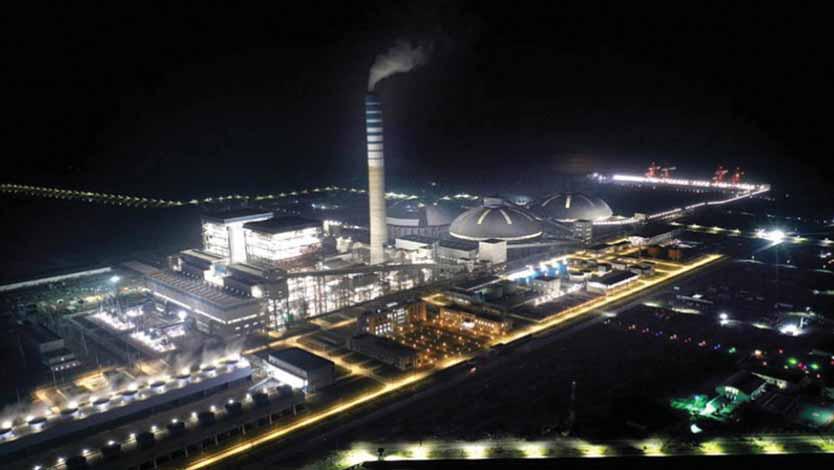
This crisis is largely the result of the absence of a long-term strategic plan, poor coordination among key stakeholders, the neglect of skilled professionals in the energy and power sectors, and a heavily politicized and corruption-prone management system. Over the past year, the interim government has failed to grasp the full scope and complexity of the crisis. While some of their actions have brought marginal improvements, they have not addressed the root causes. As a result, the energy and power sectors continue to function in a "business-as-usual" mode.
A newly elected democratic government is expected to take office in early 2026. For it, the energy and power sectors must be among the highest priorities. Bangladesh urgently needs a reliable and uninterrupted supply of electricity and gas to drive economic growth. Without consistent, transparent policies, sustained inflows of both foreign and local investment will remain elusive. If the current energy crisis continues, the country will face worsening unemployment and dwindling export earnings. There are no magical solutions-only sound strategies and vision. Let us hope the political leadership has both.
Present Situation of Power and Energy Supply Chain
Over the past 25 years, Bangladesh's power and energy sector has expanded significantly, but this growth did not follow an integrated and comprehensive master plan. Although the government developed two Power System Master Plans (PSMP 2010 and 2018) with JICA's support, and more recently the Integrated Energy and Power Master Plan (IEPMP 2023), none of these plans were seriously implemented. Inadequate data and flawed assumptions further weakened the planning process.

Cette histoire est tirée de l'édition EP_23_03 (Energy & Power Vol 23 Issue 03 July 16, 2025) de Energy & Power.
Abonnez-vous à Magzter GOLD pour accéder à des milliers d'histoires premium sélectionnées et à plus de 9 000 magazines et journaux.
Déjà abonné ? Se connecter
PLUS D'HISTOIRES DE Energy & Power

Energy & Power
Global Talks Begin on Phasing Out Fossil Fuels amid Energy Crisis
More than 50 have gathered countries in Santa Marta for the world's first international talks focused specifically on phasing out fossil fuels, against the backdrop of the ongoing Iran war and a tightening global energy supply.

1 min
EP_21_23 (Energy & Power Vol 23 Issue 23 May 16, 2026)

Energy & Power
Three Central Asian Countries Jointly Building 2,000 MW Hydropower Plant
Three Central Asian countries Kazakhstan, Kyrgyzstan and Uzbekistan - are set to launch a joint hydropower plant with a capacity of nearly 2,000 MW. The facility will be built on the Naryn River in Kyrgyzstan.
1 min
EP_21_23 (Energy & Power Vol 23 Issue 23 May 16, 2026)

Energy & Power
Renewables at the Core of Bangladesh's Energy Future
Power, Energy and Mineral Resources Minister Iqbal Hassan Mahmood recently stated that renewable energy is no longer optional but essential for building a sustainable and resilient power sector in Bangladesh.
1 min
EP_21_23 (Energy & Power Vol 23 Issue 23 May 16, 2026)
Energy & Power
Blue Hydrogen Growth Depends on Policy, Markets and Technology
Blue hydrogen, produced from natural gas with carbon capture, is emerging as a lower-carbon bridge between fossil fuels and a future hydrogen economy.
1 min
EP_21_23 (Energy & Power Vol 23 Issue 23 May 16, 2026)
Energy & Power
Climate-Induced Migration Must Be Central to National Policy: Swapon
Information and Broadcasting Minister Zahir Uddin Swapon has urged policymakers to treat climate-induced migration as a major public policy priority rather than merely a humanitarian concern.
1 min
EP_21_23 (Energy & Power Vol 23 Issue 23 May 16, 2026)

Energy & Power
Battery-Run Rickshaws Increasing Pressure on Power Grid
The rapid and largely unregulated expansion of battery-run rickshaws and vans is placing growing pressure on Bangladesh's electricity system, raising concerns over energy security, subsidies, and grid stability.
1 min
EP_21_23 (Energy & Power Vol 23 Issue 23 May 16, 2026)

Energy & Power
UAE Withdraws from OPEC, OPEC+
In a statement posted on its X page recently, which was translated from Arabic, the United Arab Emirates (UAE) Ministry of Energy and Infrastructure announced that the country has made a decision to withdraw from OPEC and OPEC+, effective May 1.
1 min
EP_21_23 (Energy & Power Vol 23 Issue 23 May 16, 2026)

Energy & Power
Prime Bank Secures $30m OPEC Fund
Prime Bank PLC recently signed a 30 million dollars term loan agreement with the OPEC Fund for International Development to strengthen its trade finance capacity, particularly for SMEs, agriculture and corporate clients.
1 min
EP_21_23 (Energy & Power Vol 23 Issue 23 May 16, 2026)

Energy & Power
Second Meeting on 250m Tree Plantation Program Held
Bangladesh recently held the second meeting of a special government cell formed to implement a nationwide programme to plant 250 million trees over the next five years.
1 min
EP_21_23 (Energy & Power Vol 23 Issue 23 May 16, 2026)
Energy & Power
Rancon Launches Country's First Solar-Powered Cold Storage in Chattogram
Rancon Infrastructure and Engineering Limited has launched Bangladesh's first solar-powered cold storage facility in Chattogram, marking a notable step toward wider use of renewable energy in the country's industrial sector.
1 min
EP_21_23 (Energy & Power Vol 23 Issue 23 May 16, 2026)
Listen
Translate
Change font size