
Passez à l'illimité avec Magzter GOLD
Obtenez un accès illimité à plus de 9 000 magazines, journaux et articles Premium pour seulement
Essayer OR - Gratuit
Ending the AMR Cycle
BioSpectrum Asia
|July 2023
According to the World Health Organisation's (WHO) annual review of antibacterial agents in clinical and preclinical development, the R&D pipeline for new antibacterial medicines is insufficient to tackle the challenge of increasing emergence and spread of antibiotic resistance. Furthermore, the availability and access to new and existing antibiotics, including generics, is a challenge for countries of all income levels. The Global Leaders Group on AMR recently reiterated that the world faces a serious antibiotic pipeline and access crisis that requires innovative financing measures.
-

Antimicrobial resistance (AMR) among bacterial pathogens is a silent pandemic and an urgent global public health threat. These superbugs, which are able to resist multiple antibiotics, are on the rise and have claimed millions of lives worldwide as well as long-term disabilities, and high economic costs associated with the healthcare burden.
According to a study by the Global Research on Antimicrobial Resistance (GRAM) Project published in the Lancet, 33 common bacterial infections were either directly or indirectly responsible for 7.7 million deaths in 2019. MRSA, an infection that primarily occurs in people who’ve been in hospitals or other healthcare settings, alone caused more than 100,000 deaths in 2019. These bacterial pathogens are deadlier than most better monitored pathogens such as malaria, HIV or tuberculosis.
The overuse and misuse of antibiotics have led to the emergence of AMR, which is a complex problem that requires a multi-pronged approach to address. The annual AMR death toll is expected to double by 2050 without sufficient intervention.
Environmental sustainability
The constant presence of antimicrobials in our environment increases the spread of AMR driven by the environmental impacts of the manufacture, use and disposal of antimicrobials. In both livestock and humans between 40 and 90 per cent of an antibiotic dose administered is excreted in faeces or urine. In agriculture, these excretes frequently reach the environment and are contaminating soil, plants and water. Pharmaceutical effluent discharge from manufacturing sites have also shown contamination often greater than those of agriculture and humans.


Cette histoire est tirée de l'édition July 2023 de BioSpectrum Asia.
Abonnez-vous à Magzter GOLD pour accéder à des milliers d'histoires premium sélectionnées et à plus de 9 000 magazines et journaux.
Déjà abonné ? Se connecter
PLUS D'HISTOIRES DE BioSpectrum Asia
BioSpectrum Asia
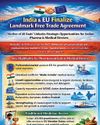
India–EU FTA Paves Way for Expanded Healthcare Trade
On January 27, 2026, after years of negotiations, India and the European Union announced a landmark Free Trade Agreement.

4 mins
BioSpectrum Asia March 2026
BioSpectrum Asia
PreferCo and Glatt to open CoE for precision fermentation bioprocess scale-up in India
In a major boost to Government of India's BioE3 push, German major Glatt and India-based startup PreferCo have announced the launch of \"PreferCo-Glatt Centre of Excellence (CoE) for Bioprocess Scale-Up\" in Hyderabad's Genome Valley.
1 min
BioSpectrum Asia March 2026

BioSpectrum Asia
Women's Health Surge in APAC
The rising burden of diseases such as ovarian cancer, breast cancer, cervical cancer, infertility, etc. is emerging as the key driver of the women's healthcare market across the globe. While North America led the women healthcare market in 2025, Asia Pacific (APAC) is expected to witness the fastest growth this year onwards. As a result, governments across the APAC region, are recognising the importance of women's health and are launching initiatives, particularly under female leaders, to improve access to healthcare services. Moreover, a number of women-led startups are now developing new solutions to address this growing burden of women-associated diseases in the APAC region. Let's take a closer look.
6 mins
BioSpectrum Asia March 2026

BioSpectrum Asia
Hanchor Bio receives US FDA Orphan Drug Designation for HCB101 in gastric cancer
Taiwan-based biotech startup HanchorBio, Inc. has announced that the US Food and Drug Administration (FDA) has granted Orphan Drug Designation (ODD) to HCB101 for the treatment of gastric cancer.
1 min
BioSpectrum Asia March 2026

BioSpectrum Asia
Daiichi Sankyo names Dr John Tsai as Global Head of R&D
Japan-based Daiichi Sankyo Company has appointed Dr John Tsai to succeed Dr Ken Takeshita, who is stepping down as Global Head of R&D, effective April 1, 2026.
1 min
BioSpectrum Asia March 2026

BioSpectrum Asia
"The global trend is moving beyond centralised hubs toward distributed networks and domestic capability"
King Faisal Specialist Hospital & Research Centre (KFSHRC) and US-based Germfree Laboratories have announced a strategic partnership to develop Saudi Arabia's first fully integrated, modular Advanced Therapy Medicinal Product (ATMP) Manufacturing Campus.
4 mins
BioSpectrum Asia March 2026

BioSpectrum Asia
SEOUL'S RISKY DRUG PRICING RESET
Drug pricing has once again moved to the centre of policy debate in South Korea, with the government recently stepping back from its proposed generic drug pricing reform.
2 mins
BioSpectrum Asia March 2026

BioSpectrum Asia
Takeda and Iambic sign $1.7 B deal to advance AI driven design of small molecules
Iambic, a US-based clinical-stage life science and technology company developing novel medicines using its artificial intelligence (AI)-driven discovery and development platform, has announced a multi-year technology and discovery collaboration agreement with Japan-based Takeda Pharma that will use Iambic's industry leading AI drug discovery models to advance a select set of high-priority small molecule programmes, initially in Takeda's Oncology and Gastrointestinal and Inflammation therapeutic areas.
1 min
BioSpectrum Asia March 2026
BioSpectrum Asia
S.Biomedics announces partnership with Catalent to develop and manufacture TED-A9
US-based Catalent and South Korea-based S.Biomedics have announced a strategic partnership to support the development and manufacturing of TED-A9, S.Biomedics' allogeneic pluripotent stem-cell-derived ventral midbrain-specific dopaminergic precursor cell therapy being developed for the treatment of Parkinson's disease.
1 min
BioSpectrum Asia March 2026
BioSpectrum Asia
China revises drug administration regulations to spur innovation
China has revised regulations concerning drug administration in a bid to promote drug innovation, strengthen management of online sales of medicines and reinforce drug safety supervision.
1 min
BioSpectrum Asia March 2026
Translate
Change font size