Essayer OR - Gratuit
Magnetoreception
The Country Smallholder
|July 2025
This month, Paul Donovan explores the hidden world of Magnetoreception in chickens.
-
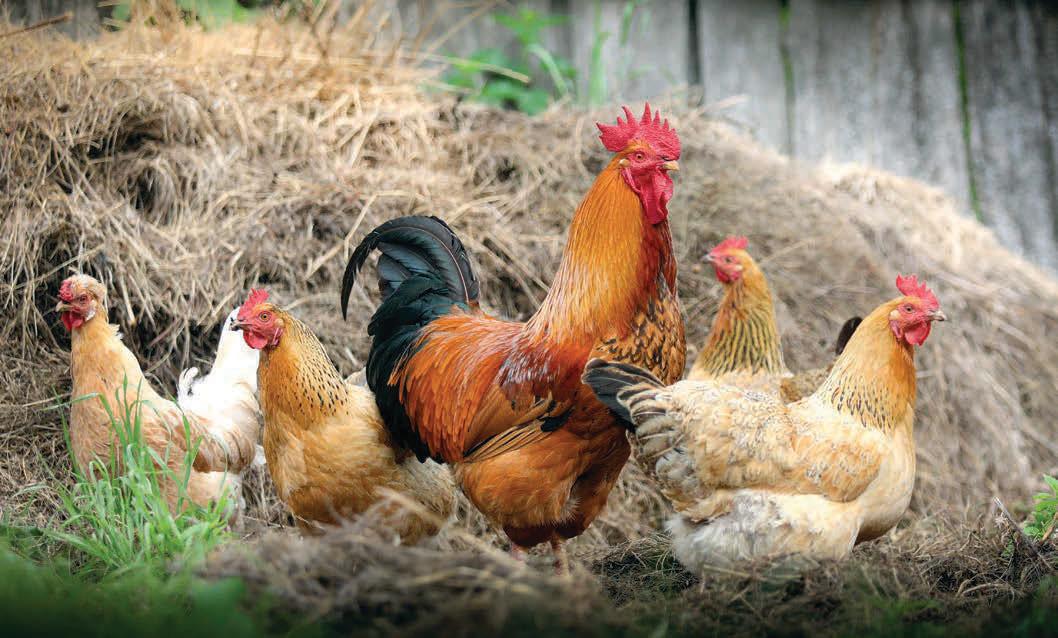
Chickens possess a remarkable, yet little-known ability - magnetoreception. This was first discovered in the 1960s by researchers studying bird migration and orientation. However, the specific discovery of magnetoreception in chickens is attributed to a group of German researchers in 1972, who demonstrated that chickens uses magnetic fields for orientation. The research was further enhanced in 2005, when scientists discovered magnetite, a magnetically sensitive mineral in chicken brains. These findings laid the groundwork for further research, revealing the intricate mechanisms of magnetoreception in chickens.
Magnetoreception is a capacity allowing certain groups of animals to detect and respond to the Earth’s magnetic field, effectively granting them a built-in compass. Chickens can perceive magnetic cues, influencing their behaviour, navigation, and even visual perception. This fascinating trait is shared with various animal species, including migratory birds, turtles, and monarch butterflies. However, the study of magnetoreception in chickens offers unique insights into the intimate relationships between biology, environment, and behaviour.
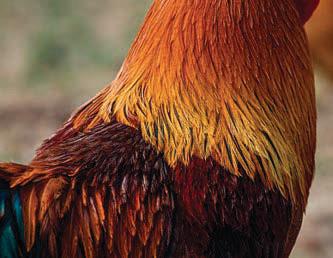 THE SCIENCE BEHIND MAGNETORECEPTION
Magnetoreception is a complex biological process involving the detection of magnetic fields by specialised cells or organs in the body. In chickens, magnetoreception is mediated by tiny magnetic crystals, composed of magnetically sensitive iron oxide, found in the brain, inner ear, and retina. These crystals respond to magnetic fields, triggering biochemical signals transmitted to the brain. The brain then interprets these signals, allowing the chicken to perceive magnetic information.
Chickens possess two types of magnetoreceptors:

Cette histoire est tirée de l'édition July 2025 de The Country Smallholder.
Abonnez-vous à Magzter GOLD pour accéder à des milliers d'histoires premium sélectionnées et à plus de 9 000 magazines et journaux.
Déjà abonné ? Se connecter
PLUS D'HISTOIRES DE The Country Smallholder
The Country Smallholder
Making sure you put enough nutrition into your dairy goat to support her milk production
Sarah Day, nutritionist for Small Holder Feed offers feeding advice for your dairy goats to help them be happy, healthy and milky animals.

6 mins
March 2026
The Country Smallholder
Welcoming the very start of the spring season
Henrietta Balcon makes the most of the new crop rhubarb
2 mins
March 2026
The Country Smallholder
Starting with Pigs - before you start
Linda Aldous outlines what you need to do before anything porcine arrives on your smallholding
3 mins
March 2026
The Country Smallholder
Insurance to protect livestock - and your peace of mind
Looking ahead to a busy 2026 for Pedigree Sales, farmers and breeders will be preparing their livestock for the upcoming markets
2 mins
March 2026

The Country Smallholder
Getting Your Electric Fence Spring-Ready: Expert Q&A
As Spring arrives, it’s the perfect time to give your electric fence some attention. Based on questions we discuss regularly here at www.electricfencing.co.uk, here’s a list of the checks you should be carrying out now, and why they matter.
2 mins
March 2026

The Country Smallholder
Check your kit for the busy seasons ahead
Agricultural journalist, and machinery writer Jane Brooks, joins us for her regular look at the world.
4 mins
March 2026
The Country Smallholder
Flock together: is now the right time to add more hens?
Andy Hill explains how to integrate birds into a flock without feathers flying
4 mins
March 2026
The Country Smallholder
The secrets behind maximising incubator hatch rates
Buying quality point of lay hens can be an expensive proposition these days (even if you can find a local source of the breed that you want). Incubating fertilised eggs can save a great deal of money and make many more breeds accessible. If you already keep poultry that includes a cockerel, an incubator means that you can hatch their eggs either to increase your flock or to sell. Hugh & Fiona Osborne have been using incubators for many years and have learned that getting a good hatch means attention to detail.
7 mins
March 2026
The Country Smallholder
Making choices for your chicks
Victoria Roberts BVSc MRCVS says Natural and Artifical Incubation are not an either/or choice
5 mins
March 2026

The Country Smallholder
An appetite for asparagus
Our Experts answer your questions
1 mins
March 2026
Listen
Translate
Change font size