Essayer OR - Gratuit
Feathered Flatmates
The Country Smallholder
|February 2026
When a pair of chicks came indoors before the first Covid lockdown, veterinary student Lizzay Slaney never imagined they'd lead to a household of house chickens. At 20, she and her family in south-east London now share their home with Silkies and mixed bantams.
-
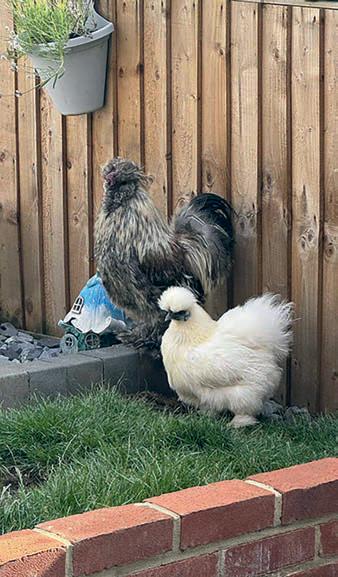
When Lizzay Slaney describes how her house hens began, it’s clear this was never merely a practical choice. “I raised my first chicks indoors; they came just before Covid started. I grew very attached to them,” recalls Lizzay. “They even slept in bed with me at night!” Those early days, with lockdown and little social contact, transformed two birds into much more than pets. “They became my friends, not just pets.”
What followed was a series of practical decisions shaped by circumstance. As her birds reached maturity the family planned to move them outside, until avian influenza restrictions intervened. “When it was time for them to go outside, avian influenza lockdown was introduced, so they stayed inside until full maturity.” By then, the birds regarded both inside and outside as home. Lizzay recalls with a laugh how determined they could be: they “would come to the door and knock with their beaks if they wanted to come in (if we didn’t let them in they’d jump up to the window to watch and see why they couldn’t come in).”
Their story captures what “house chickens” means for many keepers: a bond so strong that birds become integrated into daily domestic life. House chickens are exactly that, poultry kept predominantly or entirely indoors, sharing living spaces with people. Reasons vary: companionship, care requirements, urban predator pressures, or health needs.
In Lizzay’s case, it was a mix of attachment, safety and special care: “We also like to keep them inside for safety as we live in London where there are lots of predators. One of them is a cockerel and we keep him inside to try and limit the noise the neighbours hear, the other is elderly and blind, so she comes in for care and to make sure she’s warm healthy and fed.”
House chickens remain a minority practice and provoke a range of reactions.
CONCERN OVER HYGIENE

Cette histoire est tirée de l'édition February 2026 de The Country Smallholder.
Abonnez-vous à Magzter GOLD pour accéder à des milliers d'histoires premium sélectionnées et à plus de 9 000 magazines et journaux.
Déjà abonné ? Se connecter
PLUS D'HISTOIRES DE The Country Smallholder
The Country Smallholder
Making sure you put enough nutrition into your dairy goat to support her milk production
Sarah Day, nutritionist for Small Holder Feed offers feeding advice for your dairy goats to help them be happy, healthy and milky animals.

6 mins
March 2026

The Country Smallholder
Welcoming the very start of the spring season
Henrietta Balcon makes the most of the new crop rhubarb
2 mins
March 2026
The Country Smallholder
Starting with Pigs - before you start
Linda Aldous outlines what you need to do before anything porcine arrives on your smallholding
3 mins
March 2026
The Country Smallholder
Insurance to protect livestock - and your peace of mind
Looking ahead to a busy 2026 for Pedigree Sales, farmers and breeders will be preparing their livestock for the upcoming markets
2 mins
March 2026

The Country Smallholder
Getting Your Electric Fence Spring-Ready: Expert Q&A
As Spring arrives, it’s the perfect time to give your electric fence some attention. Based on questions we discuss regularly here at www.electricfencing.co.uk, here’s a list of the checks you should be carrying out now, and why they matter.
2 mins
March 2026

The Country Smallholder
Check your kit for the busy seasons ahead
Agricultural journalist, and machinery writer Jane Brooks, joins us for her regular look at the world.
4 mins
March 2026
The Country Smallholder
Flock together: is now the right time to add more hens?
Andy Hill explains how to integrate birds into a flock without feathers flying
4 mins
March 2026
The Country Smallholder
The secrets behind maximising incubator hatch rates
Buying quality point of lay hens can be an expensive proposition these days (even if you can find a local source of the breed that you want). Incubating fertilised eggs can save a great deal of money and make many more breeds accessible. If you already keep poultry that includes a cockerel, an incubator means that you can hatch their eggs either to increase your flock or to sell. Hugh & Fiona Osborne have been using incubators for many years and have learned that getting a good hatch means attention to detail.
7 mins
March 2026
The Country Smallholder
Making choices for your chicks
Victoria Roberts BVSc MRCVS says Natural and Artifical Incubation are not an either/or choice
5 mins
March 2026

The Country Smallholder
An appetite for asparagus
Our Experts answer your questions
1 mins
March 2026
Listen
Translate
Change font size