Essayer OR - Gratuit
The wallaby controversy
BBC Wildlife
|July 2025
Feral wallaby populations are growing on the Isle of Man - and native wildlife is suffering
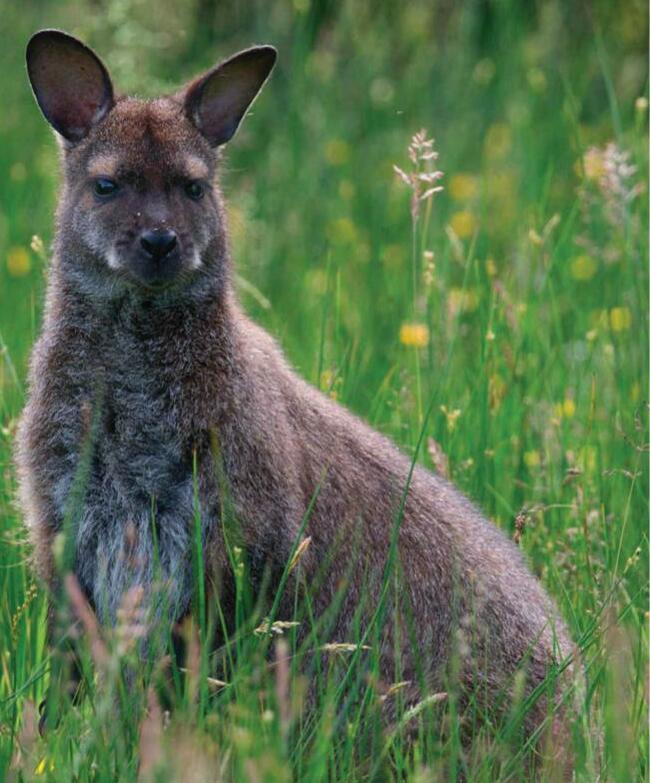
IT'S 9PM IN LATE APRIL IN AN AREA OF the Isle of Man known as the Ballaugh Curragh, and a most unusual nocturnal migration is taking place. As darkness descends on a 2km² area of wet woodland, an estimated 600 red-necked wallabies are emerging to feed on the surrounding grasslands.
You'd think that 600 wallabies would be easy to spot as they awake from their daytime slumbers, especially since the island has no large native land mammals to confuse them with. But as the Manx Wildlife Trust's head of conservation David Bellamy points out, they blend in well with the tangled, swampy forest of grey willows.
"The fact that four of us, who are looking for wallabies, just walked past one without seeing it and it's only 15m away highlights how easy it is to be here and not realise you are surrounded by them," he says. (It's only spotted with a thermal-imaging camera.)
It surely goes without saying that the wallabies should not be on the Isle of Man, and especially not in the Ballaugh Curragh, the island's only Ramsar site and area of special scientific interest. The macropods are native to mainland Australia and Tasmania, but they were brought to the government-owned wildlife zoo in 1965. Shortly afterwards, it seems, a few wallabies escaped (no one knows how many but it was probably fewer than 10), and they've been living as a feral population ever since. Until a couple of years ago, it was assumed the total population was fewer than 100 animals. But in 2023 and 2024, two surveys using drones enabled with thermal-imaging cameras blew this assumption far out into the windy Irish Sea.

Cette histoire est tirée de l'édition July 2025 de BBC Wildlife.
Abonnez-vous à Magzter GOLD pour accéder à des milliers d'histoires premium sélectionnées et à plus de 9 000 magazines et journaux.
Déjà abonné ? Se connecter
PLUS D'HISTOIRES DE BBC Wildlife
BBC Wildlife
Animal welfare
FURTHER TO EM GENOVESE'S LETTER (Your Letters, Spring 2026), I would like to signpost the charity Wild Welfare to readers.

2 mins
May 2026
BBC Wildlife
"The hooves pounded up the trail behind us"
Moose in Colorado
3 mins
May 2026
BBC Wildlife
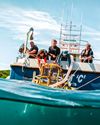
SEAGRASS SAVIOURS
Sometimes, saving the planet requires a bright idea, some practical know-how and a bit of tinkering
6 mins
May 2026
BBC Wildlife
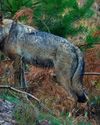
WALL TO WILD
After the fall of the Berlin Wall, reunified Germany became a new landscape not only for people, but for wildlife too 'M SITTING IN A FOREST IN Brandenburg, northeast Germany, looking over a large clearing.
7 mins
May 2026
BBC Wildlife
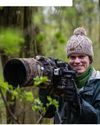
SNAP-CHAT
Samuel Bloch on wild horses, crazy capercaillies and sleeping on the job
2 mins
May 2026
BBC Wildlife
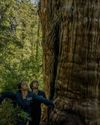
Old trees key to resilience
Study finds mature trees trump youthful ones
1 min
May 2026
BBC Wildlife
ONE STEP BEYOND
There's a lot more to these quirky seabirds than their eye-catching limbs
2 mins
May 2026
BBC Wildlife
RETURN OF A LEGEND
Once teetering on the very brink of extinction, the elusive Scottish wildcat is prowling the Highlands once more, thanks to a bit of help
7 mins
May 2026
BBC Wildlife
Urban scavengers help curb carbon
New study reveals the extent of emissions saved as city animals feast on food waste
2 mins
May 2026
BBC Wildlife
Merlin on the brink
The diminutive raptor is one of many species facing extinction in Britain, suggests new report
1 mins
May 2026
Listen
Translate
Change font size