Essayer OR - Gratuit
MIRRORLESS MARVEL
African Birdlife
|November/December 2025
Testing Canon's R1 in the field
The shift to mirrorless cameras for wildlife photography has been expensive but rewarding for birders. Sony set the pace, forcing traditional market leaders Canon and Nikon to switch from SLR to mirrorless systems. Since 2020, Canon has released a series of camera bodies with animal-eye focus, which is one of the main advantages of going mirrorless (see African Birdlife 9(3): 56–60). However, it was only in 2024 that the company finally released the R1, the replacement for its professional 1D SLR series. I was excited to be able to borrow one to assess at first hand how it performs.
First impressions: ergonomics and EVF
The first thing that strikes you when you pick up an R1 is how well it fits into your hand. The ergonomics are stunning. And, thanks to the fine clarity, looking through the camera brings back happy memories of using an SLR. The electronic viewfinder (EVF) is the largest and has the highest resolution of any Canon camera to date. After using the R1, it was hard to go back to the much smaller EVFs in the R6 and R7.
Weighing in
Like all Canon’s 1D bodies, the R1 has a much larger battery than that of most other Canon cameras. Many controls are duplicated, making it as easy to shoot portrait as landscape images. It closely resembles the R3, which was released a few years ago but lacked sufficient weatherproofing for it to be awarded the coveted R1 marque (see
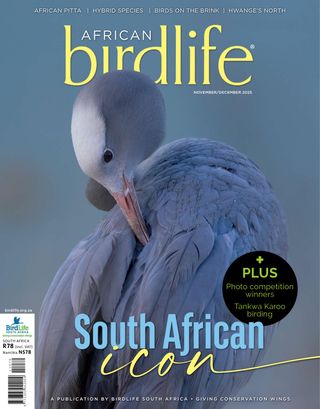

Cette histoire est tirée de l'édition November/December 2025 de African Birdlife.
Abonnez-vous à Magzter GOLD pour accéder à des milliers d'histoires premium sélectionnées et à plus de 9 000 magazines et journaux.
Déjà abonné ? Se connecter
PLUS D'HISTOIRES DE African Birdlife
African Birdlife
Southern SIGHTINGS
MID-JULY TO MID-SEPTEMBER 2025

2 mins
November/December 2025
African Birdlife
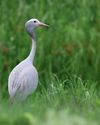
BLUE CRANE
A symbol of pride and vulnerability
6 mins
November/December 2025
African Birdlife
CHAOS AT THE KOM
Between 1 and 3 December 2024 there was a remarkable sardine run off Kommetjie on the Cape Peninsula.
1 min
November/December 2025
African Birdlife
Ramsar Convention on Wetlands
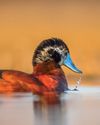
Whatever form they take, from peatlands to estuaries, wetlands are critical for the survival of waterbirds, such as the White-winged Flufftail, Maccoa Duck and Grey Crowned Crane. They are highly productive ecosystems that are characterised by diverse and abundant food sources and they provide essential feeding, breeding, migratory and resting habitat for numerous species. iSimangaliso Wetland Park, for example, supports more than 500 bird species.
1 mins
November/December 2025

African Birdlife
FRAMING wild feathers
WINNERS OF THE BIRDLIFE SOUTH AFRICA PHOTOGRAPHY COMPETITION 2025
4 mins
November/December 2025

African Birdlife
PITTA PILGRIMAGE
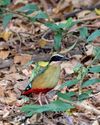
Look there - on that branch, behind those green leaves!’ Crouching in thick forest, with sweat dripping, heart pounding and eyes straining, I frantically searched with my binoculars, trying to work out which branch, which green leaves - indeed, which darned tree? I was close to panicking as we had come so far, and yet I just couldn't see where our guide was pointing.
4 mins
November/December 2025
African Birdlife
Unlocking a DIGITAL WORLD of bird stories
For more than 75 years, the South African Bird Ringing Unit (SAFRING), now hosted by the FitzPatrick Institute of African Ornithology, has woven together the complex life stories of southern Africa's birds.
1 mins
November/December 2025
African Birdlife
MIRRORLESS MARVEL
Testing Canon's R1 in the field
3 mins
November/December 2025
African Birdlife
Is NECHISAR NIGHTJAR a hybrid?
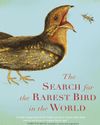
Vernon Head's award-winning book The Search for the Rarest Bird in the World brought widespread attention to the curious case of the Nechisar Nightjar. In 1992, a dead nightjar was found on a dirt road in Nechisar National Park, southern Ethiopia. A wing was collected and the bird was later described as a new species based on its distinctive large white wing patch. Its scientific name, Caprimulgus solala, attests to the fact that it is known only from a single wing.
2 mins
November/December 2025
African Birdlife
a TALL Tail
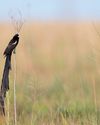
In the high grass of eastern South Africa, midsummer is when the Long-tailed Widowbird transforms the veld into a stage.
1 min
November/December 2025
Listen
Translate
Change font size