Essayer OR - Gratuit
Give your hens some support
The Country Smallholder
|September 2024
Paul Donovan looks at the right and wrong ways of handling birds
-

Over the years I have had the privilege of writing for Practical Poultry, I have covered many behavioural problems associated with chickens. Now, I want to cover a behavioural problem which is not of the chickens doing, but that of the owner. And that is, the manner in which many mishandle/carry their birds.
Unlike many domesticated pets, chickens do not take kindly to being handled, despite what people may believe. They are a prey species, and it brings out the fear in them that they are being attacked by a predator – this instinct has not been bred out of them. So, to handle them roughly, or inappropriately, can be an even more distressing experience. And there are some inexcusable ways in which chickens are routinely handled, in the erroneous belief that they are an acceptable part of their management.
NEVER CARRY THEM UPSIDE DOWN BY THEIR LEGS
One of the most common, and controversial ways of carrying a bird, is by its legs. In many countries it is legal to carry chickens this way, while others illegal; even where it is illegal, the practice still goes on regardless. Irrespective of whether it is legal or illegal, you are dealing with a live animal which deserves respect. Put yourself in the bird’s position, how would you feel if you were carried around upside down.
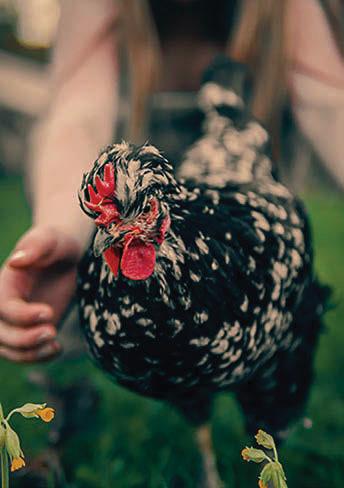 It is bad enough to carry one bird like this, but in the country where I live, I so often see people carry four or five in one hand. Chickens are crammed in small wire pens, and sold along the sides of roads, in full glare of the sun (while the seller is sat beneath the shade of a tree), without food or water. So, they are already suffering from stress/heat stress, for it only to be compounded even further, by being carted home upside down, and swung about like a toy.

Cette histoire est tirée de l'édition September 2024 de The Country Smallholder.
Abonnez-vous à Magzter GOLD pour accéder à des milliers d'histoires premium sélectionnées et à plus de 9 000 magazines et journaux.
Déjà abonné ? Se connecter
PLUS D'HISTOIRES DE The Country Smallholder
The Country Smallholder
Making sure you put enough nutrition into your dairy goat to support her milk production
Sarah Day, nutritionist for Small Holder Feed offers feeding advice for your dairy goats to help them be happy, healthy and milky animals.

6 mins
March 2026

The Country Smallholder
Welcoming the very start of the spring season
Henrietta Balcon makes the most of the new crop rhubarb
2 mins
March 2026
The Country Smallholder
Starting with Pigs - before you start
Linda Aldous outlines what you need to do before anything porcine arrives on your smallholding
3 mins
March 2026

The Country Smallholder
Insurance to protect livestock - and your peace of mind
Looking ahead to a busy 2026 for Pedigree Sales, farmers and breeders will be preparing their livestock for the upcoming markets
2 mins
March 2026

The Country Smallholder
Getting Your Electric Fence Spring-Ready: Expert Q&A
As Spring arrives, it’s the perfect time to give your electric fence some attention. Based on questions we discuss regularly here at www.electricfencing.co.uk, here’s a list of the checks you should be carrying out now, and why they matter.
2 mins
March 2026

The Country Smallholder
Check your kit for the busy seasons ahead
Agricultural journalist, and machinery writer Jane Brooks, joins us for her regular look at the world.
4 mins
March 2026
The Country Smallholder
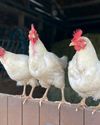
Flock together: is now the right time to add more hens?
Andy Hill explains how to integrate birds into a flock without feathers flying
4 mins
March 2026
The Country Smallholder
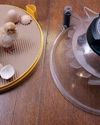
The secrets behind maximising incubator hatch rates
Buying quality point of lay hens can be an expensive proposition these days (even if you can find a local source of the breed that you want). Incubating fertilised eggs can save a great deal of money and make many more breeds accessible. If you already keep poultry that includes a cockerel, an incubator means that you can hatch their eggs either to increase your flock or to sell. Hugh & Fiona Osborne have been using incubators for many years and have learned that getting a good hatch means attention to detail.
7 mins
March 2026
The Country Smallholder
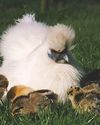
Making choices for your chicks
Victoria Roberts BVSc MRCVS says Natural and Artifical Incubation are not an either/or choice
5 mins
March 2026

The Country Smallholder
An appetite for asparagus
Our Experts answer your questions
1 mins
March 2026
Listen
Translate
Change font size