
Passez à l'illimité avec Magzter GOLD
Obtenez un accès illimité à plus de 9 000 magazines, journaux et articles Premium pour seulement
Meet the ORIOLES
Birds & Blooms
|April/May 2024
GET TO KNOW eight TYPES SEEN THROUGHOUT THE U.S. AND WHAT MAKES EACH ONE STAND OUT

The word "oriole" originally came from a Latin term meaning "the golden one." Although the name was first applied to an unrelated group of birds in Europe, Asia and Africa, it's perfectly appropriate for the American orioles. These birds belong to the blackbird family (along with grackles, red-winged blackbirds and meadowlarks) and they have the same sharply pointed beaks typical of that family.
Eight oriole species are found regularly north of the Mexican border, and you can find at least one or two of these in almost any area of the United States during summer. Many male orioles in northern locations are more brightly patterned than females, but the sexes often look the same among those seen further south.
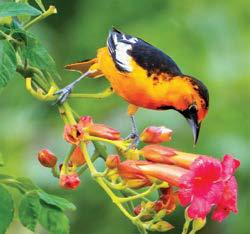
Female orioles build impressive nests. They weave plant fibers into a cup or a hanging pouch that's often suspended near the end of a branch, hidden by leaves, providing a cradle for the young that's safe from most predators.
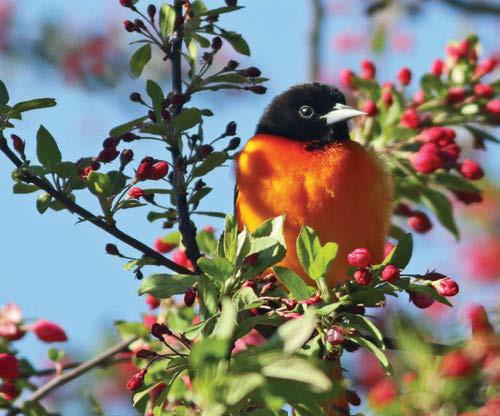
Official Colors: Baltimore Oriole
As early as the 1720s, people in the eastern colonies called this species the Baltimore bird because the male's orange and black colors suggested the coat of arms of a British nobleman, Lord Baltimore, the same person for whom the city in Maryland was named. The term oriole wasn't added to the bird's name until decades later. Baltimore orioles are common in summer across most of the eastern states and southeastern Canada, with smaller numbers spending the winter in the southeastern states.
Western Cousin: Bullock's Oriole

Cette histoire est tirée de l'édition April/May 2024 de Birds & Blooms.
Abonnez-vous à Magzter GOLD pour accéder à des milliers d'histoires premium sélectionnées et à plus de 9 000 magazines et journaux.
Déjà abonné ? Se connecter
PLUS D'HISTOIRES DE Birds & Blooms
Birds & Blooms
Ready to Fly
For birders, spring migration is something to look forward to and be celebrated, but how do birds know when it's time to begin their travels?

2 mins
December 2025 / January 2026

Birds & Blooms
COOL AS A Camellia
When temperatures drop, most plants wait out the chilly months, but camellias put on a show. Discover how to have these beauties thriving in your yard.
2 mins
December 2025 / January 2026
Birds & Blooms
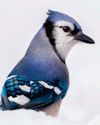
Festive Feathers
Readers braved the winter chill to capture these snowy snapshots of the season's most beautiful birds
2 mins
December 2025 / January 2026
Birds & Blooms
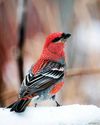
Winter Gems
With raspberry-red feathers, pine grosbeaks cheer up chilly landscapes wherever they land
2 mins
December 2025 / January 2026

Birds & Blooms
the mysterious lives of NIGHTHAWKS
These creatures of contradiction aren't hawks and aren't the most active at night, but they are worth knowing
3 mins
December 2025 / January 2026

Birds & Blooms
Adventure Awaits
Pack your bags, get on board and find your next vacation destination in these captivating photos from far-flung travels
2 mins
December 2025 / January 2026

Birds & Blooms
It's All in the Needles
Get to know the greenery to identify these conifers
1 min
December 2025 / January 2026
Birds & Blooms
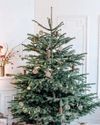
Christmas Tree Do's and Don'ts
These pro tips will help you get the most out of this classic holiday fixture
2 mins
December 2025 / January 2026

Birds & Blooms
Trailing Houseplants
Simple, easy-to-grow plants for hanging containers
3 mins
December 2025 / January 2026
Birds & Blooms
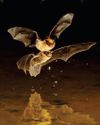
Better Off with Bats
Rethink the unsung heroes of the night and why you should support them
2 mins
October / November 2025
Listen
Translate
Change font size