
Passez à l'illimité avec Magzter GOLD
Obtenez un accès illimité à plus de 9 000 magazines, journaux et articles Premium pour seulement
Essayer OR - Gratuit
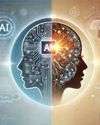
AI: Driving the future of Software development
PCQuest
|July 2021
With increasing digital transformation, the need for custom software is also increasing. AI in software development is impacting each phase of the software lifecycle, enhancing, and automating the traditional processes, and improving productivity through speed, quality and cost

The Artificial Intelligence (AI) revolution is silently brewing in the way we think about and write software. Popularly, the next wave of AI-driven software development is known as Software 2.0. You often find statements like, “AI is eating software.” We’re not sure about that, but one thing is true: AI is changing the way software is written.
Imagine the traditional flow of software development. A programmer identifies the key idea (algorithm/approach) to solve a problem and, subsequently, writes appropriate code. In this workflow, all the hard work of coming up with the approach to the problem rests firmly on the programmer’s shoulders. (Good for everyone, except the poor, put-upon programmer).
But imagine a slightly different scenario. An AI algorithm is provided with examples of expected inputs and outputs. Using this information, AI determines the correct algorithm/approach that would result in different inputs being transformed into appropriate outputs. (And our programmer becomes a little less put-upon in the process. Win-win.)
Programmers painstakingly and carefully design software systems, “instruction by instruction,” in a process that can be slow, tedious, and error-prone. But, with new developments in AI, that is all changing. Instead of programming “instruction by instruction,” the industry is moving to a paradigm of programming “example by example.” Many examples of what we want the program to do can be collected (or not do) and labeled using a simple scheme. These examples are then fed to a machine learning algorithm that trains our algorithm. At the end of this process, a “trained model” appears that can be used as a program.


Cette histoire est tirée de l'édition July 2021 de PCQuest.
Abonnez-vous à Magzter GOLD pour accéder à des milliers d'histoires premium sélectionnées et à plus de 9 000 magazines et journaux.
Déjà abonné ? Se connecter
PLUS D'HISTOIRES DE PCQuest

PCQuest
When Software Drives the Machine Need for Enterprise-Grade Software
Cars used to fail because of broken parts.Now they fail because of broken code. As vehicles become rolling computers, enterprise-grade software, ruthless testing, and fail-safe architecture decide one thing: whether a car keeps moving safely at 100 km/h

2 mins
March 2026
PCQuest
AI on the ground Practical use cases of AI in large enterprise operations
AI isn't a side project anymore, it's the quiet operator inside global giants. It reads invoices, senses machine fatigue, tailors every customer moment, flags risk in real time, and feeds leaders sharper instincts. Scale just got smarter
3 mins
March 2026
PCQuest
From AI experiments in 2025 to enterprise scale in 2026: Why data foundations will decide the winners
Everyone's betting big on Al, but most are burning cash instead of building value. The hidden culprit? Dirty data, clunky processes, and missing context. What if fixing your foundation, not your algorithms, was the real AI game-changer?
4 mins
March 2026
PCQuest
How automation at the periphery is accelerating digital transformation
Digital transformation is not tearing down the core anymore. It is happening at the edges. With AI and automation layered onto existing systems, companies are cutting costs, boosting productivity by up to 40%, and scaling smarter without risking operational chaos
2 mins
March 2026
PCQuest
When AI moves from chips to racks
AI performance is no longer just about faster chips. It is about how racks, power, networking, and orchestration work together. As agentic AI grows, infrastructure must become predictable, open, and built for scale from day one
4 mins
March 2026

PCQuest
Designing enterprise AI systems that stay fair
In 2026, bias is no longer treated as a communications issue or a public relations headache.
6 mins
March 2026

PCQuest
HALO smart sensor
What if bathrooms, locker rooms, and isolated spaces could become safer without adding cameras?
2 mins
March 2026

PCQuest
Building enterprise AI that doesn't discriminate
Bias in enterprise AI is not a side issue. It starts in data pipelines, training systems, product design, and engineering workflows. As AI scales, fairness, transparency, and accessibility are becoming core software requirements
4 mins
March 2026
PCQuest
Bias travels faster than code
Bias in enterprise AI is not a surface issue. It enters through data, features, model training, APIs, and UI logic, then spreads across the stack. The technical response is shifting from audits to architecture, observability, and deployment controls
6 mins
March 2026

PCQuest
How hospitals can use AI without risking patient data
With the fast pace of adoption of Artificial Intelligence (AI) and digital health systems in Indian hospitals, issues related to the security of patient data are also increasing at an equal rate.
2 mins
March 2026
Translate
Change font size