
Passez à l'illimité avec Magzter GOLD
Obtenez un accès illimité à plus de 9 000 magazines, journaux et articles Premium pour seulement
Essayer OR - Gratuit
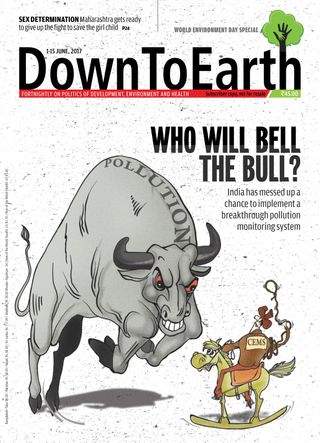
Tilting At Poplar Trees
Down To Earth
|June 1, 2017
Poplar is not behind the spike in allergy cases in Kashmir, yet the tree is being felled.

AN ORDER passed by the High Court of Jammu and Kashmir on May 12, 2015, is likely to change the landscape of the state. The court had ordered felling of the female species of all “Russian” poplar trees and banned growing poplar in the state. The species, introduced in the 1980s under a World Bank-aided social forestry initiative, now dominates the state’s skyline. Though there are no official figures, estimates say that the tree constitutes a third of the state’s tree population.
Over the past decade, media reports have blamed the tree for triggering allergies and respiratory ailments in the months of April and May when it releases showers of seed. In one of its observations, the court noted, “It is a common knowledge that pollen seed of Poplars is adversely affecting health of general public, mostly of elderly people and children. The pollen seed of these trees has given rise to chest diseases in Kashmir, which can become life threatening for them.” The court also ordered a scientific investigation into whether the tree was responsible for the large-scale allergy cases. The Directorate of Health Services and S K Institute of Medical Sciences, Srinagar, were entrusted with the responsibility.
Following the court order, the government started felling poplar trees in 2015, but the intermittent political unrest in the state slowed down the process in 2016. This year felling has started in Anantnag, Budgam, Srinagar and Kupwara. Though state-wide figures are not available, in Anantnag and Kulgam around 0.7 million and 0.2 million poplars have been felled since 2015, as per data provided by the district administrations. The state has 22 districts.
The beginning

Cette histoire est tirée de l'édition June 1, 2017 de Down To Earth.
Abonnez-vous à Magzter GOLD pour accéder à des milliers d'histoires premium sélectionnées et à plus de 9 000 magazines et journaux.
Déjà abonné ? Se connecter
PLUS D'HISTOIRES DE Down To Earth

Down To Earth
THINK TWICE BEFORE FELLING SAL TREES
Many trees considered to be affected by sal borer in the 1990s are still alive today

1 mins
February 16, 2026

Down To Earth
EDGE OF SURVIVAL
Caste divides deny marginalised communities land, resources and essential aid, leaving them more vulnerable to climate disasters
6 mins
February 16, 2026

Down To Earth
A WISH LIST?
Union Budget for 2026-27 conveys the impression of a roll-call of intentions and ambitious proposals, with little detail on their formulation
6 mins
February 16, 2026
Down To Earth
Break down the gender wall
THE RULING National Democratic Alliance (NDA) government has been heavily invested in the goal to make India a developed economy by 2047.
2 mins
February 16, 2026

Down To Earth
MENSTRUAL HEALTH, NOW A FUNDAMENTAL RIGHT
In a landmark judgement, the Supreme Court has recognised menstrual health and hygiene as a fundamental right under Article 21 of the Constitution of India, which guarantees the right to life and dignity.
8 mins
February 16, 2026

Down To Earth
Of devolution and new disasters
The 16th Finance Commission pushes for changes in view of new fiscal and climatic conditions
11 mins
February 16, 2026
Down To Earth
Rising risks of plastics
NEGATIVE IMPACTS on human health due to emissions linked to the plastic lifecycle could double by 2040, according to a study published in The Lancet Planetary Health in January.
1 min
February 16, 2026
Down To Earth
GAP BETWEEN EPIDEMICS NARROWING
A watershed-based and landscape-level approach is needed to address forest degradation
2 mins
February 16, 2026
Down To Earth
WAITING TO STRIKE
Sal heartwood borer is considered the biggest threat to forestry in India, especially to the sal tree, where it lives and breeds.
11 mins
February 16, 2026
Down To Earth
A SPRING DELIGHT
Mustard flowers are not meant only for the eyes. Invite them to your plate once in a while
3 mins
February 16, 2026
Translate
Change font size