
Passez à l'illimité avec Magzter GOLD
Obtenez un accès illimité à plus de 9 000 magazines, journaux et articles Premium pour seulement
Essayer OR - Gratuit
‘Mauritius Leaks' And Need For Tax Reforms
The Hindu Business Line
|August 30, 2019
Mauritius has conveniently kept India outside the network of tax treaties that are covered under the OECD’s BEPS project

Earlier this month, the International Consortium of International Journalists published over 200,000 confidential documents from the offices of Conyers Dill & Pearman, a Bermuda-based law firm that allegedly aids large Western businesses to set up letterbox companies in Mauritius aimed at making tax-motivated investments in Africa and Asia.
Not surprisingly, the leak has reignited the debate on multinational tax avoidance and how businesses use tax-friendly jurisdictions to channel funds from one country to another in order to minimize their overall corporate tax liability.
Controversial treaty
The ‘Mauritius Leaks’ comprise the names of some of the most popular brands in India and globally. Pertinently, the leaks cannot and do not conclusively establish any wrongdoing on the part of these businesses, and the tax arrangements in question need to be examined in view of the provisions of the Income Tax Act and the relevant double taxation avoidance agreements.
The India-Mauritius tax treaty has been a subject matter of controversy and debate ever since it was signed over 30 years ago. Before 2017, Article 13(4) of the tax treaty exempted capital gains arising from the sale of shares in an Indian company at the hands of Mauritian residents.
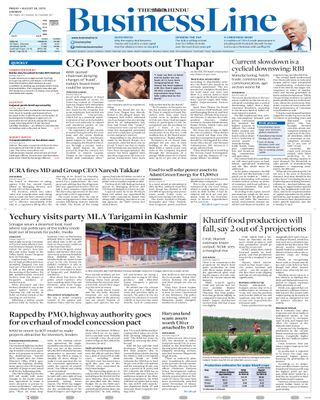

Cette histoire est tirée de l'édition August 30, 2019 de The Hindu Business Line.
Abonnez-vous à Magzter GOLD pour accéder à des milliers d'histoires premium sélectionnées et à plus de 9 000 magazines et journaux.
Déjà abonné ? Se connecter
Translate
Change font size