
Passez à l'illimité avec Magzter GOLD
Obtenez un accès illimité à plus de 9 000 magazines, journaux et articles Premium pour seulement
Bring Back The Nervous Breakdown
The Atlantic
|March 2021
It used to be okay to admit that the world had simply become too much.

April 1935 was a nervous month. Unemployment in America stood at 20 percent. A potential polio vaccine was failing trials. The term Dust Bowl made its first appearance in newsprint. A thousand-mile storm carried away much of Oklahoma. And Fortune magazine introduced its readers to “The ‘Nervous Breakdown.’ ”
Soon reprinted as an 85-page book, the article cited experts “whose names loom largest in the fields of mental hygiene.” The takeaway? The nervous breakdown was deemed to be “as widespread as the common cold and the chiefest source of misery in the modern world.” Anyone could be susceptible; it could be precipitated by nearly anything, and it prevented one “from carrying on the business of normal living.” Resolution of the breakdown entailed a time-out, ideally at one of the deluxe sanitariums profiled a few pages in.
Right now—I think we can all agree—Americans are once again living in a nervous time. Pandemic. Wildfires. Indefinite homeschooling. Post-election political chaos. TikTok. Feelings of impending collapse have arguably never rested on firmer empirical ground. But today we no longer have recourse to the culturally sanctioned respite that the nervous breakdown once afforded. No longer can we take six weeks at the Hartford Retreat, one of the healing getaways described in Fortune— all long since closed or transmuted into psychiatric facilities that require a formal mental health diagnosis for admission. No restorative caesura is forthcoming for us. The nervous breakdown is gone.
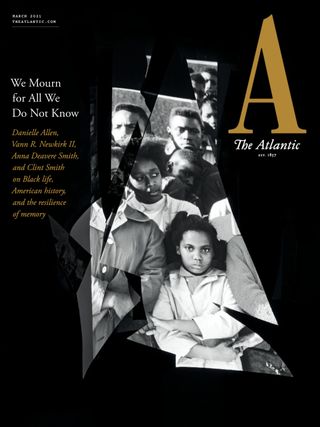

Cette histoire est tirée de l'édition March 2021 de The Atlantic.
Abonnez-vous à Magzter GOLD pour accéder à des milliers d'histoires premium sélectionnées et à plus de 9 000 magazines et journaux.
Déjà abonné ? Se connecter
PLUS D'HISTOIRES DE The Atlantic
The Atlantic
You Had to Be There
An emerging field of history asks if we can ever really understand how our forebears experienced love, anger, fear, and sorrow.

23 mins
January 2026

The Atlantic
By the Horns
The week before the biggest bullfight of her career, in Cádiz, Spain, this past July, 24-year-old Miriam Cabas posted a carefully produced video on Instagram.
1 mins
January 2026

The Atlantic
The New German War Machine
After World War II, Germany embraced pacifism as a form of atonement. Now the country is arming itself again.
18 mins
January 2026
The Atlantic
The Eloquence
The prime minister was watching a disaster movie when we found him.
4 mins
January 2026

The Atlantic
What's for Dinner, Mom?
The women who want to change the way America eats
12 mins
January 2026

The Atlantic
How Terror Works
A 1947 German novel explores the sometimes corrosive, sometimes energizing nature of fear.
8 mins
January 2026

The Atlantic
Yesterday's Idea of a Modern Man
Sam Shepard, a self-made cowboy, was also a poet of masculine angst.
7 mins
January 2026

The Atlantic
ACCOMMODATION NATION
America's colleges have an extra-time-on-tests problem.
11 mins
January 2026

The Atlantic
Respect the Drummer
A new history of rock, told through its overlooked heroes
5 mins
January 2026

The Atlantic
THE MOST POWERFUL MAN IN SCIENCE
WHY IS ROBERT F. KENNEDY JR. SO CONVINCED HE'S RIGHT?
42 mins
January 2026
Translate
Change font size