Essayer OR - Gratuit
Why We Cry?
Reader's Digest India
|March 2017
Our tears are far more important than scientists once believed.

There's a lot scientists don’t know—or can’t agree on—about people who do cry. Charles Darwin once declared emotional tears “purposeless”, and nearly 150 years later, emotional crying remains one of the human body’s more confounding mysteries. Though some other species shed tears reflexively as a result of pain or irritation, humans are the only creatures whose tears can be triggered by their feelings. But why?
Researchers have generally focused their attention more on emotions than on physiological processes that appear to be their by-products. “scientists are not interested in the butterflies in our stomach, but in love,” writes ad Vingerhoets, a professor at Tilburg University in the Netherlands and the world’s foremost expert on crying, in his book, Why Only Humans Weep.
But crying is more than a symptom of sadness, as Professor Vingerhoets and others are showing. It’s triggered by a range of feelings—from empathy and surprise to anger and grief—and unlike those butterflies that flap around invisibly when we’re in love, tears are a signal that others can see. That insight is central to the newest thinking about the science of crying.
For centuries, people thought tears originated in the heart. A prevailing theory in the 1600s held that emotions—especially love—heated the heart, which generated water vapour in order to cool itself down. The heart vapour would then rise to the head, condense near the eyes and escape as tears. Finally, in 1662, a Danish scientist named Niels Stensen discovered that the lacrimal gland was the proper origin point of tears. That’s when scientists began to unpack what possible evolutionary benefit could be conferred by fluid that springs from the eye. Stensen’s theory: Tears were simply a way to keep the eye moist.


Cette histoire est tirée de l'édition March 2017 de Reader's Digest India.
Abonnez-vous à Magzter GOLD pour accéder à des milliers d'histoires premium sélectionnées et à plus de 9 000 magazines et journaux.
Déjà abonné ? Se connecter
PLUS D'HISTOIRES DE Reader's Digest India

Reader's Digest India
EXTRAORDINARY INDIANS
Six ordinary people who turned concern into action, fixed what was broken—and made life fairer, safer, and kinder for all

16 mins
February 2026
Reader's Digest India
STUDIO
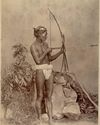
Untitled (Native Man from Chotanagpur drawing Bow and Arrow)
1 min
February 2026
Reader's Digest India
Learning to FLY
A small act of rebellion on a cold Oxford night creates a moment of spontaneous joy
4 mins
February 2026

Reader's Digest India
MY (RELUCTANT) TRIP TO THE TITANIC
In 2023, the submersible Titan imploded on its way to view the famous sunken ocean liner. A year earlier, our author—a sitcom writer— took the same trip. Here's what he saw
9 mins
February 2026

Reader's Digest India
She Carried HOME the Blues
Tipriti Kharbangar has spent two decades carrying a music that refuses spectacle and chases truth. Now the blues singer is asking a deeper question: what does it mean to know your roots—and protect them?
9 mins
February 2026

Reader's Digest India
A Year in France
My time in Aix-en-Provence as a student changed my outlook on life
3 mins
February 2026

Reader's Digest India
A SISTERHOOD IN THE WILD
COMMUNITY In a city better known for traffic snarls than bird calls, a small but growing initiative is helping women slow down and look closer at the wild spaces around them.
3 mins
February 2026
Reader's Digest India
How Famine and History Rewired Our Genes
What if India's current diabetes crisis began generations ago? Science reveals that food scarcity, colonial history, and epigenetics quietly shaped South Asia's metabolic fate
4 mins
February 2026

Reader's Digest India
Tracing the Birth of Nations
In his latest book, Sam Dalrymple interlaces high political history with intimate human stories to examine the complex, often violent, foundations of modern west and south Asian countries
4 mins
February 2026
Reader's Digest India
The Case for Curiosity
Two trivia enthusiasts explore how wonder fades with age— and why asking questions might be the key to finding it again
3 mins
February 2026
Translate
Change font size