
Passez à l'illimité avec Magzter GOLD
Obtenez un accès illimité à plus de 9 000 magazines, journaux et articles Premium pour seulement
Mirroring Multicultural Britain
BBC History Magazine
|April 2022
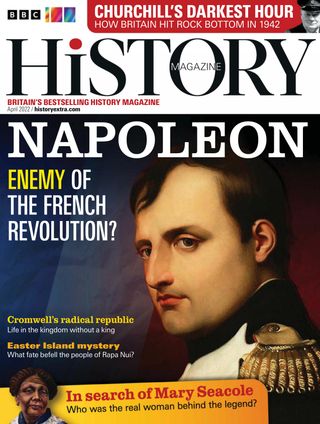
From its inception the BBC has featured entertainers of colour, but they were often reduced to "exotic” attractions. David Hendy explores how the corporation tried to include diverse voices, from the 1930s to the postwar years

In the spring of 1941, the 36-year-old Jamaican writer Una Marson was offered a job as a staff producer at the BBC. It seemed a watershed moment for Britain's national broadcaster. A full seven years before the Empire Windrush docked at Tilbury, bringing nearly 500 British citizens from the Caribbean to their “Mother Country, the corporation was opening up one of its much-sought-after editorial posts to a woman of colour. Yet by the time Marson left her job - in deeply troubling circumstances - less than six years later, she had every reason to conclude that the BBC's commitment to racial equality had much further to go.
The BBC had never been exclusively white - on the airwaves, at least. In the 1930s, the Guyanese bandleader Rudolph Dunbar had made numerous appearances on the wireless with what the Radio Times called his Coloured Orchestra”. The singer Elisabeth Welch had her own series, Soft Lights and Sweet Music, while many other music programmes featured what were billed as “Negro spirituals”. As for television, the African-American double-act “Buck and Bubbles” were among the stars of Alexandra Palace's opening night in November 1936.
What's striking in this list of names is that it consists entirely of entertainers - people presented largely as exotic” attractions. And despite a formidable CV that included publishing poetry and running a literary magazine, Una Marson had also been treated as an exotic even problematic - presence in the BBC workplace. Before installing her in the post, managers at the Overseas Service had thought it prudent to check with the Colonial Office in Whitehall that there would be no objection on their part to our appointment of a coloured British subject”. Her arrival was described - by broadcasters and civil servants alike – as an experiment”.

Cette histoire est tirée de l'édition April 2022 de BBC History Magazine.
Abonnez-vous à Magzter GOLD pour accéder à des milliers d'histoires premium sélectionnées et à plus de 9 000 magazines et journaux.
Déjà abonné ? Se connecter
PLUS D'HISTOIRES DE BBC History Magazine
BBC History UK
On the skids
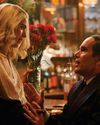
Richard Rodgers and Oscar Hammerstein II's smash musical Oklahoma! opened on Broadway on 31 March 1943.

1 min
Christmas 2025

BBC History UK
Small pleasures
Memory is imperfect, but what if you could get a professional model maker to recreate a moment from the past?
1 min
Christmas 2025

BBC History UK
Bath in five places
In the Georgian era, Bath became arguably Britain's most fashionable destination. KIRSTEN ELLIOTT promenades five historic highlights
3 mins
Christmas 2025
BBC History UK
End times
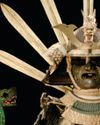
Why do civilisations that dominated their epoch fail? In an era of autocracy, climate change, the rise of Al and a first-hand understanding of how deadly pandemics can be, it's a question that seems pertinent.
1 min
Christmas 2025
BBC History UK
What are the origins of the Yule Lads?
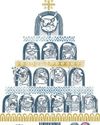
To learn about the Jólasveinar (Yule Lads), we must start with their mother, the terrifying ogress Grýla. Her name appeared in Icelandic texts as early as the 13th century, although it wasn’t until later that those 13 mischievous lads became associated with her. Folk tales and poems tell how she descends from the mountains with an empty sack to stuff full of children. Grýla owns the monstrous Jólaköttur (Yule Cat), which roams the countryside on Christmas Eve, searching for children to gobble up if they're not wearing new clothes.
1 mins
Christmas 2025
BBC History UK
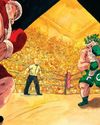
Santa Claus v Father Christmas
The true identity of the white-bearded, red-robed figure who fills children's stockings at Christmas has long been debated. Thomas Ruys Smith sizes up the merry contenders
8 mins
Christmas 2025
BBC History UK
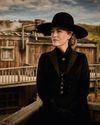
Frontier friction
Set in Washington Territory in 1854, The Abandons is a Western that's unusual for having two matriarchs, women whose lives become entangled, at its centre.
1 min
Christmas 2025

BBC History UK
The Last Days of Pompeii: The Immersive Experience
Delve into the culture of daily Roman life, witness the momentous eruption of Mount Vesuvius, and follow its fallout in Immerse LDN's new exhibition. In a blend of cutting-edge technology and vivid storytelling, this exhibition launches visitors into Pompeii's rich history with recreations of the ancient city's beautiful pre-eruption landscape, a 360-degree virtual reality Roman amphitheatre experience, and a digital metaverse recreating Pompeii's 'Villa of Mysteries'.
1 min
Christmas 2025
BBC History UK
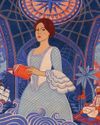
Elizabeth Marsh The corsair's captive
Taken hostage by a Barbary ship's captain in the 18th century, a young Englishwoman found herself fighting for her freedom in Marrakech. ADAM NICHOLS introduces a brave captive who later wrote a book about her dramatic experiences
6 mins
Christmas 2025
BBC History UK
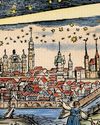
29 DECEMBER 1170: Thomas Becket is murdered in Canterbury
Knights loyal to Henry II rid him of the “low-born cleric”
2 mins
Christmas 2025
Translate
Change font size