
Passez à l'illimité avec Magzter GOLD
Obtenez un accès illimité à plus de 9 000 magazines, journaux et articles Premium pour seulement
Essayer OR - Gratuit
Migration Of Application Workloads To Containers Using Docker And Kubernetes
Open Source For You
|April 2019
Containers present an easy way of deploying traditional applications, cutting-edge microservices and Big Data apps anywhere. In enterprises in which a large number of Docker pods may be in use, Kubernetes is one of the best orchestration tools to choose. Migrating application workloads to containers has many advantages for enterprises, such as profitability, scalability and security.
-
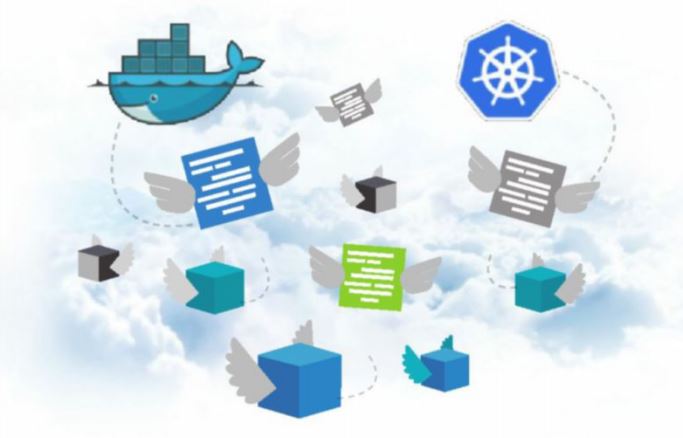
It was only a matter of time before containers changed the way enterprise cloud infrastructure was built and packaged. Containers have promoted and supported the concept of modularity, allowing applications and software to be independent of their life cycles. They’re now used intensively with cloud orchestration and are therefore increasingly critical for enterprises looking to scale up and succeed with their cloud infrastructure.
Cloud orchestration
Orchestration refers to the process of automating the deployment of containers, which optimises applications. Container orchestration is imperative to manage the life cycles of containers in large environments. The most popular container orchestration tools today are Kubernetes, Marathon for Mesos and Docker Swarm. The configuration files point to the container images and establish networking between containers. These files are branched so that they can deploy the same applications across various environments, after which they are deployed to the production clusters.
Business advantages of the migration The main reason for businesses to migrate to containers is that they offer a cost advantage. This is accomplished through a number of avenues.
Lower development costs: Containers are portable and platform-independent, which eliminates the need to modify modules to make them compatible across various environments. This makes organisations more flexible, speeding up the development process.
Better security: Since containers do not interact with each other, there are no security risks involved with any module crashing.
Smooth scaling: Containers allow horizontal scaling. This allows you to run the containers you need in real-time, reducing your costs drastically.


Cette histoire est tirée de l'édition April 2019 de Open Source For You.
Abonnez-vous à Magzter GOLD pour accéder à des milliers d'histoires premium sélectionnées et à plus de 9 000 magazines et journaux.
Déjà abonné ? Se connecter
PLUS D'HISTOIRES DE Open Source For You

Open Source For You
Top 10 Open Source Tools for System and IT Administrators
All reputed online services have committed system and IT administrators working behind the scenes. Here are ten open source tools they should be aware of, as these can help them monitor, automate, as well as manage complex infrastructure with relative ease.

6 mins
February 2026
Open Source For You
Google opens access to its Gemini Deep Research Agent
Google has opened access to its Gemini Deep Research Agent for the first time, allowing developers to integrate advanced autonomous research capabilities directly into their applications.
1 min
February 2026

Open Source For You
NVIDIA buys SchedMD, keeps Slurm open source and vendor neutral
NVIDIA has acquired AI software company SchedMD, signalling a deeper commitment to open source technologies as competition intensifies across the artificial intelligence ecosystem.
1 min
February 2026

Open Source For You
How Open Source Tools Power Modern IT Operations
Open source tools have not replaced enterprise IT platforms; they have become the connective layer that makes modern operations possible.
6 mins
February 2026
Open Source For You
Mandiant's Auralnspector enhances Salesforce security
Google-owned cybersecurity firm Mandiant has released AuraInspector, a free, open source command-line tool designed to identify dangerous access control misconfigurations in Salesforce environments, marking a significant move to democratise enterprise-grade security testing.
1 min
February 2026
Open Source For You
Google launches Universal Commerce Protocol to power agentic AI commerce
Google has introduced the Universal Commerce Protocol (UCP), a new open standard that enables AI agents to autonomously perform end-to-end commerce activities, spanning product discovery, purchasing, checkout, payments, and postpurchase experiences.
1 min
February 2026

Open Source For You
Zero Trust CI/CD: The Death of Static Secrets
In an era where data breach costs continue to hit record highs, shifting to a secretless CI/CD pipeline is the most effective step to safeguard digital infrastructure.
7 mins
February 2026

Open Source For You
Quantum Algorithms: The Future of Computing
Explore the essence of quantum algorithms, their groundbreaking applications, recent innovations, and the challenges that remain.
8 mins
February 2026

Open Source For You
Bringing Clarity to the Chaos in AI
AI feels powerful, yet most teams struggle because they cannot define what intelligence they really need. But there are ways to address this challenge.
5 mins
February 2026

Open Source For You
Top researchers return to OpenAI
OpenAI has welcomed back three high-profile researchers, Barret Zoph, Luke Metz, and Sam Schoenholz, following their brief tenure at former OpenAI CTO Mira Murati's AI startup, Thinking Machines.
1 min
February 2026
Translate
Change font size