
Passez à l'illimité avec Magzter GOLD
Obtenez un accès illimité à plus de 9 000 magazines, journaux et articles Premium pour seulement
Essayer OR - Gratuit
Dairy Cows: Overcoming Fodder Flow Shortages In Winter
Stockfarm
|June 2020
Kikuyu grazing into which ryegrass is sown in autumn is the most common grazing system in the milk-producing areas of the Southern Cape. Kikuyu is dormant during the winter months (June to September) and ryegrass is therefore sown to bridge the fodder flow gap created by this resting period – Italian and perennial ryegrass cultivars are commonly used.

Carrying capacity in winter
Due to the cold winters, shorter days, and low light intensity in the Southern Cape in winter, the growth rate of ryegrass decreases to 20 to 30kg dry matter (DM) per hectare per day. This is significantly lower than the 60 to 80kg DM per hectare per day produced in spring and summer.
Only two cows per hectare can, therefore, be accommodated in winter. However, the average stocking rate on most farms that cultivate grazing under irrigation, is four to five cows per hectare. For that reason, surplus grazing in spring and summer are ensiled and used during winter to bridge the roughage shortage gap.
Below-average rainfall was recorded for the spring of 2019, which meant that considerably less silage was produced on many farms. Roughage shortages can, therefore, be expected in the winter of 2020.
Lucerne hay and silage
Two strategies are generally used to overcome roughage shortages. One is to buy in roughage such as lucerne hay and the other is to feed some form of silage.
Lucerne is expensive. It usually has to be transported over long distances and transport costs are therefore a contributing factor. In addition, smaller farms do not necessarily have the storage capacity to store bulk quantities of lucerne.
Silage, on the other hand, should preferably be available on the farm and many farmers plant maize to produce silage. However, maize silage yields were also affected by the drought.
If one decides to purchase silage, it is important to determine its moisture content and price per ton DM. As silage is a perishable product, feed-out needs to occur within one to two days once it has been exposed to air. This is why it is neither practical nor cost-effective to transport silage over long distances.
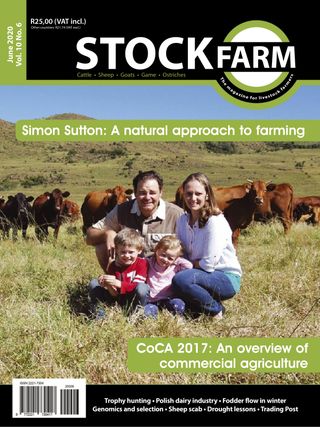

Cette histoire est tirée de l'édition June 2020 de Stockfarm.
Abonnez-vous à Magzter GOLD pour accéder à des milliers d'histoires premium sélectionnées et à plus de 9 000 magazines et journaux.
Déjà abonné ? Se connecter
PLUS D'HISTOIRES DE Stockfarm

Stockfarm
World School Milk Day: A national celebration of dairy
The Department of Basic Education (DBE), in partnership with Milk SA's Consumer Education Project (CEP), marked the national celebration of World School Milk Day (WSMD) at Mandlomsobo Primary School in Bronkhorstspruit on 26 September.

2 mins
January 2026
Stockfarm
A breed that you like will work with you
Data can't fix what selection broke, and your grandpa knew it.
4 mins
January 2026
Stockfarm
2025 Santam Agriculture Silage Competition: Wet conditions, winning silage
Plaas Media's twelfth Santam Agriculture National Silage Competition once again showcased impressive expertise among its participants.
4 mins
January 2026
Stockfarm
Let the fingers do the walking
One of my favourite summer sights is watching new lambs being playful and silly. I am not alone in this. English shepherds liked the sight of cute baby sheep so much, that the old term for a group of lambs used to be 'a love!
2 mins
January 2026
Stockfarm
Unravelling the regulations for dairy and imitation dairy products
Regulation R1510 of 22 November 2019, which governs dairy and imitation dairy products, recently took centre stage during a webinar hosted by the Dairy Standard Agency (DSA). Thabang Rampa, manager of regulatory affairs at the DSA, provided a technical interpretation of key sections of the regulation, aimed at improving industry's understanding of the prescribed minimum compositional and labelling requirements.
3 mins
January 2026

Stockfarm
2025 ARC National Master Dairyman Awards: Top dairy farmers honoured
The Agricultural Research Council (ARC) announced the winners of its 2025 National Master Dairyman Awards during a ceremony held in November at Lanzerac Estate in Stellenbosch.
2 mins
January 2026
Stockfarm
Abattoirs: The hidden pulse of meat safety
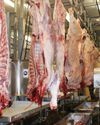
In conversations regarding the meat supply chain, the first and final links tend to take prominence, while the work performed by the middlemen often goes unnoticed. Yet every link plays a vital role. The real question is: Do we truly understand the value each link adds? Or has ‘value addition’ become shorthand for 'price addition, leaving producers and consumers feeling the financial strain?
5 mins
January 2026
Stockfarm
Silage equipment you can't do without
Silage is an invaluable resource on many livestock farms but producing it is not always simple or cheap.
3 mins
January 2026
Stockfarm
A competition and winner of note: 2025 Santam Agriculture National Silage Competition
Plaas Media's popular Santam Agriculture National Silage Competition completed its twelfth instalment with great success in November last year. The competition is a testament to the loyal, long-term cooperation between sponsors, participants, the sampling team, and the competition's supporters.
2 mins
January 2026
Stockfarm
The value of a vaccination programme for cattle
Vaccination is essential for any cattle operation, especially given the increasing risk of disease outbreaks. According to Dr Paul Reynolds, a veterinarian at the Warden and Vrede Animal Hospitals, vaccines are never developed arbitrarily. Each exists because a specific disease threat warranted it.
4 mins
January 2026
Translate
Change font size