Essayer OR - Gratuit
New Strategies For Smart Borrowing
Kiplinger's Personal Finance
|January 2019
Rising interest rates and new tax rules mean taking a different approach to how you shop for loans and manage your debt.

A lot of financially savvy people make a distinction between good debt and bad debt. Good debt is used to finance goals that will improve your net worth—such as a home purchase, a college education or a small business. Good debt is even better if it carries a low interest rate and is tax-deductible. Bad debt is the kind you incur to buy things you can’t afford with your paycheck—the big-screen TV you put on a credit card or the Caribbean trip you paid for with your home-equity line of credit. In some people’s book, it’s a bad idea to borrow to buy any depreciating asset, including a car.
But even good debt turns bad when you overindulge, as happened in the years leading up to the financial crisis. The bursting of the housing bubble and the stock market bust forced many Americans to go on a debt diet, and in the last decade, even though credit has been historically cheap, we’ve been pretty careful borrowers. Household debt has increased since the Great Recession, but that’s largely a desirable side effect of the strong economy and a healthy relaxation in lending. Mortgage balances have been rising (although they are still way below the peak reached in 2008), and studentloan, auto-loan and credit card debt levels have also gone up.
There are a few worrisome trends: Borrowers age 60 and older now hold 22.5% of total outstanding balances for all types of loans, up from 15.9% in 2008. Older borrowers are also taking on more student-loan debt to help pay for the education of children and grandchildren. The average amount of student-loan debt owed by borrowers age 60 and older nearly doubled from 2005 to 2015, to $23,500, according to the Consumer Financial Protection Bureau. Another worry: Among younger student-loan borrowers, delinquencies are rising.
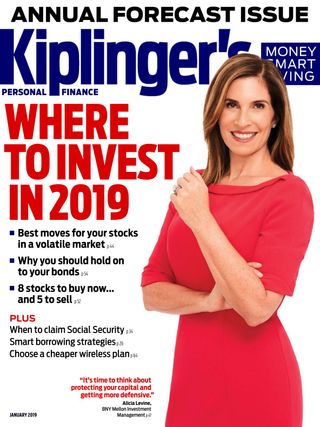

Cette histoire est tirée de l'édition January 2019 de Kiplinger's Personal Finance.
Abonnez-vous à Magzter GOLD pour accéder à des milliers d'histoires premium sélectionnées et à plus de 9 000 magazines et journaux.
Déjà abonné ? Se connecter
PLUS D'HISTOIRES DE Kiplinger's Personal Finance

Kiplinger's Personal Finance
A Helping Hand for the Homeless
This nonprofit offers shelters, job programs, support in finding a home and more.

2 mins
January 2026

Kiplinger's Personal Finance
Downsizing Advice, Part II
My column on downsizing (see “Living in Retirement,” Oct.) struck a chord with readers. I heard from many who offered advice on successfully culling clutter.
2 mins
January 2026
Kiplinger's Personal Finance
WHY COMPANY GUIDANCE MATTERS
Understanding how corporate profit forecasts affect analysts' estimates and stock ratings can help you make investment decisions.
4 mins
January 2026

Kiplinger's Personal Finance
WHAT SCIENCE REVEALS ABOUT MONEY AND A HAPPY RETIREMENT
Whether you're still planning or already retired, these research-based insights point the way to your best post-work life.
12 mins
January 2026

Kiplinger's Personal Finance
WHAT TO KNOW ABOUT FLOOD INSURANCE
Even if your home is outside a high-risk area, you may want to purchase coverage.
2 mins
January 2026

Kiplinger's Personal Finance
My Retirement Learning Curve
THE NEW WORLD OF RETIREMENT
2 mins
January 2026
Kiplinger's Personal Finance
CREATE A FINANCIAL PLAN WITH THESE TOOLS
Online programs for do-it-yourselfers are better than ever-and they're affordable, too.
9 mins
January 2026

Kiplinger's Personal Finance
2026 MONEY CALENDAR
These key dates and tips will help you make the most of your money in the new year.
7 mins
January 2026
Kiplinger's Personal Finance
Should You Renew Your CD?
AFTER you put money in a certificate of deposit, you can sit back while it collects interest over its term. Once it reaches maturity, you'll face a decision: renew it or withdraw the funds.
1 mins
January 2026

Kiplinger's Personal Finance
GIVING THE BULL THE BENEFIT OF THE DOUBT
KIPLINGER: What do you see ahead for financial markets in 2026? Do you have a target price for the S&P 500?
5 mins
January 2026
Translate
Change font size