
Passez à l'illimité avec Magzter GOLD
Obtenez un accès illimité à plus de 9 000 magazines, journaux et articles Premium pour seulement
Essayer OR - Gratuit
Cash Comes Back In India
Bloomberg Businessweek Middle East
|August 1, 2017
Many still rely on it, even after the government made bank notes hard to get.
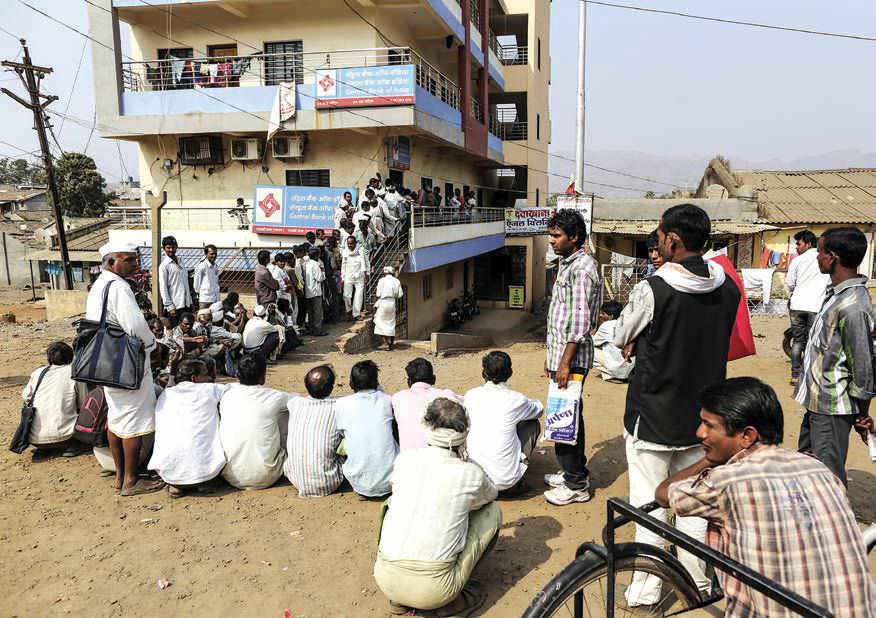
India’s road to a cashless economy is going to be longer than many technological optimists had hoped. It turns out people will shift to digital payments very quickly when they’re forced to, but they’ll still want some paper money in their purses.
Back in November, Prime Minister Narendra Modi shocked the nation by announcing that existing 500-rupee ($7.75) and 1,000-rupee bank notes—about four-fifths of the rupees in circulation—would become invalid almost overnight and had to be exchanged for new bills. The idea was to curb tax evasion and corruption by exposing stockpiles of cash that had stayed outside the banking system and were essentially invisible. Indians have used cash for about 98 per cent of consumer payments.
After millions of Indians lined up for hours at banks to deposit their now-useless notes or exchange them for new denominations, economic growth faltered in the first quarter of 2017 as consumer sentiment and cash-dependent industries were hit. With valid paper currency in short supply because the new notes rolled out more slowly than expected, the Reserve Bank of India set daily limits on cash withdrawals from ATMs. As Indians sought ways around the shortages, the value of digital payment transactions surged to a record 150 trillion rupees in March, according to central bank data, up from about 94 trillion rupees in November, the month in which the old notes were voided.

Cette histoire est tirée de l'édition August 1, 2017 de Bloomberg Businessweek Middle East.
Abonnez-vous à Magzter GOLD pour accéder à des milliers d'histoires premium sélectionnées et à plus de 9 000 magazines et journaux.
Déjà abonné ? Se connecter
PLUS D'HISTOIRES DE Bloomberg Businessweek Middle East

Bloomberg Businessweek Middle East
Golfing With The Enemy
Did Donald Trump's executives violate the Cuban embargo?

12 mins
August 16, 2016

Bloomberg Businessweek Middle East
Super-Rich Syrians Wait for War's End
Actor, author, playwright. Gill Pringle tries her hand at unravelling the mystery behind this enigmatic multi-hyphenate
11 mins
July 01, 2016

Bloomberg Businessweek Middle East
How About A Bit More Room For Competition?
The tech giants may be contributing to the US economy’s most persistent ailments. Should they be broken up?
6 mins
August 1, 2017

Bloomberg Businessweek Middle East
Stand By ... Scanning For Viruses And Secrets
Kaspersky Lab has worked much more closely with Russian intelligence than it has disclosed
5 mins
August 1, 2017

Bloomberg Businessweek Middle East
Uber Without The Smartphone
With inspiration from a nonprofit in Atlanta, the app is becoming more senior-friendly
4 mins
August 1, 2017

Bloomberg Businessweek Middle East
Brands Pump Up The Volume In Pakistan
Foreign companies are sponsoring raves to reach young, affluent consumers
4 mins
August 1, 2017

Bloomberg Businessweek Middle East
Tim Cook CEO, Apple
The head of the most valuable company in the world talks to Bloomberg Businessweek Editor Megan Murphy about augmented reality, the new HomePod, Donald Trump, and the legacy of Steve Jobs
13 mins
August 1, 2017

Bloomberg Businessweek Middle East
Syrian Refugees: Western Union's Most Loyal Customers
Refugees, immigrants expatriates. For some politicians, they're scapegoats. For Western Union, they're customers
20 mins
August 1, 2017

Bloomberg Businessweek Middle East
The Asian Jobs Ladder Is Broken
An economic model that’s organised an entire hemisphere for decades could be coming to an abrupt end.
5 mins
August 1, 2017

Bloomberg Businessweek Middle East
Iran's Islamic Evolution
Both conservatives and reformists consider the ballot box an essential instrument“There may be two candidates, but they are part of the system”
5 mins
June 16, 2017
Translate
Change font size