
Passez à l'illimité avec Magzter GOLD
Obtenez un accès illimité à plus de 9 000 magazines, journaux et articles Premium pour seulement
Tunnel Vision
Racecar Engineering
|December 2019
In the latest in our racecar design 101 series we take a detailed look at the fundamentals of wind tunnel aero development By

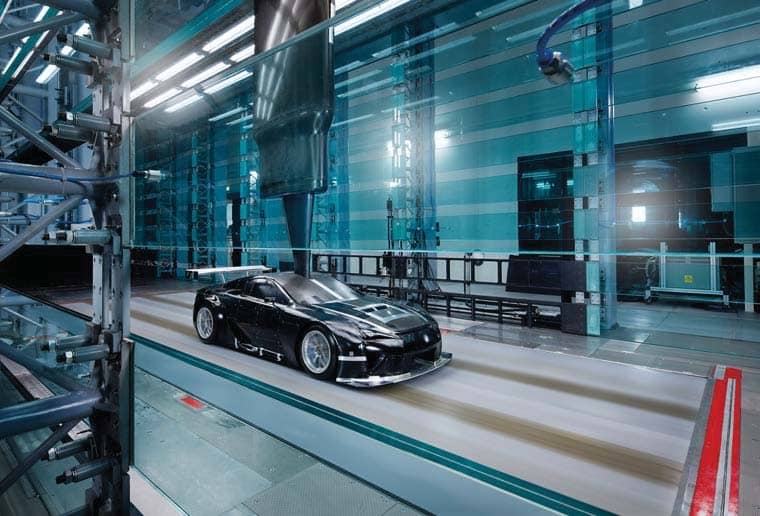
It won’t come as a surprise to most to hear that wind tunnels were initially developed for developing aircraft. But when road car speeds increased, this naturally brought the use of these same tunnels into the automotive world. Either full-scale or model aeronautic facilities were then used for decades, but the proximity to the ground caused some problems peculiar to cars. We will discuss this later, but first let us examine the wind tunnel itself.
Wind tunnels fall into two fundamental types, open and closed. The open or Eiffel type – made by Gustave Eiffel, of Parisian tower fame – certainly have their advantages. For a start, they are cheaper to build, while the pollutants – smoke, flow viz paints or fumes if an engine is running – are easily purged. On the other hand, there are also disadvantages: for instance, the size of the tunnel must be compatible to the size of the room it is housed in, as the room is the return path for the air. They tend to be noisy, and more expensive to run than closed tunnels.
The closed, or Gottingen, type of tunnel is where the air runs in a closed loop. The advantages are that they are cheaper to run and the quality of the flow can be easily controlled, while they are less noisy than the open type. On the other hand, they are more expensive to build, while the continuous losses of energy in the tunnel heats up the air, so the air may need cooling, especially in summer. Also, as the air recirculates, pollutants are not easy to purge.
Wind scale

Cette histoire est tirée de l'édition December 2019 de Racecar Engineering.
Abonnez-vous à Magzter GOLD pour accéder à des milliers d'histoires premium sélectionnées et à plus de 9 000 magazines et journaux.
Déjà abonné ? Se connecter
PLUS D'HISTOIRES DE Racecar Engineering

Racecar Engineering
Talk the torque
More thoughts on in-wheel motors and their effects on twisting force

6 mins
December 2021

Racecar Engineering
Rolling about
An explanation of the limitations of a previous load transfer article, bringing jacking forces into the mix
5 mins
December 2021

Racecar Engineering
F1 breaks schedule records
The FIA has confirmed no fewer than 23 races on the 2022 Formula 1 World Championship schedule, the highest number of grands prix ever to be held in a single season, and that has led to criticism from some teams that will be on the road for eight months.
1 mins
December 2021

Racecar Engineering
Under pressure
Toyota may have finished first and second at Le Mans this year, but the effort required to overcome a fuel delivery problem and finish with both cars was Herculean
12 mins
December 2021

Racecar Engineering
Physics at work
Dutch company, Intrax, offers Racecar Engineering an insight into the technologies it employs to optimise its suspension products
4 mins
December 2021

Racecar Engineering
Williams' 2030 ambition
Williams Racing has committed to becoming climate positive by 2030 as part of an all-new sustainability strategy.
1 min
December 2021

Racecar Engineering
Diff'rent strokes
Racecar looks at the different types of mechanical differential, their benefits and limitations
14 mins
December 2021

Racecar Engineering
Das Boot
A curious Twitter exchange fired up a unique, hydrogen-powered, cross-country project that will contest the Baja 1000 in November 2022
8 mins
December 2021

Racecar Engineering
Air born
Every racecar engineer's dream is a blank sheet of paper design. When Hoonigan and Subaru approached Vermont Sportscars about building the next generation of Gymkhana racer, that's just what the company was given
8 mins
December 2021

Racecar Engineering
Remote control
Called variously ‘virtual garages’, ‘mission control’ or ‘race support rooms’ is the future of race engineering sitting in the warm back at HQ?
14 mins
December 2021
Translate
Change font size