Essayer OR - Gratuit
GROUND EFFECTS AND PORPOISING
Overdrive
|March 2022
As Formula 1 ushers in a new era, a common problem has already afflicted almost all teams

Ground effects are back in F1! But hold on — it’s not all celebrations just yet. Porpoising, a word which has suddenly become a headache for almost all teams in early testing. What is porpoising? Well, it is the up and down motion, or oscillation, made by a dolphin-like aquatic mammal called the porpoise as it moves through the water. New era F1 cars, for some reason, are mimicking this motion under power down the straights. According to experts, this is due to an aerodynamic phenomenon called ground effects which is making its return after almost 40 years of absence in F1. To understand porpoising, we need to understand ground effects first.
We all know that up until the season-ending 2021, F1 cars relied solely on their wings (forward and rear) to generate necessary downforce. Downforce in simple terms is force generated by air flowing over the wings to press the car down on the track and generate more grip (over and above mechanical grip generated by suspension and tyres) for carrying greater speed around the fast corners and straights. Wings are essentially aerofoils that generate lift when air passes over them, as in aircraft, but in opposite direction on a racing car for obvious reasons. F1 teams have championed this method over many decades of development with their lap times unmatched by any other racing series.

Cette histoire est tirée de l'édition March 2022 de Overdrive.
Abonnez-vous à Magzter GOLD pour accéder à des milliers d'histoires premium sélectionnées et à plus de 9 000 magazines et journaux.
Déjà abonné ? Se connecter
PLUS D'HISTOIRES DE Overdrive
Overdrive
2025 DUCATI MULTISTRADA V4S
TECH ENHANCED SPORTTOURER UPS ITS LEVEL OF ALLDAY ADVENTURE COMFORT

4 mins
February 2026
Overdrive
SUZUKI GSX-8R
SO MUCH POTENTIAL, AND FEW MISSES!
6 mins
February 2026
Overdrive
SIMPLE ONE GEN 2
SIMPLE? NOT ENTIRELY. IMPROVED? ABSOLUTELY.
4 mins
February 2026

Overdrive
2026 SKODA KUSHAQ
The Škoda Kushaq was never short on ability. From the way it drove to the way its engines delivered performance, it always felt engineered with intent.
5 mins
February 2026

Overdrive
LAVA BLAZE 5G AMOLED 2
SENSIBLE CAN STILL BE FUN
2 mins
February 2026
Overdrive
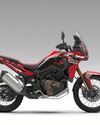
2026 HONDA AFRICA TWIN REVEALED
The CRF1100L Africa Twin range to get new paintjobs for the year 2026, and no mechanical or component changes for the adventure motorcycle.
1 min
February 2026

Overdrive
TAPAN GHOSH
CEO OF VINFAST INDIA
4 mins
February 2026

Overdrive
CITROEN AIRCROS X
Small changes make a big impact
7 mins
February 2026

Overdrive
TOYOTA URBAN CRUISER EBELLA BOOKINGS OPEN
Toyota has revealed the Urban Cruiser Ebella in India, with bookings now open.
1 min
February 2026

Overdrive
SANJAY TAKALE
The 57-year old rally driver born in Manjri, close to Pune in Maharashtra, is a pioneer when it comes to motorsports in India.
2 mins
February 2026
Translate
Change font size