
Passez à l'illimité avec Magzter GOLD
Obtenez un accès illimité à plus de 9 000 magazines, journaux et articles Premium pour seulement
Designing A Disobedient Show For An Unruly Space
Domus India
|December 2017
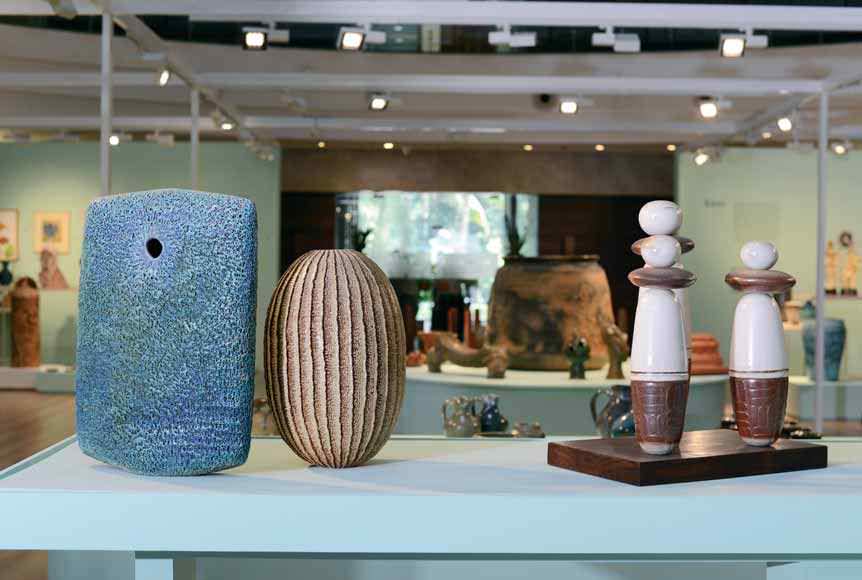
An ongoing exhibition throws light upon ceramic and clay objects made by hereditary and studio-trained potters as well as artists — and their histories — that have never, or rarely, been measured and mapped. Held in a repurposed space of an office building in a corporate park in central Mumbai, it appropriately illustrates the challenges involved in the process of exhibition-making in an ‘unruly’ space; highlights the experience of the art-viewer; and discusses the notion of spatial possibilities in ‘alternate museums’
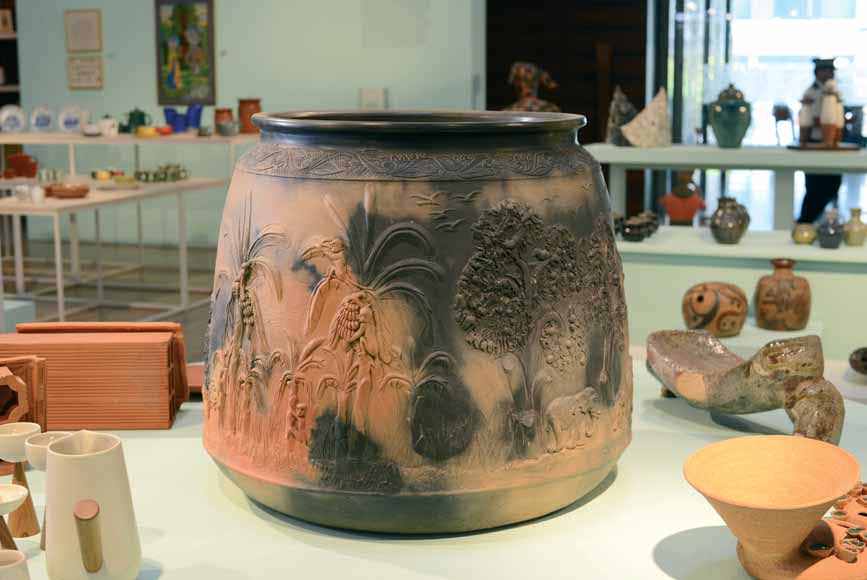
Gustavo Buntnix and Ivan Karp write in their essay “Tactical Museologies,” published in the now classic anthology Museum Frictions: Public Cultures/ Global Transformations (Duke University Press, 2006) that “alternative museums” have developed to address diverse collections, purposes, and audiences. They share a “wish to take advantage of the symbolic capital associated with the idea of the museum,” and yet also seek, sometimes unwittingly, “to present an alternative to the claims of better-established museums to define citizenship.” As has been discussed recently by many scholars working on Indian museums, there are numerous state-sponsored and private museums but very few have active curatorial agendas or concomitant departments of exhibition design and publication. This has led to a situation in which we have buildings, objects, histories, patronage, and audiences, but very few opportunities to develop integrated programmes that can work to link object, history, curation, design, and publics while increasing the capacity of institutions.


Cette histoire est tirée de l'édition December 2017 de Domus India.
Abonnez-vous à Magzter GOLD pour accéder à des milliers d'histoires premium sélectionnées et à plus de 9 000 magazines et journaux.
Déjà abonné ? Se connecter
Translate
Change font size