
Passez à l'illimité avec Magzter GOLD
Obtenez un accès illimité à plus de 9 000 magazines, journaux et articles Premium pour seulement
How to Catch a Stock Thief
Farmer's Weekly
|10 February 2017
Every animal is unique, and stock handling can leave distinct marks on individual animals. These two facts can be used by law enforcement officers to prosecute stock thieves effectively. Gerhard Uys spoke to expert witness Mort Mortassagne.
-

Stock theft in South Africa currently costs the livestock industry approximately R500 million a year. Yet well informed prosecutors, policemen and farmers can use simple logic to secure criminal convictions and help reduce this theft, according to Mort Mortassagne, cattle farmer, former policeman and expert witness in over 900 stock theft cases.
“Every animal is unique and will have [some] permanent marks from being handled over the years. These can all be used for identification purposes to link stolen livestock to their owners’ herds,” says Mort.
Taking these factors into account and using research, DNA and circumstantial evidence, prosecutors can reconstruct a case successfully and secure a conviction. To achieve this, however, they need some understanding of stock handling methods, as well as the correct usage of livestock farming terminology, he explains.
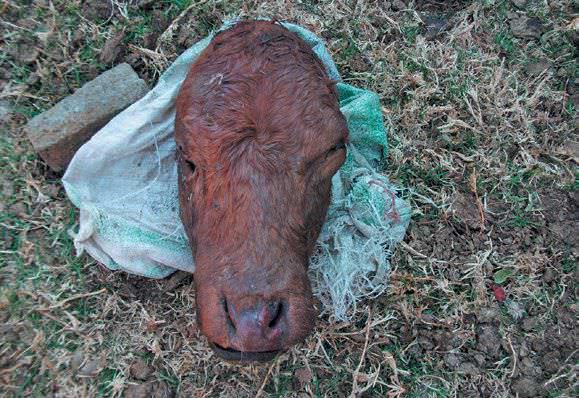
According to Mort, many thieves do their best to change the appearance of livestock shortly after it has been stolen. Typically, they dehorn, remove ear tags, or smudge brand marks with a hot spade or other object. The prosecutor therefore has to link evidence to an animal whose appearance may have been changed, or to a farm that may be kilometres away from where animals or parts of animals have been found. Being able to match wool, ear notches, branding, dehorning methods, castration and age to stolen livestock is crucial.
LANGUAGE BARRIER
Often, the first obstacle encountered when trying to secure a conviction in a stock theft case is the language barrier.


Cette histoire est tirée de l'édition 10 February 2017 de Farmer's Weekly.
Abonnez-vous à Magzter GOLD pour accéder à des milliers d'histoires premium sélectionnées et à plus de 9 000 magazines et journaux.
Déjà abonné ? Se connecter
PLUS D'HISTOIRES DE Farmer's Weekly

Farmer's Weekly
Christmas books to charm and delight
During the holiday season, one usually takes a well-earned break from the daily rutt, and there is no better time to catch up on some reading. Patricia McCracken has selected a wide spectrum of titles to tuck into.

4 mins
December 19-26, 2025

Farmer's Weekly
From chance to choice: a women's rise to farming success
Many raisin producers assume that retiring without a son to take over the farm means the end of the family business. Alcois Blaauw, this year's winner of the Raisins SA Female Producer Award, proves that assumption to be wrong. Glenneis Kriel reports.
4 mins
December 19-26, 2025

Farmer's Weekly
Grandparents below, and kids upstairs!
Dear Jonno,My wife and I want to escape to the countryside.
1 min
December 19-26, 2025

Farmer's Weekly
The Unseen Protector
The belief in the Unseen Protector or Unseen Shepherd endured for around 600 years, from the 13th century up until the 19th century. The farmer or his wife would provide a bowl of fresh cream and gruel to appease a spirit, whose blessing was imperative for a good summer harvest and animal health and fertility.
2 mins
December 19-26, 2025
Farmer's Weekly
THE HITCHING POST
I am a 67-year-old farmer residing on a farm near Harding in KwaZulu-Natal.
1 mins
December 19-26, 2025
Farmer's Weekly
Pet-friendly family accommodation in the Waterberg
With travel time of only a little over three hours from Johannesburg and 30 minutes from Vaalwater, guests will find Waterberg Cottages in Limpopo. Guests can plan a family-friendly holiday or weekend with plenty of activities to keep everyone occupied on this peaceful 2 500ha private game reserve.
4 mins
December 19-26, 2025
Farmer's Weekly
The Shuman legacy continues under the watchful eye of a fifth-generation farmer
Ken Shuman, co-owner of Hilson Shuman Farming, is committed to carrying on his father's towering legacy through innovation and adaptation.
9 mins
December 19-26, 2025

Farmer's Weekly
History's most famous musket
The Brown Bess musket was the standard issue firearm for British forces from 1722 to 1838. As Mike Burgess writes, this much-loved weapon contributed significantly to the consolidation of the British Empire that by 1922 was in control of a quarter of the earth's surface.
4 mins
December 19-26, 2025

Farmer's Weekly
Muddy soil can cause lameness due to footrot
It is important to clean legs and hooves and check for lameness in horses on a daily basis, especially when there is heavy rain
2 mins
December 19-26, 2025

Farmer's Weekly
The role of family farmers in sub- Saharan Africa
As part of the United Nations' recognition of family farming as a vital component of the global agricultural landscape, the decade between 2019 to 1928 was declared the Decade for Family Farming globally. Annelie Coleman compiled this report.
6 mins
December 19-26, 2025
Translate
Change font size