Essayer OR - Gratuit
The Dam Busters
BBC Wildlife
|August 2021
Across Europe, hundreds of rivers are blocked by dams, dykes, locks and levees. But a movement is gathering pace to remove these barriers and restore water flow.
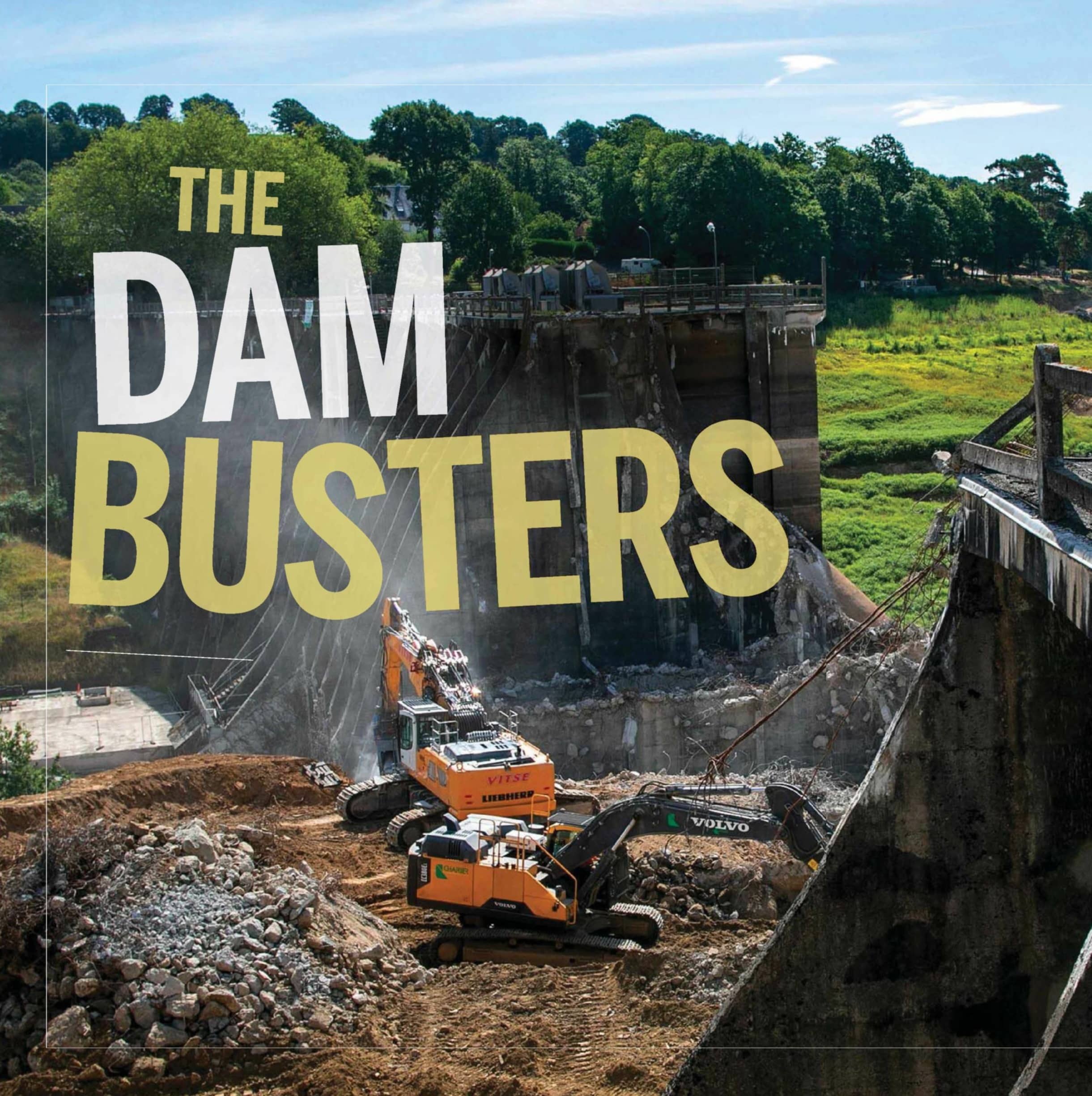
“In the Netherlands, salmon was once seen as food for the poor,” says Herman Wanningen, founder of the World Fish Migration Foundation and the Dam Removal Europe movement. “There was a lot of salmon in the 1600s and 1700s, and people didn’t want to eat it every day. Millions of the fish travelled in from the sea and up rivers through the delta on their way to Germany and the Swiss Alps.”
Then came a dramatic change to the rich riverscape with the Delta Works in the mid- 1900s; a series of construction projects in the south-west Netherlands to protect the area of delta surrounding the rivers Rhine, Schelde and Maas. “The Dutch say ‘we’re proud of how we managed the delta. We built dams, sluices, dykes, locks and levees, to make it safe for humans and reduce the risk of flooding’, but the result was that it was not a good place for fish,” explains Wanningen. “That, in turn, had an impact on birds and fish-eating animals, such as eagles and otters. There was far more diversity and abundance of fish and wildlife here 100 years ago.”
What happened in the Netherlands happened on a global scale. Throughout history, humans have attempted to modify and control nature, including water sources for crops, livestock and drinking. But the construction of river barriers accelerated during the Industrial Revolution, to power mills and factories, create reservoirs and aid flood management. Today, an estimated 1.2 million dams, weirs, culverts and other barriers straddle Europe’s rivers – at least 100,000 of which are thought to be obsolete. The UK is thought to have between 50,000-60,000 of these structures, at least 10 per cent of which serve no purpose.
Fears for freshwater fish

Cette histoire est tirée de l'édition August 2021 de BBC Wildlife.
Abonnez-vous à Magzter GOLD pour accéder à des milliers d'histoires premium sélectionnées et à plus de 9 000 magazines et journaux.
Déjà abonné ? Se connecter
PLUS D'HISTOIRES DE BBC Wildlife
BBC Wildlife
Animal welfare
FURTHER TO EM GENOVESE'S LETTER (Your Letters, Spring 2026), I would like to signpost the charity Wild Welfare to readers.

2 mins
May 2026
BBC Wildlife
"The hooves pounded up the trail behind us"
Moose in Colorado
3 mins
May 2026
BBC Wildlife
SEAGRASS SAVIOURS
Sometimes, saving the planet requires a bright idea, some practical know-how and a bit of tinkering
6 mins
May 2026
BBC Wildlife
WALL TO WILD
After the fall of the Berlin Wall, reunified Germany became a new landscape not only for people, but for wildlife too 'M SITTING IN A FOREST IN Brandenburg, northeast Germany, looking over a large clearing.
7 mins
May 2026
BBC Wildlife
SNAP-CHAT
Samuel Bloch on wild horses, crazy capercaillies and sleeping on the job
2 mins
May 2026
BBC Wildlife
Old trees key to resilience
Study finds mature trees trump youthful ones
1 min
May 2026
BBC Wildlife
ONE STEP BEYOND
There's a lot more to these quirky seabirds than their eye-catching limbs
2 mins
May 2026
BBC Wildlife
RETURN OF A LEGEND
Once teetering on the very brink of extinction, the elusive Scottish wildcat is prowling the Highlands once more, thanks to a bit of help
7 mins
May 2026
BBC Wildlife
Urban scavengers help curb carbon
New study reveals the extent of emissions saved as city animals feast on food waste
2 mins
May 2026
BBC Wildlife
Merlin on the brink
The diminutive raptor is one of many species facing extinction in Britain, suggests new report
1 mins
May 2026
Translate
Change font size