
Mit Magzter GOLD unbegrenztes Potenzial nutzen
Erhalten Sie unbegrenzten Zugriff auf über 9.000 Zeitschriften, Zeitungen und Premium-Artikel für nur
Versuchen GOLD - Frei
Python 3: Features Every Developer Should Know Of
Open Source For You
|June 2025
Here's a review of some of the most significant features and enhancements introduced in Python 3, responsible for making it the programming language that developers love to work with.
Python 3 was first released in 2008 with the aim to end the long-standing inconsistencies found in Python 2, the earlier version of the programming language. However, for years, it had gaps in toolchains, unsupported libraries, and legacy code making developers unwilling to migrate to it. The tide turned in January 2020 when the sun set on Python 2. From then on, Python 3 has become the preferred and the sole maintained and supported version of Python.
Today, Python 3 is used widely. Libraries and frameworks are designed and built using Python 3 — from Django and Flask to NumPy and TensorFlow. Schools don’t teach anything except Python 3. Every new release of the language continues to enhance its performance and readability. New error-reporting schemes and support for modern programming practices have helped Python 3 secure its position as the default platform for all forms of software development.
Clean and consistent syntax Python 3 focuses on clarity and consistency. Much of its development has come in the form of improvements to the fundamental syntax elements that form the core of the language. Eliminating certain ambiguities allows one to write code that is easy to maintain. Here are a few code comparisons that show how Python 3 is a major syntactic improvement over Python 2.
print() as a function: Print was a statement in Python 2, not a function. This led to inconsistent behaviour and less flexibility. In Python 3, print is an actual function.
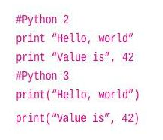 Because print is now a function, you can pass it as an argument, use keyword arguments like sep and end, or wrap it: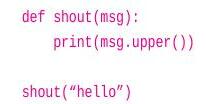

Diese Geschichte stammt aus der June 2025-Ausgabe von Open Source For You.
Abonnieren Sie Magzter GOLD, um auf Tausende kuratierter Premium-Geschichten und über 9.000 Zeitschriften und Zeitungen zuzugreifen.
Sie sind bereits Abonnent? Anmelden
WEITERE GESCHICHTEN VON Open Source For You

Open Source For You
Sending IoT Sensor Data to Public or Private Servers
This IoT system shows a simple and effective way to send sensor data using an ESP8266 microchip.

3 mins
March 2026

Open Source For You
Popular FOSS Tools for LLM Observability, Monitoring and Evaluation
This overview of popular tools for monitoring large language models also sheds light on how LLM-as-a-judge enhances their performance.
2 mins
March 2026
Open Source For You
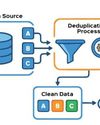
Data Deduplication Done the Right Way
Deduplication helps to save space on Linux-based storage systems. Choose the right platform and check whether it meets your goals.
6 mins
March 2026

Open Source For You
The Relevance of Rubber Duck Debugging in the Age of AI
Discover why rubber duck debugging is a powerful process today. There's also a step-by-step guide on how to use it in the age of artificial intelligence.
4 mins
March 2026
Open Source For You
GitHub weighs turning off pull requests as AĬ slop floods projects
GitHub has formally acknowledged that AI-generated 'slop' is overwhelming open source projects, forcing maintainers to sift through poor pull requests (PRS), abandoned submissions and guideline violations - and is now considering restricting or even disabling pull requests, the core mechanism of open collaboration.
1 min
March 2026

Open Source For You
Global banks are deploying Ethereum's Layer-2 stack
Banks are standardising on Ethereum's open source stack as production financial infrastructure, shifting from experimental pilots and proprietary blockchains to live Layer-2 networks for tokenised deposits, interbank payments, and cross-border settlement.
1 min
March 2026

Open Source For You
OpenClaw's creator joins OpenAl
In a move that reinforces its commitment to open development rather than acquisition, OpenAI has brought Peter Steinberger, founder of OpenClaw, into the company while placing the popular AI agent under a foundation structure to ensure it remains open source.
1 min
March 2026
Open Source For You
LibreOffice 26.2 comes with native Markdown support
LibreOffice 26.2 has been released by The Document Foundation, strengthening its position as a fully free and open source office suite for Windows, macOS, and Linux, with support for more than 120 languages.
1 min
March 2026

Open Source For You
Indian government mandates labelling of Al-generated content and quicker deletion of illegal deepfakes
India has introduced sweeping AI content rules that immediately place pressure on social platforms and open source AI ecosystems to label, trace and rapidly remove AI Open ource synthetic media at scale.
1 min
March 2026
Open Source For You
I2C and I3C: How Modern Devices Communicate
I3C and I2C are both two-wire communication protocols that help exchange data between multiple devices. While I3C preserves the simplicity of I2C, it introduces new features suited for today's sensor-rich devices.
8 mins
March 2026
Listen
Translate
Change font size