
Mit Magzter GOLD unbegrenztes Potenzial nutzen
Erhalten Sie unbegrenzten Zugriff auf über 9.000 Zeitschriften, Zeitungen und Premium-Artikel für nur
Versuchen GOLD - Frei
The Mariana Trench
The Week Junior Science+Nature UK
|January 2025
Dive in to find out how far down the ocean goes and what it's really like at the bottom.
-
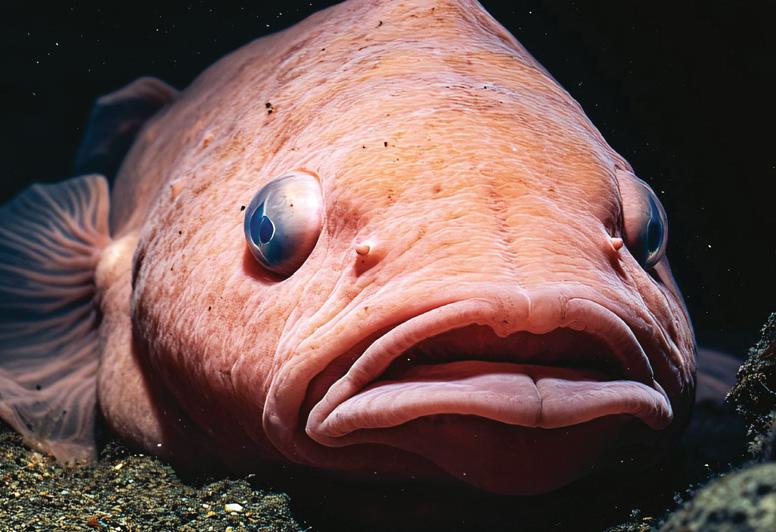
Have you ever gone swimming in the sea and wondered how far down the ocean goes? The deepest known point on the planet is a mysterious cavern called Challenger Deep that plunges down inside a gigantic underwater valley called the Mariana Trench.
Located in the western Pacific Ocean, the Challenger Deep is so deep that if you stacked six Eiffel Towers on top of Mount Everest and put them inside, you still wouldn't break the sea surface. The Mariana Trench was first discovered in 1875 but is so hard to reach that only a handful of people have ever been there. It is one of the least explored places on the planet, and is teeming with mysteries. How can scientists learn about somewhere that is so treacherous to humans? Let's find out...
Going down
We now know that the Mariana Trench was created when two tectonic plates (huge, moving slabs of solid rock that make up the Earth's solid surface) slammed into each other and - in slow motion - one slid underneath the other creating a cavernous ditch.
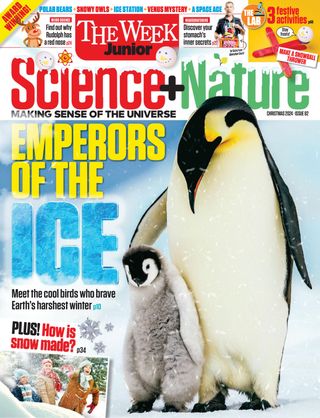

Diese Geschichte stammt aus der January 2025-Ausgabe von The Week Junior Science+Nature UK.
Abonnieren Sie Magzter GOLD, um auf Tausende kuratierter Premium-Geschichten und über 9.000 Zeitschriften und Zeitungen zuzugreifen.
Sie sind bereits Abonnent? Anmelden
WEITERE GESCHICHTEN VON The Week Junior Science+Nature UK

The Week Junior Science+Nature UK
Make a smoothie bowl
Use left-over fruit and veg to whip up this breakfast treat.

1 min
May 2026
The Week Junior Science+Nature UK
Indian snakes travel by train
King cobras - the world's longest venomous snakes - are slithering on board trains across India, researchers have revealed.
1 min
May 2026

The Week Junior Science+Nature UK
Carr House Meadows
The UK's wildflower meadows are often brimming with life, colour and sound. As these habitats are full of plant and animal species, they are very precious.
1 min
May 2026

The Week Junior Science+Nature UK
Did dragons ever exist?
These fire-breathing monsters have been flying into stories for centuries.
2 mins
May 2026

The Week Junior Science+Nature UK
Should big species return to the UK?
Would you be happy about large animals roaming our countryside - including predators?
1 mins
May 2026

The Week Junior Science+Nature UK
SAVING CORAL REEFS
Find out how scientists, conservationists and imaging experts are joining forces to discover more about corals and bring reefs back to life.
1 mins
May 2026
The Week Junior Science+Nature UK
THE SECRET LIFE OF BEES
Step into a miniature world that quite literally buzzes with life.
1 min
May 2026
The Week Junior Science+Nature UK
Windermere Science Festival
On 9 and 10 May, Windermere Science Festival returns to Windermere Jetty Museum. Get ready for science-themed family fun, including roving robots and awesome virtual reality.
1 min
May 2026

The Week Junior Science+Nature UK
Aneeshwar Kunchala
Hear from a young TV star about his new series and his ambition to save wildlife.
3 mins
May 2026

The Week Junior Science+Nature UK
WORLD'S OLDEST COCKATIEL
Sonny, a family pet living in the US state of Illinois, has been officially recognised as the oldest of his species.
1 min
May 2026
Listen
Translate
Change font size