
Mit Magzter GOLD unbegrenztes Potenzial nutzen
Erhalten Sie unbegrenzten Zugriff auf über 9.000 Zeitschriften, Zeitungen und Premium-Artikel für nur
Versuchen GOLD - Frei
Should musicians stop touring?
The Week Junior Science+Nature UK
|Issue 80
Multiple concerts travelling around the world have a big impact on the environment.
-

Taylor Swift's Eras tour has been record-breaking. Not only is it the highest-grossing music tour ever, earning over £760 million, but fans in Seattle, in the US, produced a "Swiftquake" - a ground-shaking tremor that was the same strength as a 2.3 magnitude earthquake while dancing to the song Shake it Off. However, the tour has also set records for its environmental impact.
US electricity company Payless Power estimates that for travel alone, Eras has used up as much energy as 67 homes consume in an entire year. Given the threat of climate change (the long-term change in world weather patterns), should musicians stop touring?
Tour travel
Bands and singers tend to travel by private jet, because venues are often thousands of miles apart. In the UK, music tours generate 85,000 tonnes of greenhouse gas emissions every year. Greenhouse gases, such as carbon dioxide (CO2), are a major cause of climate change, because they trap heat in the atmosphere and make the planet hotter. For the Eras tour, Taylor Swift is estimated to have flown 27,000 miles, producing 511 tonnes of CO₂- the same as charging 33,744,692 smartphones. Not only do the artists have to travel, but their equipment does, too. For Beyoncé's Renaissance tour, over 160 vehicles were needed to move the stage between cities.
Singalong at home

Diese Geschichte stammt aus der Issue 80-Ausgabe von The Week Junior Science+Nature UK.
Abonnieren Sie Magzter GOLD, um auf Tausende kuratierter Premium-Geschichten und über 9.000 Zeitschriften und Zeitungen zuzugreifen.
Sie sind bereits Abonnent? Anmelden
WEITERE GESCHICHTEN VON The Week Junior Science+Nature UK
The Week Junior Science+Nature UK
ANIMAL ISLANDS
Hop aboard as Daisy Dobrijevic sets sail to discover the world's most unusual beasts.

5 mins
March 2026
The Week Junior Science+Nature UK
Wildlife watch
Take a walk on the wild side with Jenny Ackland.
1 mins
March 2026

The Week Junior Science+Nature UK
Pushmeet Kohli
Meet the tech genius who trains the smart computers that are changing your world.
3 mins
March 2026
The Week Junior Science+Nature UK
New map reveals secrets hidden under Antarctic ice
A new map of Antarctica has A revealed thousands of hills Are revealed thousands of hills and valleys buried under its thick layers of ice.
1 min
March 2026
The Week Junior Science+Nature UK
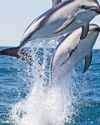
Why do dolphins jump out of the water?
Discover what makes these graceful ocean mammals leap for joy.
2 mins
March 2026
The Week Junior Science+Nature UK
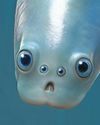
Ancient fish had four eves
Ancient vertebrates (animals that have backbones) had four eyes that worked a lot like ours, new research shows.
1 min
March 2026
The Week Junior Science+Nature UK
How? What? Why?
Set your curiosity free as Mike Rampton explains how asking questions changes the world.
5 mins
March 2026

The Week Junior Science+Nature UK
Bye-bye bitter grapefruits
Scientists have found a way to make grapefruits less bitter.
1 min
March 2026
The Week Junior Science+Nature UK
Spreading seeds of hope
Meet the scientists who are using drones to seed lost landscapes.
1 mins
March 2026
The Week Junior Science+Nature UK
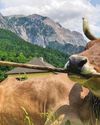
Udderly brilliant cow seen using tools
A talented Austrian cow has shecked researchers by using both ends of a broom as a grooming tool.
1 min
March 2026
Listen
Translate
Change font size