Versuchen GOLD - Frei
HEADSCRATCHERS
The Week Junior Science+Nature UK
|September 2025
Our expert, Darren Naish, has the answers to all of your dinosaur questions.
-
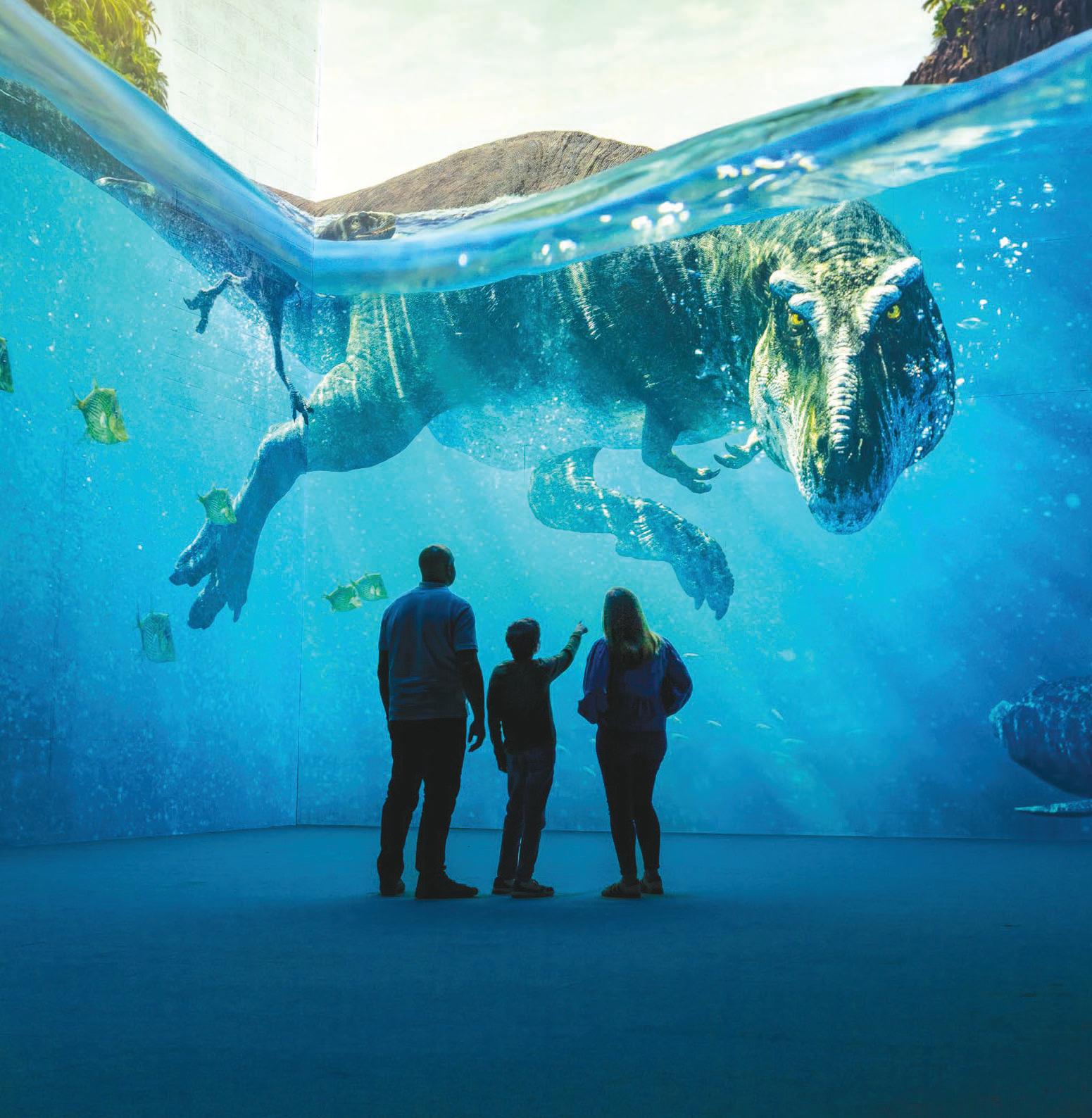
Hi, I'm Darren. I am a dinosaur expert and I also study marine reptiles and flying reptiles that were around at the same time. I worked closely with the Prehistoric Planet: Discovering Dinosaurs team to make sure the film was completely accurate and up-to-date. Go to lightroom.uk to find out more.
How do we know that T. rex could swim? Tilly
All modern animals, essentially, can swim, and the animals most similar to tyrannosaurs in basic body shape - that's big birds like emus and ostriches - are good at it. For those simple reasons alone, we fully expect dinosaurs like Tyrannosaurus rex to be competent swimmers.
A few details from the fossil record provide direct evidence of swimming for dinosaurs such as T. rex. We actually have preserved "swim traces" - scratches made on riverbeds and lake floors by the clawed toes of predator dinosaurs - that preserve direct evidence for this behaviour. Because we can work out how heavy

Diese Geschichte stammt aus der September 2025-Ausgabe von The Week Junior Science+Nature UK.
Abonnieren Sie Magzter GOLD, um auf Tausende kuratierter Premium-Geschichten und über 9.000 Zeitschriften und Zeitungen zuzugreifen.
Sie sind bereits Abonnent? Anmelden
WEITERE GESCHICHTEN VON The Week Junior Science+Nature UK

The Week Junior Science+Nature UK
Make a smoothie bowl
Use left-over fruit and veg to whip up this breakfast treat.

1 min
May 2026
The Week Junior Science+Nature UK
Indian snakes travel by train
King cobras - the world's longest venomous snakes - are slithering on board trains across India, researchers have revealed.
1 min
May 2026

The Week Junior Science+Nature UK
Carr House Meadows
The UK's wildflower meadows are often brimming with life, colour and sound. As these habitats are full of plant and animal species, they are very precious.
1 min
May 2026
The Week Junior Science+Nature UK
Did dragons ever exist?
These fire-breathing monsters have been flying into stories for centuries.
2 mins
May 2026

The Week Junior Science+Nature UK
Should big species return to the UK?
Would you be happy about large animals roaming our countryside - including predators?
1 mins
May 2026

The Week Junior Science+Nature UK
SAVING CORAL REEFS
Find out how scientists, conservationists and imaging experts are joining forces to discover more about corals and bring reefs back to life.
1 mins
May 2026
The Week Junior Science+Nature UK
THE SECRET LIFE OF BEES
Step into a miniature world that quite literally buzzes with life.
1 min
May 2026
The Week Junior Science+Nature UK
Windermere Science Festival
On 9 and 10 May, Windermere Science Festival returns to Windermere Jetty Museum. Get ready for science-themed family fun, including roving robots and awesome virtual reality.
1 min
May 2026

The Week Junior Science+Nature UK
Aneeshwar Kunchala
Hear from a young TV star about his new series and his ambition to save wildlife.
3 mins
May 2026

The Week Junior Science+Nature UK
WORLD'S OLDEST COCKATIEL
Sonny, a family pet living in the US state of Illinois, has been officially recognised as the oldest of his species.
1 min
May 2026
Listen
Translate
Change font size