Versuchen GOLD - Frei
Could you dig all the way through the planet?
The Week Junior Science+Nature UK
|June 2025
Learn the science behind digging a giant hole.
-
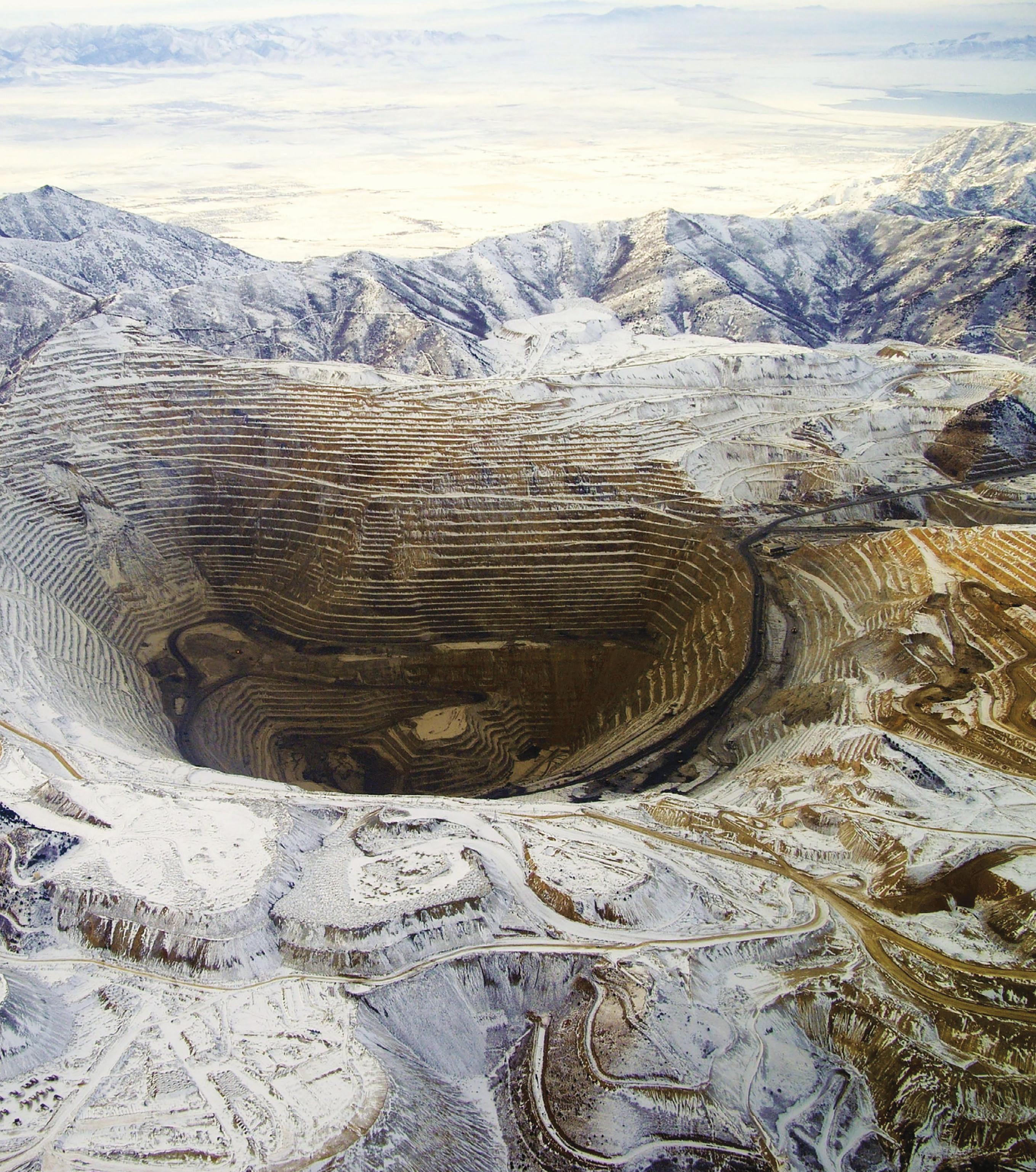
Have you ever dug a hole in your garden or at the beach? Adults love joking that if you keep digging, you'll end up in Australia. In fact, if you tunnelled straight through the middle of the planet, from anywhere in the British Isles, you'd end up in the ocean south of New Zealand.
Inside the planet
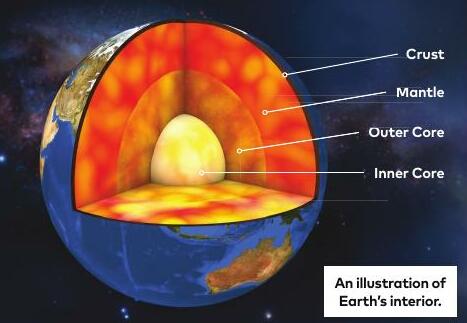
However, with just a garden spade it's unlikely that you would get much further than one metre below the surface, where you often hit rock. Earth has three main layers. The outer skin, called the crust, is a layer of light rock. Its thickness compared to the planet's diameter (the distance from one side of a circle or sphere to the other, passing through the centre) is similar to how thick an apple's skin is compared to its diameter. When you dig holes, you are basically making tiny scratches at the very top of this apple skin.
The mantle, which lies beneath the crust, is much thicker, like the flesh of the apple. It's made of strong, heavy rock that flows a few inches per year as hotter rock rises away from the centre and cooler rock sinks toward it. The core, at Earth's centre, is made of very hot metal, in both solid and liquid forms. Temperatures here are between 2,500°C and 5,200°C.

Diese Geschichte stammt aus der June 2025-Ausgabe von The Week Junior Science+Nature UK.
Abonnieren Sie Magzter GOLD, um auf Tausende kuratierter Premium-Geschichten und über 9.000 Zeitschriften und Zeitungen zuzugreifen.
Sie sind bereits Abonnent? Anmelden
WEITERE GESCHICHTEN VON The Week Junior Science+Nature UK

The Week Junior Science+Nature UK
Make a smoothie bowl
Use left-over fruit and veg to whip up this breakfast treat.

1 min
May 2026
The Week Junior Science+Nature UK
Indian snakes travel by train
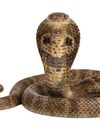
King cobras - the world's longest venomous snakes - are slithering on board trains across India, researchers have revealed.
1 min
May 2026
The Week Junior Science+Nature UK
Carr House Meadows
The UK's wildflower meadows are often brimming with life, colour and sound. As these habitats are full of plant and animal species, they are very precious.
1 min
May 2026
The Week Junior Science+Nature UK
Did dragons ever exist?
These fire-breathing monsters have been flying into stories for centuries.
2 mins
May 2026

The Week Junior Science+Nature UK
Should big species return to the UK?
Would you be happy about large animals roaming our countryside - including predators?
1 mins
May 2026

The Week Junior Science+Nature UK
SAVING CORAL REEFS
Find out how scientists, conservationists and imaging experts are joining forces to discover more about corals and bring reefs back to life.
1 mins
May 2026
The Week Junior Science+Nature UK
THE SECRET LIFE OF BEES
Step into a miniature world that quite literally buzzes with life.
1 min
May 2026
The Week Junior Science+Nature UK
Windermere Science Festival
On 9 and 10 May, Windermere Science Festival returns to Windermere Jetty Museum. Get ready for science-themed family fun, including roving robots and awesome virtual reality.
1 min
May 2026

The Week Junior Science+Nature UK
Aneeshwar Kunchala
Hear from a young TV star about his new series and his ambition to save wildlife.
3 mins
May 2026

The Week Junior Science+Nature UK
WORLD'S OLDEST COCKATIEL
Sonny, a family pet living in the US state of Illinois, has been officially recognised as the oldest of his species.
1 min
May 2026
Listen
Translate
Change font size