Versuchen GOLD - Frei
THE TRUTH ABOUT TESTOSTERONE
Scientific American
|July/August 2025
Men are spending a lot of money on hormone supplements to boost manliness, muscles and mood. But many are not aware of some serious risks
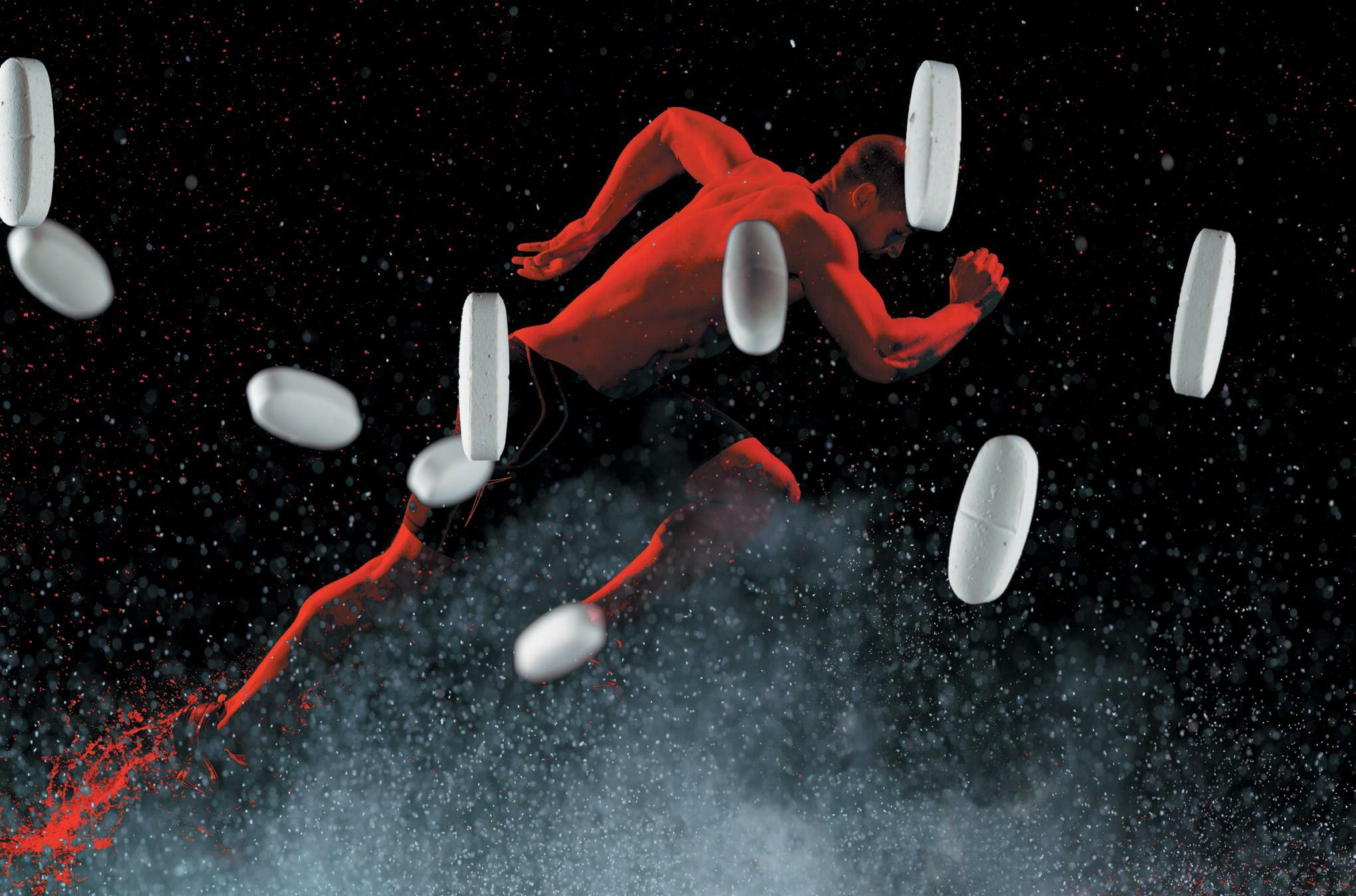
ROB, 42, IS A FITNESS GUY. He loves working out, spends his spare time in the jujitsu gym and eats a high-protein diet heavy on avocado oil. He cares about his health and wants to optimize it, and a lot of the social media influencers he follows are the same.
So a few years back, when Rob started seeing ads for testosterone replacement therapy-TRT-pop up in his feeds, he was intrigued. (Names of patients in this story have been changed to protect their privacy.) Rob was already a man in good shape. But testosterone sounded like a great way to get an extra edge.
"I bought into what I was listening to on social media, which is, 'You're going to feel better, you're going to get stronger, and you're going to look better,"" he says.
Rob went to a local, privately owned clinic. There he got a blood test, which revealed that his testosterone was well within normal range. "I certainly didn't need TRT," he says.
The clinic prescribed it anyway.
Rahim, 48, tells a similar story. He walked into a men's health clinic a decade ago looking for an energy and fitness boost.
He got an injection that very day. On subsequent visits the clinic pushed his dose higher and higher, but he perceived little benefit. "I just felt like I was taken advantage of," he says now. "I felt like somebody was using my body to make money." Testosterone therapy-prescription supplements in the form of pills, patches, injections or implantable pellets-has probably never been more publicized or popular. Podcaster Joe Rogan is on it. On Reddit and on TikTok, on highway billboards and in TV commercials, you'll see testimonials in praise of TRT promising mood boosts, better sex, extra energy and quite possibly an abdominal six-pack. The global market has been estimated at $1.9 billion.

Diese Geschichte stammt aus der July/August 2025-Ausgabe von Scientific American.
Abonnieren Sie Magzter GOLD, um auf Tausende kuratierter Premium-Geschichten und über 9.000 Zeitschriften und Zeitungen zuzugreifen.
Sie sind bereits Abonnent? Anmelden
WEITERE GESCHICHTEN VON Scientific American

Scientific American
Probiotic Hope and Hype
Despite their popularity, supplements with billions of \"good\" microbes help only a few illnesses, research shows

3 mins
January 2026

Scientific American
Mondays Really Are More Stressful
The start of the workweek can be a biologically measurable stressor, with consequences for long-term health that can stretch into retirement
4 mins
January 2026

Scientific American
Tiny Display
An e-paper breakthrough brings extremely high-resolution color
2 mins
January 2026

Scientific American
Fine-Feathered Snack
A bat's tracker documents a dramatic midair hunt
2 mins
January 2026

Scientific American
OUR ROBOTIC PICTURE
Will mechanical helpers ever be commonplace at home, at work and beyond?
11 mins
January 2026

Scientific American
"Use Your Words" Can Be Good for Kids' Health
Writing or expressing feelings can help adults mentally and physically. Kids are no different
5 mins
January 2026

Scientific American
Distant Diplomacy
Unrelated species “talk” and understand one another to avoid threats
2 mins
January 2026

Scientific American
Behind the Nobel
A 2025 winner reflects on the mysterious T cells that won him the prize
5 mins
January 2026

Scientific American
A Suite of Killers
Heart ailments, kidney diseases and type 2 diabetes actually may be part of just one condition. It's called CKM syndrome
10 mins
January 2026

Scientific American
Static Launch
Tiny worms leap toward their fruit fly hosts with an electric “tractor beam”
3 mins
January 2026
Listen
Translate
Change font size