Versuchen GOLD - Frei
My Childhood in Science
Scientific American
|July/August 2026
The story of the author's extremely early career
In late 1957, around my ninth birthday, the Soviet Union launched the world's first artificial satellite, called Sputnik. I became entranced with the idea of building a rocket of my own. I imagined the lift-off, the graceful arc of the craft as it careened through space. By the age of 13 or 14 I had started mixing my own rocket fuels. A fuel that burned too fast would explode like a bomb; a fuel that burned too slow would smolder like a barbecue grill. I settled on a particular mixture of sulfur, charcoal and potassium nitrate. The body of the rocket, I built out of an aluminum tube. For the ignition system, I used the flashbulb of a Kodak Brownie camera embedded within the fuel chamber. The launching pad, I made out of a Coca-Cola crate filled with concrete, anchoring it with a V-shaped steel girder tilted skyward at 45 degrees.
Somehow I had got it into my head that I needed a passenger. So I built a capsule, to be housed in the upper fuselage of the rocket, and recruited a lizard to ride in it as my astronaut. I constructed a parachute out of silk handkerchiefs and carefully wrapped it around the capsule. A small gunpowder charge-ignited by a mercury switch, a AAA battery and a high-resistance wire-would eject the capsule at the highest point of the trajectory.

Diese Geschichte stammt aus der July/August 2026-Ausgabe von Scientific American.
Abonnieren Sie Magzter GOLD, um auf Tausende kuratierter Premium-Geschichten und über 9.000 Zeitschriften und Zeitungen zuzugreifen.
Sie sind bereits Abonnent? Anmelden
WEITERE GESCHICHTEN VON Scientific American
Scientific American
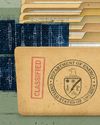
Let There Be Weapons
The Department of Energy’s new Genesis Mission promises AI-accelerated discovery. Seven of its first 26 challenges focus on nuclear weapons and national security

4 mins
July/August 2026
Scientific American
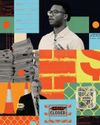
How to Fix Science
The federal funding system for scientific research in the U.S. needs reform
9 mins
July/August 2026

Scientific American
Robots Can Now Fold Your Laundry
Home-helper tasks are becoming easier for robotic assistants
4 mins
July/August 2026
Scientific American
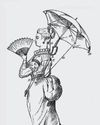
50, 100 & 150 Years
NATURAL FISSION REACTOR
3 mins
July/August 2026

Scientific American
Anna Ho
Describing the characteristics of short-lived astrophysical events
1 mins
July/August 2026
Scientific American
THE SOLILOQUY OF SCHRÖDINGER'S CAT
A MEDITATION ON LIFE AND THE VON NEUMANN–WIGNER INTERPRETATION OF QUANTUM MECHANICS
1 min
July/August 2026

Scientific American
Mikhail Kolmogorov
Developing software to reveal large genetic changes that lead to cancer
1 mins
July/August 2026

Scientific American
Jaye Gardiner
Learning how the matrix around cells and tissues impacts cancers
1 mins
July/August 2026

Scientific American
Timnit Gebru
On safeguarding independent research in the age of big tech
3 mins
July/August 2026
Scientific American
A Youthful Illusion Sharpens Memory
By making people feel as if their face is a younger version of itself, researchers can bring childhood memories into sharper focus
4 mins
July/August 2026
Listen
Translate
Change font size