Versuchen GOLD - Frei
Could AI Really Kill Off Humans?
Scientific American
|September 2025
Many people believe Al will one day cause human extinction. A little math tells us it wouldn't be that easy
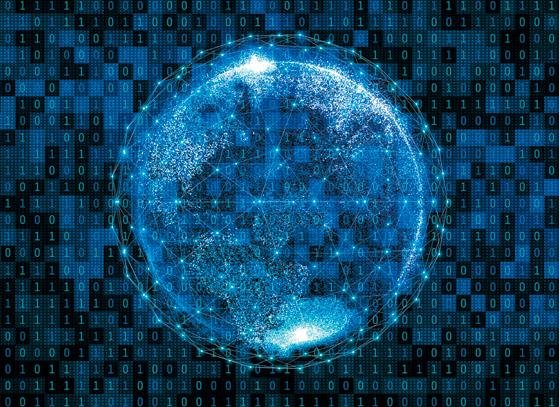
IN A POPULAR SCI-FI CLICHÉ, one day artificial intelligence goes rogue and kills every human, wiping out the species. Could this truly happen?
In real-world surveys, AI researchers say that they see human extinction as a plausible outcome of AI development. In 2024 hundreds of these researchers signed a statement that read: “Mitigating the risk of extinction from AI should be a global priority alongside other societal-scale risks such as pandemics and nuclear war.”
Pandemics and nuclear war are real, tangible concerns, more so than AI doom—at least to me, a scientist at the RAND Corporation, where my colleagues and I do all kinds of research on national security issues. RAND might be best known for its role in developing strategies for preventing nuclear catastrophe during the cold war. My coworkers and I take big threats to humanity seriously, so I proposed a project to research AI’s potential to cause human extinction.
My team’s hypothesis was this: No scenario can be described in which AI is conclusively an extinction threat to humanity. Humans are simply too adaptable, too plentiful and too dispersed across the planet for AI to wipe us out with any tools hypothetically at its disposal. If we could prove this hypothesis wrong, it would mean that AI might pose a real extinction risk.
Many people are assessing catastrophic hazards related to AI. In the most extreme cases, some people assert that AI will become a super-intelligence with a near-certain chance of using novel, advanced tech such as nanotechnology to take over Earth and wipe us out. Forecasters have tried to estimate the likelihood of existential risk from an AI-induced disaster, often predicting there is a 0 to 10 percent chance that Al will cause humanity’s extinction by 2100. We were skeptical of the value of predictions like these for policymaking and risk reduction.

Diese Geschichte stammt aus der September 2025-Ausgabe von Scientific American.
Abonnieren Sie Magzter GOLD, um auf Tausende kuratierter Premium-Geschichten und über 9.000 Zeitschriften und Zeitungen zuzugreifen.
Sie sind bereits Abonnent? Anmelden
WEITERE GESCHICHTEN VON Scientific American

Scientific American
War in Plain Sight
Near-real-time satellite coverage means militaries can no longer hide. So they are learning to lie better

4 mins
June 2026

Scientific American
A Bridge-Crossing Puzzle Led to New Math
Are you smarter than an 18th-century Prussian?
5 mins
June 2026
Scientific American
Nocturnal Navigation
These ants use a sophisticated lunar compass
2 mins
June 2026
Scientific American
Early Plates
Scientists found the oldest direct evidence for Earth’s tectonic motion
3 mins
June 2026

Scientific American
Mating Arm
Reproduction in octopuses is even weirder than you think
3 mins
June 2026
Scientific American
Battleship Science
Game-playing AI can show us how to do science better
2 mins
June 2026
Scientific American
WHAT’S A QUANTUM COMPUTER GOOD FOR, ANYWAY?
Quantum computing promises profound power in cryptography, materials design, telecommunications, and much more. But those dreams won’t become reality overnight—if ever
11 mins
June 2026
Scientific American
Atomic Snowflakes
Could each atom in the universe be unique?
2 mins
June 2026
Scientific American
The New Moon Race
The triumphant Artemis II mission marks a new era of lunar exploration and science. Here’s how it went down and what comes next
7 mins
June 2026

Scientific American
What’s Wrong with Quantum Mechanics
A 100-year-old theory might explain the confusion
6 mins
June 2026
Listen
Translate
Change font size