
Mit Magzter GOLD unbegrenztes Potenzial nutzen
Erhalten Sie unbegrenzten Zugriff auf über 9.000 Zeitschriften, Zeitungen und Premium-Artikel für nur
Babies' Brains Make Memories
Scientific American
|November 2025
Brain scans capture memory formation in infants, raising new questions about why people forget their earliest years
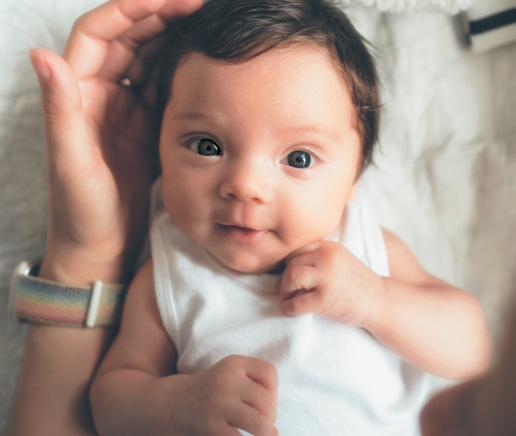
A PLUME OF RED, a searing pain and the sounds of summer—these are fragments of my earliest memory, of when I stepped on a glass shard in a Toronto splash park at six or seven years old. I don't remember much from that day, but a scar on my foot bears witness to what happened.
When you ask adults about their first memory of a specific event from their childhood, their answer is typically about something that happened no earlier than preschool. This is true whether you ask a college student or a grandparent, suggesting that adults’ lack of infant or toddler memories is not just the result of normal forgetting that occurs with the passage of time. The lack of autobiographical memory from when you were a baby is known as infantile amnesia.
There are two potential explanations for this phenomenon. One is that infants cannot store memories. The slow development of the hippocampus, a seahorse-shaped region deep in the brain, may be responsible. This region, which is critical for memory, grows and changes throughout childhood, so it might not be available to infants. In this scenario, babies are not so different from people with famous cases of amnesia, such as Henry Molaison and Lonni Sue Johnson, both of whom suffered hippocampal damage in adulthood that made them unable to store memories.
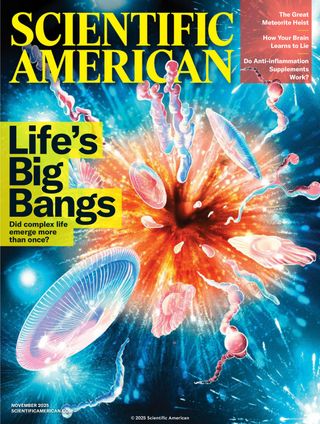

Diese Geschichte stammt aus der November 2025-Ausgabe von Scientific American.
Abonnieren Sie Magzter GOLD, um auf Tausende kuratierter Premium-Geschichten und über 9.000 Zeitschriften und Zeitungen zuzugreifen.
Sie sind bereits Abonnent? Anmelden
WEITERE GESCHICHTEN VON Scientific American

Scientific American
Probiotic Hope and Hype
Despite their popularity, supplements with billions of \"good\" microbes help only a few illnesses, research shows

3 mins
January 2026
Scientific American
Mondays Really Are More Stressful
The start of the workweek can be a biologically measurable stressor, with consequences for long-term health that can stretch into retirement
4 mins
January 2026
Scientific American
Tiny Display
An e-paper breakthrough brings extremely high-resolution color
2 mins
January 2026
Scientific American
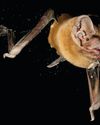
Fine-Feathered Snack
A bat's tracker documents a dramatic midair hunt
2 mins
January 2026

Scientific American
OUR ROBOTIC PICTURE
Will mechanical helpers ever be commonplace at home, at work and beyond?
11 mins
January 2026
Scientific American
"Use Your Words" Can Be Good for Kids' Health
Writing or expressing feelings can help adults mentally and physically. Kids are no different
5 mins
January 2026
Scientific American
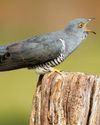
Distant Diplomacy
Unrelated species “talk” and understand one another to avoid threats
2 mins
January 2026
Scientific American
Behind the Nobel
A 2025 winner reflects on the mysterious T cells that won him the prize
5 mins
January 2026

Scientific American
A Suite of Killers
Heart ailments, kidney diseases and type 2 diabetes actually may be part of just one condition. It's called CKM syndrome
10 mins
January 2026
Scientific American
Static Launch
Tiny worms leap toward their fruit fly hosts with an electric “tractor beam”
3 mins
January 2026
Listen
Translate
Change font size