
Mit Magzter GOLD unbegrenztes Potenzial nutzen
Erhalten Sie unbegrenzten Zugriff auf über 9.000 Zeitschriften, Zeitungen und Premium-Artikel für nur
Versuchen GOLD - Frei
TECH AHEAD OF ITS TIME
How It Works UK
|Issue 204
Some of today's technology goes back much further than you'd imagine
Much of the technology we take for granted today seems like it must have been a fairly recent invention. Science and technology progress rapidly, after all. It's only been 36 years since Tim Berners-Lee first proposed the World Wide Web, and already life without it is unimaginable. But scratch beneath the surface and you'll find that there are plenty of seemingly modern creations that reared their heads many years ago — albeit in less successful forms. Sometimes, it appears, a piece of technology comes along before consumers are ready for it. Here are a few of the surprising forerunners of the technology many of us use every day...
FIRST WIRELESS PHONE
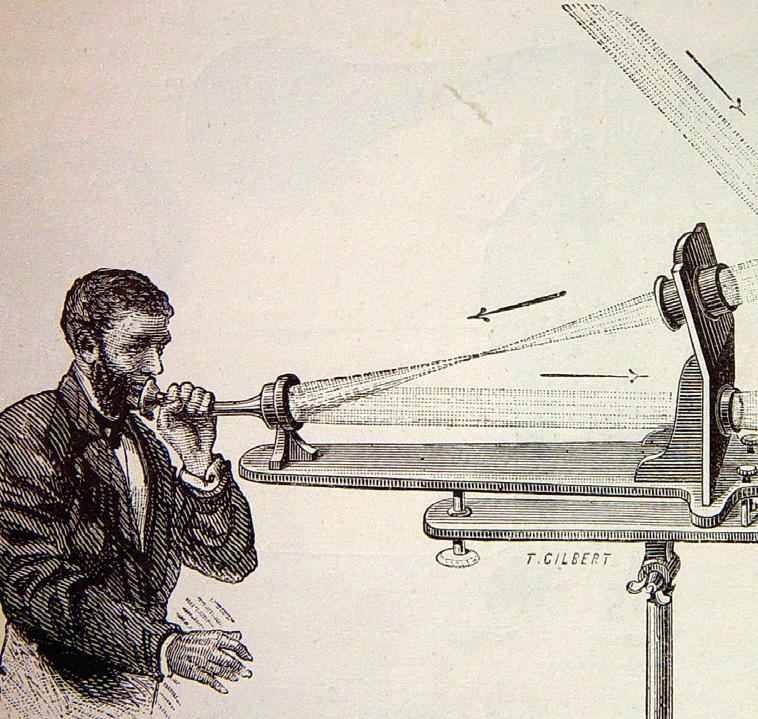
Not content with creating the telephone in 1876, Scottish inventor Alexander Graham Bell followed up his seminal invention in 1880 with a wireless version, the ‘photophone’. This used a beam of light to transmit speech, rather than the microwaves used by the mobile phones of today. The speaker’s voice was projected against a flexible mirror. The sound waves caused the mirror to alternate between being convex and concave, scattering the light. The receiver had a selenium cell that converted the light hitting it back into sound waves. Though the device could broadcast over distances of up to 213 metres, it was prone to interference.

Diese Geschichte stammt aus der Issue 204-Ausgabe von How It Works UK.
Abonnieren Sie Magzter GOLD, um auf Tausende kuratierter Premium-Geschichten und über 9.000 Zeitschriften und Zeitungen zuzugreifen.
Sie sind bereits Abonnent? Anmelden
WEITERE GESCHICHTEN VON How It Works UK
How It Works UK
SPACE MINING UNCOVERED
Asteroids rich in rare elements could be harvested for their valuable contents, but the real worth may be in using them as interplanetary fuel stations

2 mins
Issue 211

How It Works UK
WHY THINGS ROT
How dead plants and animals decay, and how living organisms rely on this natural process to survive
3 mins
Issue 211

How It Works UK
BOOZE, BEANS AND YOUR BODY
Caffeine and alcohol are two of the world's most common drugs. But what effects does drinking them have on our brains and bodies?
5 mins
Issue 211
How It Works UK
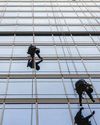
HOW TO CLEAN A SKYSCRAPER WINDOW
Discover how skilled window cleaners with nerves of steel tackle these towering glass facades
2 mins
Issue 211
How It Works UK
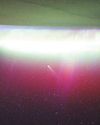
ASTRONAUTS SEE COMET LEMMON 'ABSORBED' BY AURORAE
For skywatchers, scientists and even the astronauts on the International Space Station (ISS), the skies have been active. The Sun has released its largest eruptions of 2025, sparking a series of aurorae that have reached as far south as Mexico. While astronauts on the ISS had to take shelter during the recent solar storms to avoid potentially dangerous radiation, they did manage to capture this image of Comet Lemmon appearing near the aurorae on Earth.
1 min
Issue 211
How It Works UK
HOW TO MAKE MAPLE SYRUP
Your favourite pancake topping is much more than just a sugary treat made in a factory
1 mins
Issue 211
How It Works UK
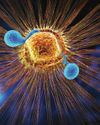
A high-fibre diet may ‘rejuvenate' immune cells that fight cancer
Microbes in the gut can help the immune system fight cancer, and a fibre-rich diet may be the key to unlocking those benefits, a study in mice suggests. The immune system is a key player in the body’s battle against cancer. On the front line of this resistance are CD8+ killer T cells, a type of immune cell that marauds around tumours and then exterminates the cancerous cells. But after each successive battle, these cells become worn out and don’t find tumours as effectively. As such, treatments that provide the cells with enough pep to finish their job are in high demand.
2 mins
Issue 211
How It Works UK
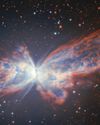
SEE THE BUTTERFLY NEBULA LIKE NEVER BEFORE
On 26 November 2025, the Gemini South telescope turned 25, and astronomers celebrated its birthday with a dazzling new image of the Butterfly Nebula.
1 min
Issue 211
How It Works UK
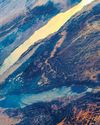
The Gulf of Suez is pulling apart
The Gulf of Suez, which partially divides Africa and Asia, may still be widening 5 million years after we thought it had stopped.
2 mins
Issue 211

How It Works UK
REMOTE ABILITIES
Infrared remotes are cheaper and more power-efficient than Bluetooth alternatives
1 mins
Issue 211
Listen
Translate
Change font size