
Mit Magzter GOLD unbegrenztes Potenzial nutzen
Erhalten Sie unbegrenzten Zugriff auf über 9.000 Zeitschriften, Zeitungen und Premium-Artikel für nur
Versuchen GOLD - Frei
ANIMALS ON THE BRINK
How It Works UK
|Issue 190
Meet some of the most critically endangered animals from around the world and discover why they're on the brink of extinction

At present, there are more than 44,000 species around the world that are facing the possibility of extinction. Keeping a watchful eye over them is the International Union for Conservation of Nature (IUCN), composed of governments and civil society organisations. Since 1964, the IUCN has compiled the Red List of Threatened Species, a comprehensive guide to the state of nature and the likelihood of plant and animal extinction. From ‘least concern’ to ‘extinct’, each species that’s assessed by the IUCN is placed on the scale to indicate their conservation status.
For example, to be categorised as ‘critically endangered’ a species needs to meet specific conditions, such as fewer than 250 mature individuals, a population reduction of 70 per cent or more in the past ten years or a population that continues to decline by 25 per cent or more over three years. This informative tool not only lists species’ status in the world, but also acts as a reference for many different agencies and organisations to enact policy changes and protections in the hopes of protecting wildlife.
The IUCN list is filled with 157,100 species, of which 28 per cent are ‘threatened with extinction’. The IUCN aims to assess a further 160,000 species and transform the IUCN Red List into a ‘barometer of life’. Here are just some of the many critically endangered animals that are facing extinction.
DUSKY GOPHER FROG (RANA SEVOSA)
Population: Around 500
Threats: Habitat loss
Location:


Diese Geschichte stammt aus der Issue 190-Ausgabe von How It Works UK.
Abonnieren Sie Magzter GOLD, um auf Tausende kuratierter Premium-Geschichten und über 9.000 Zeitschriften und Zeitungen zuzugreifen.
Sie sind bereits Abonnent? Anmelden
WEITERE GESCHICHTEN VON How It Works UK
How It Works UK
WHY ANIMALS PLAY DEAD
These species have mastered faking their own deaths for several different reasons

1 min
Issue 214
How It Works UK
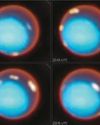
THE JAMES WEBB SPACE TELESCOPE MAPS 3D AURORAE ON URANUS
An international team of researchers has uncovered new insights into the upper atmosphere of Uranus, where ions swirling above the ice giant's clouds meet its magnetic field.
1 min
Issue 214
How It Works UK
LASERS BEAM 'ARTIFICIAL STARS' INTO CHILE'S SKIES
The European Southern Observatory has released a breathtaking photo of the Milky Way shining over Paranal Observatory in Chile as lasers create artificial 'guide stars' in the dark sky above.
1 min
Issue 214

How It Works UK
WHISKERS AT WORK
How long hairs on a cat's face fine-tune their senses
2 mins
Issue 214

How It Works UK
HOW AI IMPROVES CAR SAFETY
The vehicle technology that saves lives today - and the innovations that will soon make the roads safer for everyone
4 mins
Issue 214

How It Works UK
APOLLO 17: THE LAST CREWED MOON LANDING
It's been over 50 years since the final Apollo mission, so why haven't we put astronauts on the Moon since then?
4 mins
Issue 214
How It Works UK
WHAT IS LIMESCALE?
Why 'hard' water leaves chalky, flaky deposits wherever it settles
2 mins
Issue 214
How It Works UK
Astronauts describe the moment a crack was discovered on their spacecraft
Chinese astronauts have described what happened when they were nearly stranded in space last year after a suspected piece of space junk struck their return capsule.
2 mins
Issue 214
How It Works UK
The Vera C. Rubin Observatory found 800,000 objects of interest in a single night
The newly commissioned Vera C. Rubin Observatory has issued 800,000 astronomy alerts in just one night, a staggering number of nightly discoveries that's expected to grow nearly tenfold by the end of this year.
2 mins
Issue 214
How It Works UK
RETURN TO THE MOON
Project Artemis is accelerating its push to put humans back on Earth's orbital dancing partner before the end of the decade
5 mins
Issue 214
Listen
Translate
Change font size