
Mit Magzter GOLD unbegrenztes Potenzial nutzen
Erhalten Sie unbegrenzten Zugriff auf über 9.000 Zeitschriften, Zeitungen und Premium-Artikel für nur
Versuchen GOLD - Frei
Urban trap
Down To Earth
|March 01, 2025
Fearing loss of autonomy and access to government schemes, several villages across India are protesting against the decision to change their status to town
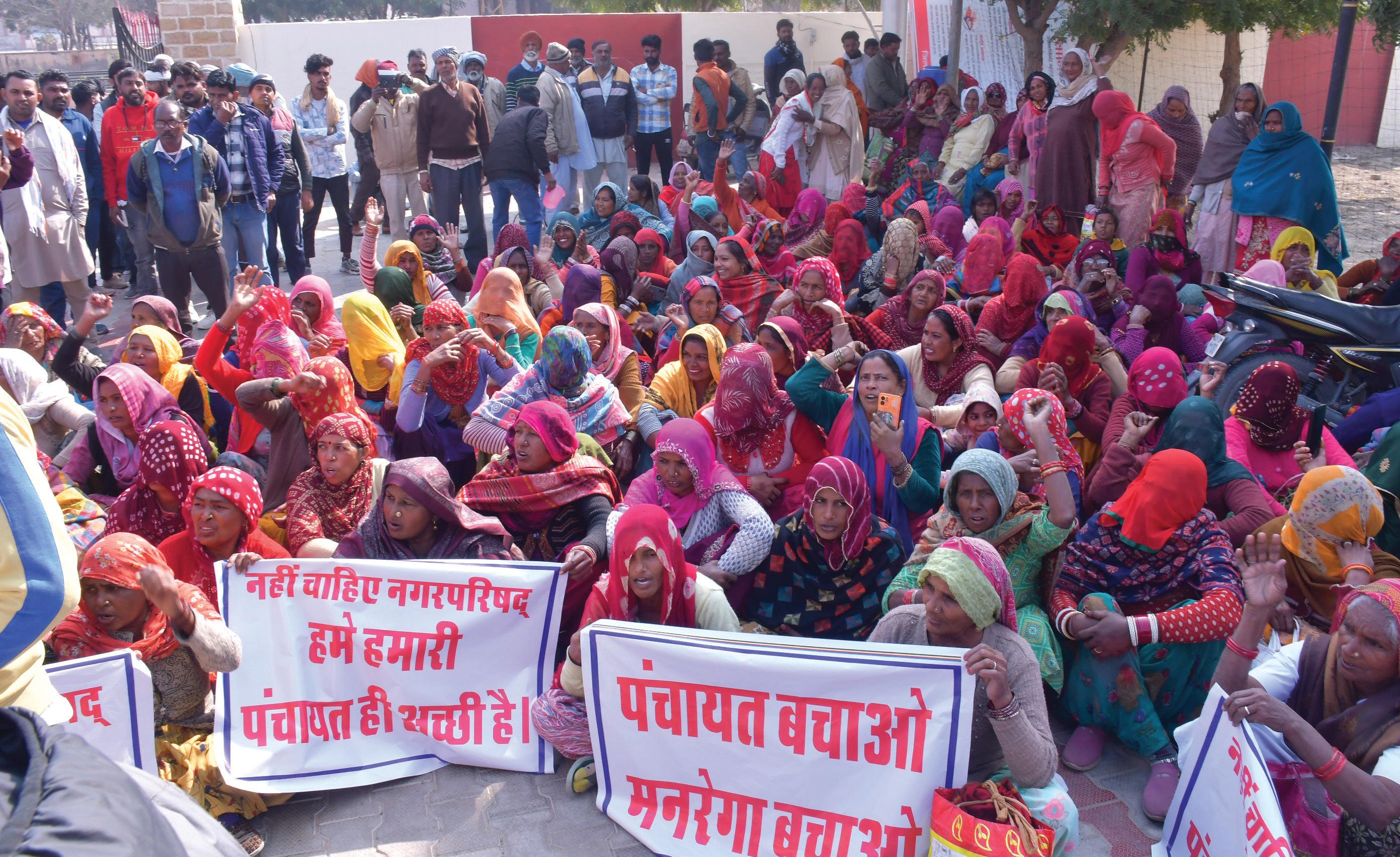
THE CROWD gathers every morning, banners in hand, their voices echoing through the streets of Hanumangarh in Rajasthan. Their demand is simple: restore their villages to the rural status they once held. The people of Satipura and 2 Knj, two of the six villages incorporated into the Hanumangarh municipal council on January 10, 2025, are protesting almost daily against the state government's circular. For them, becoming “urban” is not a privilege but a crisis.
“We do not know how we will survive anymore,” says Jasram, a resident of Satipura. He and his wife have worked as daily-wage labourers under the Mahatma Gandhi National Rural Employment Guarantee Act (MGNREGA) for 15 years. The scheme, which ensures 100 days of employment annually to rural households, has been their economic lifeline. But with the villages now designated as urban, MGNREGA will no longer apply, leaving over 3,100 families in the two villages without a guaranteed source of income. “Gram panchayats allocate significant funds to MGNREGA, making it the backbone of rural employment,” says Anshuman Karol, lead for governance and climate action at Delhi-based non-profit Participatory Research in Asia (PRIA). He says residents in villages sit for protest the moment they realise that they will no longer be beneficiaries to government schemes for rural areas. While Rajasthan is one of the few states in the country with an urban employment initiative—Mukhyamantri Shahri Rozgar Guarantee Yojana—it does not offer the same guarantee as MGNREGA.
“MGNREGA is a legal right, whereas the other is merely a scheme,” says Rajendran Narayanan, professor of economics at Azim Premji University in Bengaluru.
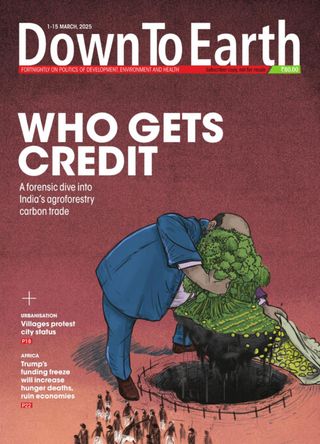

Diese Geschichte stammt aus der March 01, 2025-Ausgabe von Down To Earth.
Abonnieren Sie Magzter GOLD, um auf Tausende kuratierter Premium-Geschichten und über 9.000 Zeitschriften und Zeitungen zuzugreifen.
Sie sind bereits Abonnent? Anmelden
WEITERE GESCHICHTEN VON Down To Earth

Down To Earth
THINK TWICE BEFORE FELLING SAL TREES
Many trees considered to be affected by sal borer in the 1990s are still alive today

1 mins
February 16, 2026

Down To Earth
EDGE OF SURVIVAL
Caste divides deny marginalised communities land, resources and essential aid, leaving them more vulnerable to climate disasters
6 mins
February 16, 2026

Down To Earth
A WISH LIST?
Union Budget for 2026-27 conveys the impression of a roll-call of intentions and ambitious proposals, with little detail on their formulation
6 mins
February 16, 2026
Down To Earth
Break down the gender wall
THE RULING National Democratic Alliance (NDA) government has been heavily invested in the goal to make India a developed economy by 2047.
2 mins
February 16, 2026

Down To Earth
MENSTRUAL HEALTH, NOW A FUNDAMENTAL RIGHT
In a landmark judgement, the Supreme Court has recognised menstrual health and hygiene as a fundamental right under Article 21 of the Constitution of India, which guarantees the right to life and dignity.
8 mins
February 16, 2026

Down To Earth
Of devolution and new disasters
The 16th Finance Commission pushes for changes in view of new fiscal and climatic conditions
11 mins
February 16, 2026
Down To Earth
Rising risks of plastics
NEGATIVE IMPACTS on human health due to emissions linked to the plastic lifecycle could double by 2040, according to a study published in The Lancet Planetary Health in January.
1 min
February 16, 2026

Down To Earth
GAP BETWEEN EPIDEMICS NARROWING
A watershed-based and landscape-level approach is needed to address forest degradation
2 mins
February 16, 2026
Down To Earth
WAITING TO STRIKE
Sal heartwood borer is considered the biggest threat to forestry in India, especially to the sal tree, where it lives and breeds.
11 mins
February 16, 2026
Down To Earth
A SPRING DELIGHT
Mustard flowers are not meant only for the eyes. Invite them to your plate once in a while
3 mins
February 16, 2026
Listen
Translate
Change font size