Versuchen GOLD - Frei
‘SOCIAL STUDIES ARE NEEDED TO INCREASE THE SCOPE OF ATTRIBUTION?’
Down To Earth
|November 01, 2022
Researchers have established that the Pakistan deluge was made worse by global warming. But fixing responsibility of such events on historical polluters is not easy, KRISHNA ACHUTARAO, climate scientist at the Centre for Atmospheric Sciences, Indian Institute of Technology, Delhi, tells AKSHIT SANGOMLA. Excerpts:

What can attribution studies tell us about historical responsibility of countries?
In weather attribution studies we estimate how much of a particular extreme weather event was made worse by cumulative greenhouse gas emissions coming up to this point. So you compare the two scenarios-one with emissions and the other without. Then a fractional attribution is calculated which informs that a particular part of the event is due to human-made climate change.
So if it were just about who is emitting today, then it is easy to fix responsibility. But when you go back and say it is the cumulative of everything that has happened, then you start your accounting at some point, from where you say this is who has emitted the most and therefore, cumulatively their share is highest.
In the recent study on Pakistan floods, you analysed five-day and 60-day extreme rainfall events to say that the downpour in Sindh and Balochistan was 75 per cent more intense due to warming. How would you link this with historical emissions?

Diese Geschichte stammt aus der November 01, 2022-Ausgabe von Down To Earth.
Abonnieren Sie Magzter GOLD, um auf Tausende kuratierter Premium-Geschichten und über 9.000 Zeitschriften und Zeitungen zuzugreifen.
Sie sind bereits Abonnent? Anmelden
WEITERE GESCHICHTEN VON Down To Earth

Down To Earth
BEYOND COLLATERAL DAMAGE
Recent geopolitical conflicts are urging a reconsideration of what constitutes environmental harm in war and the limits of existing legal frameworks

3 mins
April 01, 2026
Down To Earth
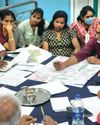
Masterstroke
Residents of a small Kerala town reject an inadequate state-led development blueprint and create their own master plan that prioritises protection of historic water systems and urban commons
4 mins
April 01, 2026

Down To Earth
Rethinking E20
It is pertinent to explore potential of ethanol as high-value industrial feedstock
4 mins
April 01, 2026
Down To Earth
Food in the age of climate change
WHEN WE eat, we contribute to climate change. But food is also about livelihoods, about nutrition and about nature.
3 mins
April 01, 2026

Down To Earth
FADING WINTER
India's winters are warming, becoming shorter, shifting and spilling beyond their traditional bounds. The consequences are already evident in meltwater availability, forest-fire intensity and changes in flowering cycles and insect behaviour.
20 mins
April 01, 2026

Down To Earth
War on Iran strikes India's pharmaceuticals sector
Shortages of critical raw materials and rising input costs for the drug industry will have global consequences
4 mins
April 01, 2026

Down To Earth
POWER IN AN AGE OF INSECURITY
Energy transition is no longer solely about emission reduction but also about energy security
3 mins
April 01, 2026
Down To Earth
Re-discovery of fuelwood
THE WEST Asia conflict has made visible a multi-billion dollar energy market in India.
2 mins
April 01, 2026

Down To Earth
A CASE THAT RESHAPED INDIA'S ENVIRONMENT
The case of MC Mehta v Union of India stands as proof that a proactive judiciary can accelerate action even when the executive drags its feet
4 mins
April 01, 2026
Down To Earth
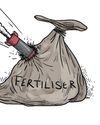
FOREVER DEPENDENT
India depends on global fertiliser supply chains for 70 per cent of its needs, leaving its food security exposed to geopolitical disruptions
6 mins
April 01, 2026
Translate
Change font size