
Mit Magzter GOLD unbegrenztes Potenzial nutzen
Erhalten Sie unbegrenzten Zugriff auf über 9.000 Zeitschriften, Zeitungen und Premium-Artikel für nur
Versuchen GOLD - Frei
Reluctant to share
Down To Earth
|June 16, 2025
Even three decades after panchayats received constitutional status, states across India seem unwilling to share power with them
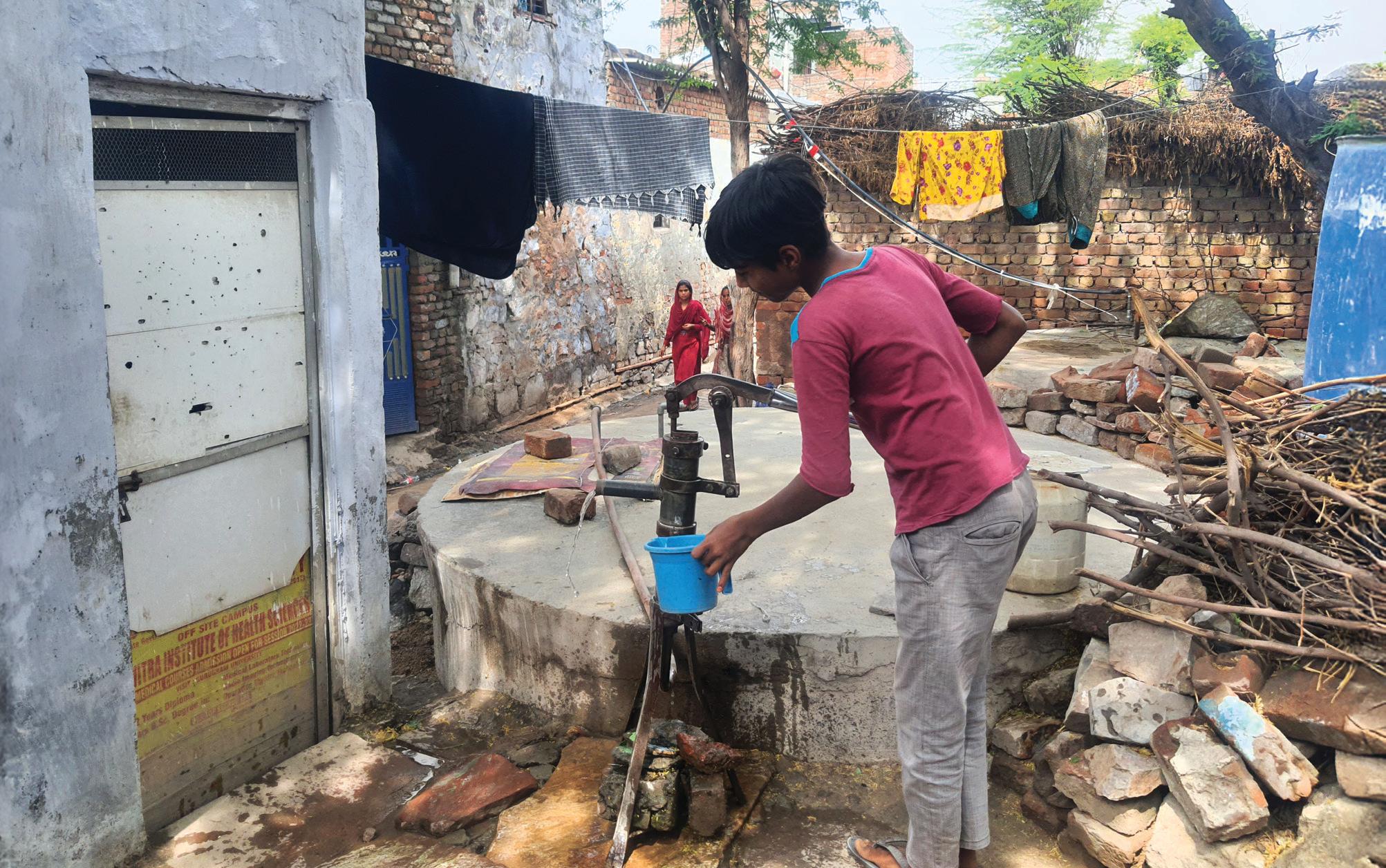
WHEN THE government installed taps in our house in 2021, we were hopeful that the perennial problem of water access would be solved. But nothing happened,” says Yusuf Khan of Ghasera village. “The roads were dug up for laying pipelines, which never arrived. After waiting for months, people levelled the roads with mud to be able to freely use them again,” he adds.
Ghasera in Haryana’s Nuh district lacks basic amenities like water and sanitation. “Our panchayat only works in name. The person who wins the sarpanch election becomes rich over the years, but nothing else changes,” says 70-year-old Saeed, a resident of the village.
What's remarkable about Ghasera is that Mahatma Gandhi visited the village during Partition and asked its residents to not leave India, with the promise that the government was duty-bound to provide basic services. “I remember my father talk about Gandhi's visit, but the situation here is quite bad even nearly eight decades after Independence,” says 65-year-old Jamila. Ghasera does not have a panchayat building, and employs just seven people for cleaning the village of more than 15,000 residents.
Ghasera panchayat is one of India’s 269,057 panchayats, which received constitutional status as the third tier of government in 1992-93, with the 73rd and 74th Amendments to the Constitution of India. The Amendments call upon state governments to enact laws to endow powers and authority to the panchayats to enable them function as local governments.

Diese Geschichte stammt aus der June 16, 2025-Ausgabe von Down To Earth.
Abonnieren Sie Magzter GOLD, um auf Tausende kuratierter Premium-Geschichten und über 9.000 Zeitschriften und Zeitungen zuzugreifen.
Sie sind bereits Abonnent? Anmelden
WEITERE GESCHICHTEN VON Down To Earth

Down To Earth
GREAT NICOBAR DILEMMA
In the fragile ecosystem of Nicobar, strategic development must align with constitutional commitment to protect environment, indigenous dignity

3 mins
March 16, 2026
Down To Earth
CATCH BY THE ROOTS
Sabai grass could be a game-changer for the marginalised economies of West Bengal's dry uplands. All it needs is an efficient market strategy
4 mins
March 16, 2026

Down To Earth
POWERING TRANSITION
India's renewable ambitions are rising rapidly, with half of its installed power capacity now coming from non-fossil sources. Yet the gap between capacity and generation remains wide. The experiences of two pioneering states, Karnataka and Tamil Nadu, which together generate over a fifth of the country's renewable energy, offer crucial lessons for accelerating the transition, reports PUJA DAS from Bengaluru, Chennai, Mumbai and New Delhi
16 mins
March 16, 2026
Down To Earth
At core of survival
Water scarcity defines life in a village inside Sariska Tiger Reserve's critical habitat, as debates over its relocation drag on
5 mins
March 16, 2026

Down To Earth
What's on your plate
An upcoming digital tool can help people learn about the origin of their meals and make climate-positive food choices
2 mins
March 16, 2026

Down To Earth
'Bad environment can never be good economics'
The Supreme Court of India and even the high courts were once very active and took a proactive role in protecting the environment; unfortunately, that is no longer true
4 mins
March 16, 2026
Down To Earth
Things fall apart
IN THE past year, the world has counted more missiles and bombs than hours.
2 mins
March 16, 2026

Down To Earth
Universities in crisis, innovation is stifled
Political control and skewed policies have led to unrest in academia, stifling creativity and meaningful research
4 mins
March 16, 2026

Down To Earth
SPARK IN THE GAME
The Reserve Bank of India's restored recognition of Default Loss Guarantees re-enables credit flow into last-mile electric mobility
3 mins
March 16, 2026

Down To Earth
Ushering in new eras
An appraisal of the state of biodiversity conservation, pollution reduction and climate adaptation regimes in India
3 mins
March 16, 2026
Listen
Translate
Change font size