
Mit Magzter GOLD unbegrenztes Potenzial nutzen
Erhalten Sie unbegrenzten Zugriff auf über 9.000 Zeitschriften, Zeitungen und Premium-Artikel für nur
Versuchen GOLD - Frei
POETRY AND POLITICAL ECOLOGY IN PALESTINE
Down To Earth
|May 16, 2025
Through poetry and through the care of olive, fig and orange orchards, Palestinian people assert their indigenous identity and relationship with the living ecologies of the landscape

In order for me to write poetry that isn’t political I must listen to the birds and in order to hear the birds the warplanes must be silent. - Marwan Makhoul
Colonizers write about flowers. I tell you about children throwing rocks at Israeli tanks seconds before becoming daisies. I want to be like those poets who care about the moon. Palestinians don't see the moon from jail cells and prisons. It’s so beautiful, the moon. They're so beautiful, the flowers. I pick flowers for my dead father when I'm sad.. - Noor Hindi
Where is the place for “nature poetry” in times of war, massacre and genocide? Can one still write of birdsongs, flowers or the beauty of the moon while facing tanks and warplanes? The words of Palestinian poets Marwan Makhoul and Noor Hindi drive home these impossibilities, even as they express a longing for a time that would allow them such freedom to escape politics.
Yet, contested land, nature and ecology have always been at the heart of the politics around Israel-Palestine. From very early on (early 1900s), Israeli-Zionist claims to land have been closely tied to the “green colonial” narrative of “making the desert bloom” and restoring the Palestinian landscape to a mythic “original state of biblical splendour”. An afforestation programme to plant varieties of primarily non-native coniferous trees—often in areas previ-ously used by Palestinian pastoralists and farmers—was, in fact, a key function of the Jewish National Fund set up in 1901 to lay the foundations of Israel. In his book Landscape and Memory, British-Zionist historian Simon Schama describes the pine trees planted to transform indigenous vegetation of Palestine as “proxy immigrants” for Jewish people in the nation-building project of Israel.


Diese Geschichte stammt aus der May 16, 2025-Ausgabe von Down To Earth.
Abonnieren Sie Magzter GOLD, um auf Tausende kuratierter Premium-Geschichten und über 9.000 Zeitschriften und Zeitungen zuzugreifen.
Sie sind bereits Abonnent? Anmelden
WEITERE GESCHICHTEN VON Down To Earth

Down To Earth
GREAT NICOBAR DILEMMA
In the fragile ecosystem of Nicobar, strategic development must align with constitutional commitment to protect environment, indigenous dignity

3 mins
March 16, 2026
Down To Earth
CATCH BY THE ROOTS
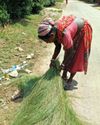
Sabai grass could be a game-changer for the marginalised economies of West Bengal's dry uplands. All it needs is an efficient market strategy
4 mins
March 16, 2026

Down To Earth
POWERING TRANSITION
India's renewable ambitions are rising rapidly, with half of its installed power capacity now coming from non-fossil sources. Yet the gap between capacity and generation remains wide. The experiences of two pioneering states, Karnataka and Tamil Nadu, which together generate over a fifth of the country's renewable energy, offer crucial lessons for accelerating the transition, reports PUJA DAS from Bengaluru, Chennai, Mumbai and New Delhi
16 mins
March 16, 2026
Down To Earth
At core of survival
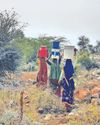
Water scarcity defines life in a village inside Sariska Tiger Reserve's critical habitat, as debates over its relocation drag on
5 mins
March 16, 2026

Down To Earth
What's on your plate
An upcoming digital tool can help people learn about the origin of their meals and make climate-positive food choices
2 mins
March 16, 2026

Down To Earth
'Bad environment can never be good economics'
The Supreme Court of India and even the high courts were once very active and took a proactive role in protecting the environment; unfortunately, that is no longer true
4 mins
March 16, 2026
Down To Earth
Things fall apart
IN THE past year, the world has counted more missiles and bombs than hours.
2 mins
March 16, 2026

Down To Earth
Universities in crisis, innovation is stifled
Political control and skewed policies have led to unrest in academia, stifling creativity and meaningful research
4 mins
March 16, 2026

Down To Earth
SPARK IN THE GAME
The Reserve Bank of India's restored recognition of Default Loss Guarantees re-enables credit flow into last-mile electric mobility
3 mins
March 16, 2026

Down To Earth
Ushering in new eras
An appraisal of the state of biodiversity conservation, pollution reduction and climate adaptation regimes in India
3 mins
March 16, 2026
Listen
Translate
Change font size