Versuchen GOLD - Frei
LOST IN MAIZE
Down To Earth
|June 16, 2025
Ethanol-blending programme and its spiralling impacts on food inflation, nutrition availability
-
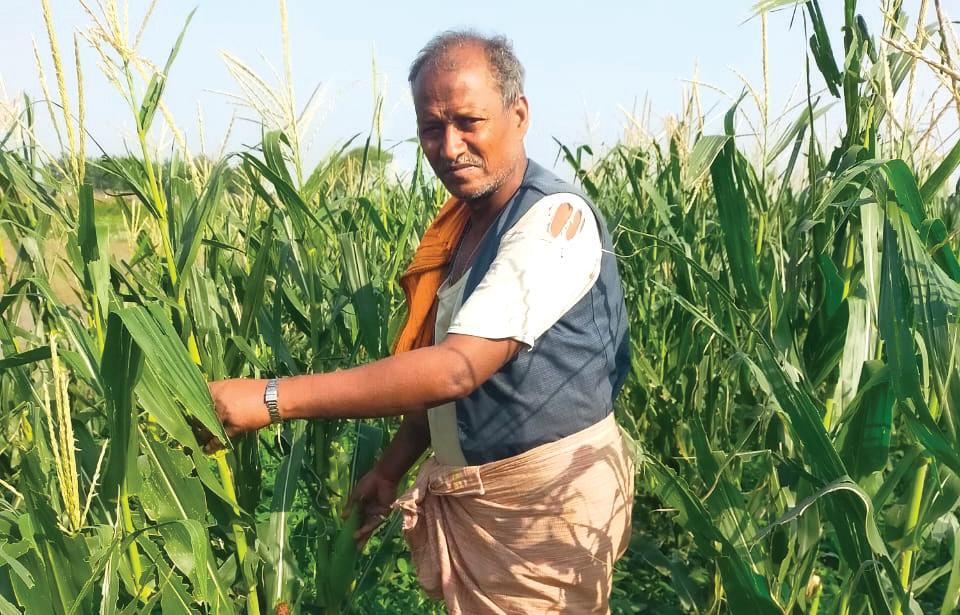
IN AN unpredictable turn of events, India, the breadbasket of maize for Asian countries like Bangladesh, Nepal, Malaysia and Vietnam, found itself scouring global markets for the high-protein grain last year. In 2024, the country imported 0.9 million tonnes of maize—a mammoth 7,940 per cent more than what it imported in 2023, as per data with Union Ministry of Commerce and Industry. The figure is, in fact, much more than the combined import of maize in the last seven years. The culprit was not weather anomaly or pest attack—but diversion of maize for ethanol production, say industry insiders.
Poultry and cattle farmers and the feed industry, already squeezed by volatile soymeal prices and an avian influenza outbreak, found themselves bidding for maize against ethanol distilleries. And they lost. Energy security took precedence over other priorities, quite literally fuelling the tank and starving the trough.
During the initial years after the National Policy on Biofuels was rolled out in 2018, molasses were the main feedstock of ethanol. In fact, until ethanol supply year (ESY) 2021-22 (November 2021 to October 2022), maize was not used as a feedstock. Then in ESY 2022-23, some 315 million litres of ethanol was produced from maize alone, which increased to a massive 2.86 billion litres in ESY 2023-24. That year, ethanol from maize accounted for 42 per cent of the total ethanol produced. Poultry and cattle feed industry, which consumes 60-70 per cent of the maize produced in the country, was the worst hit.

Diese Geschichte stammt aus der June 16, 2025-Ausgabe von Down To Earth.
Abonnieren Sie Magzter GOLD, um auf Tausende kuratierter Premium-Geschichten und über 9.000 Zeitschriften und Zeitungen zuzugreifen.
Sie sind bereits Abonnent? Anmelden
WEITERE GESCHICHTEN VON Down To Earth

Down To Earth
Hope for revival of the great Indian bustard
The birth of a great Indian bustard chick in the Kutch region of Gujarat has created history in the world of conservation, reviving hope.

2 mins
April 16, 2026
Down To Earth
MILES TO GO
As impacts of climate change accelerate, climate finance remains trapped in incrementalism
6 mins
April 16, 2026
Down To Earth
IN MAHUA TERRITORY
Once mahua starts to flower, every thing else takes a back seat for tribal communities in forests of central India
6 mins
April 16, 2026

Down To Earth
CAUGHT IN THE ENERGY GAP
Kitchens across rural India reflect a peculiar reality: energy is within reach but affordability remains a concern. PUJA DAS travels across 15 villages in Madhya Pradesh, Chhattisgarh and Uttar Pradesh to investigate why rural households still rely on traditional fuels like firewood, dung cakes and crop residue that pose a health risk, and why their energy bills are rising.
12 mins
April 16, 2026
Down To Earth
Lake or wetland?
While villages around Almora's Tadag Tal want the seasonal lake to be developed into a perennial waterbody, experts say the area is a wetland and should not be disturbed
5 mins
April 16, 2026

Down To Earth
World far from curbing maternal deaths
INDIA HAS cut its maternal mortality ratio (MMR) by 80 per cent since 1990, according to a recent analysis published in The Lancet.
1 min
April 16, 2026
Down To Earth
Energy in times of war
THE DISASTROUS US-Israel war against Iran has disrupted energy supply across the world. Governments in both rich and poor countries are warning their people of dire times ahead, unlike anything seen before by this generation: acute energy scarcity, rationing and even the prospect of cars and aeroplanes running out of fuel. The question is what will the future energy map look like?
3 mins
April 16, 2026

Down To Earth
Unfinished business
Land consolidation is globally considered a critical component of land reforms and holds the key to improve agrarian productivity. But it is yet to be undertaken in meaningful ways in most parts of the country, reports
6 mins
April 16, 2026

Down To Earth
Roots of revival
Chhattisgarh's Baiga community mounts conservation efforts to keep alive a traditional art form at risk of vanishing due to ecological changes
2 mins
April 16, 2026
Down To Earth
A mass human capital loss
ADULT HEIGHT across countries, including India, is no longer increasing.
2 mins
April 16, 2026
Listen
Translate
Change font size