
Mit Magzter GOLD unbegrenztes Potenzial nutzen
Erhalten Sie unbegrenzten Zugriff auf über 9.000 Zeitschriften, Zeitungen und Premium-Artikel für nur
Vaonis Vespera Pro smart telescope
BBC Sky at Night Magazine
|November 2025
Swift, effortless and seriously capable - this scope makes every session count
Smart telescopes have opened a new, accessible avenue for newcomers to astronomy, providing an all-in-one platform for capturing those first stellar photons. The Vaonis Vespera Pro is the latest model in the Vespera line and builds on the features of its predecessor, the Vespera II.
While the aperture and focal length are the same, the Vespera Pro boasts the larger Sony IMX676 colour sensor, which offers 12.5MP resolution versus the Vespera II's 8.3MP. The pixel size of 2µm means a sampling rate of 1.6 arcseconds per pixel, which is perfect for average seeing conditions, so we were keen to see what details we could capture.
We received the Cosmic Bundle, which meant that in addition to the hard case and tripod that come as standard, we also received a Vaonis dual-band filter and CLS light-pollution filter. Vaonis also sent us its solar filter, which does not come as part of the Cosmic Bundle but can be purchased separately.
The Vespera Pro's design couldn't be simpler: a single button and port on a sleek white unit. Once we'd assembled the tripod and screwed it into the unit's base, we downloaded the Singularity app (available for iOS and Android) and were ready to go.
The summer days didn't disappoint and we were soon granted an opportunity to use the solar filter. Bringing the Sun into the Vespera Pro's field of view was easy: after opening the arm, we selected Solar Mode in the app and popped the filter on before following prompts to level and aim the Vespera Pro. It then effortlessly slewed to and centred our nearest star and we captured some lovely sunspot details. At the time of review, via the app we could only save solar images as JPEGs; for solar and lunar imaging, TIFF files weren't available during our review. We felt this would be beneficial when it comes to stacking in processing software. We'd love to see video imaging as an option in future, to really boost details.
To the Moon and beyond
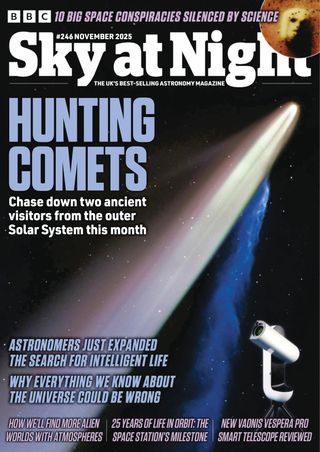

Diese Geschichte stammt aus der November 2025-Ausgabe von BBC Sky at Night Magazine.
Abonnieren Sie Magzter GOLD, um auf Tausende kuratierter Premium-Geschichten und über 9.000 Zeitschriften und Zeitungen zuzugreifen.
Sie sind bereits Abonnent? Anmelden
WEITERE GESCHICHTEN VON BBC Sky at Night Magazine
BBC Sky at Night Magazine
MOONWATCH
January's top lunar feature to observe

2 mins
January 2026
BBC Sky at Night Magazine
Speed up your processing workflow
How to use Photoshop's Actions tool to drastically cut your processing time
3 mins
January 2026
BBC Sky at Night Magazine
Chasing Canada's polar lights
With solar maximum peaking and a new Moon promising dark skies, Jamie Carter travels to Churchill, Manitoba to hunt the Northern Lights - and dodge polar bears – in Canada's far north
7 mins
January 2026

BBC Sky at Night Magazine
Beyond Pluto: The search for the hidden planets
Could one – or even two - undiscovered planets lurk at the edges of our Solar System? Nicky Jenner explores how close we are to finding the elusive 'Planet 9'
6 mins
January 2026
BBC Sky at Night Magazine
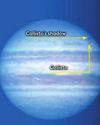
Jupiter moon events
Jupiter is a magnificent planet to observe.
2 mins
January 2026

BBC Sky at Night Magazine
What samples from space have taught us
Alastair Gunn explains what scientists have learnt in the 20 years since the first unmanned mission brought materials back from alien worlds
3 mins
January 2026
BBC Sky at Night Magazine
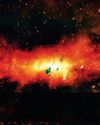
The Milky Way as you've never seen it before
This is the largest low-frequency radio colour image of our Galaxy ever assembled
1 min
January 2026
BBC Sky at Night Magazine
Merger of ‘impossibly' massive black holes explained
Scientists discover how enormous, fast-spinning black holes can exist after all
1 mins
January 2026
BBC Sky at Night Magazine
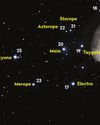
Lunar occultation of the Pleiades
BEST TIME TO SEE: 27 January from 20:30 UT
1 min
January 2026
BBC Sky at Night Magazine
The Universe's expansion may be slowing down
New study suggests current theories of dark energy could be wrong
1 mins
January 2026
Listen
Translate
Change font size