
Mit Magzter GOLD unbegrenztes Potenzial nutzen
Erhalten Sie unbegrenzten Zugriff auf über 9.000 Zeitschriften, Zeitungen und Premium-Artikel für nur
Imaging with MULTI-BAND FILTERS
BBC Sky at Night Magazine
|April 2023
Over the last few years there has been an explosion of multi-band filters for astrophotographers.
Used with a colour astro camera, they help to combat light pollution and make it easier to image deep-sky targets from cities. Compared to mono cameras, one-shot colour cameras also help in this regard as they save time imaging. Combining data captured with a multi-band filter and with a standard light-pollution filter allows some good creativity when it comes to processing; the colour can be changed, and stars moved from one image to another to give some very impressive results.
Here we have examined a selection of multi-band filters to look at the differences in the wavelength of light they let pass through to the camera sensor. There are dual-band filters, which mainly pass the light emission from ionised hydrogen alpha (Ha) and oxygen III (OIII) (though some are now passing sulphur II (SII) and Olll emission), which can enhance the detail within nebulae. There are tri-band filters too, which generally have the addition of passing hydrogen beta emission, useful for adding detail to areas that contain OllI.
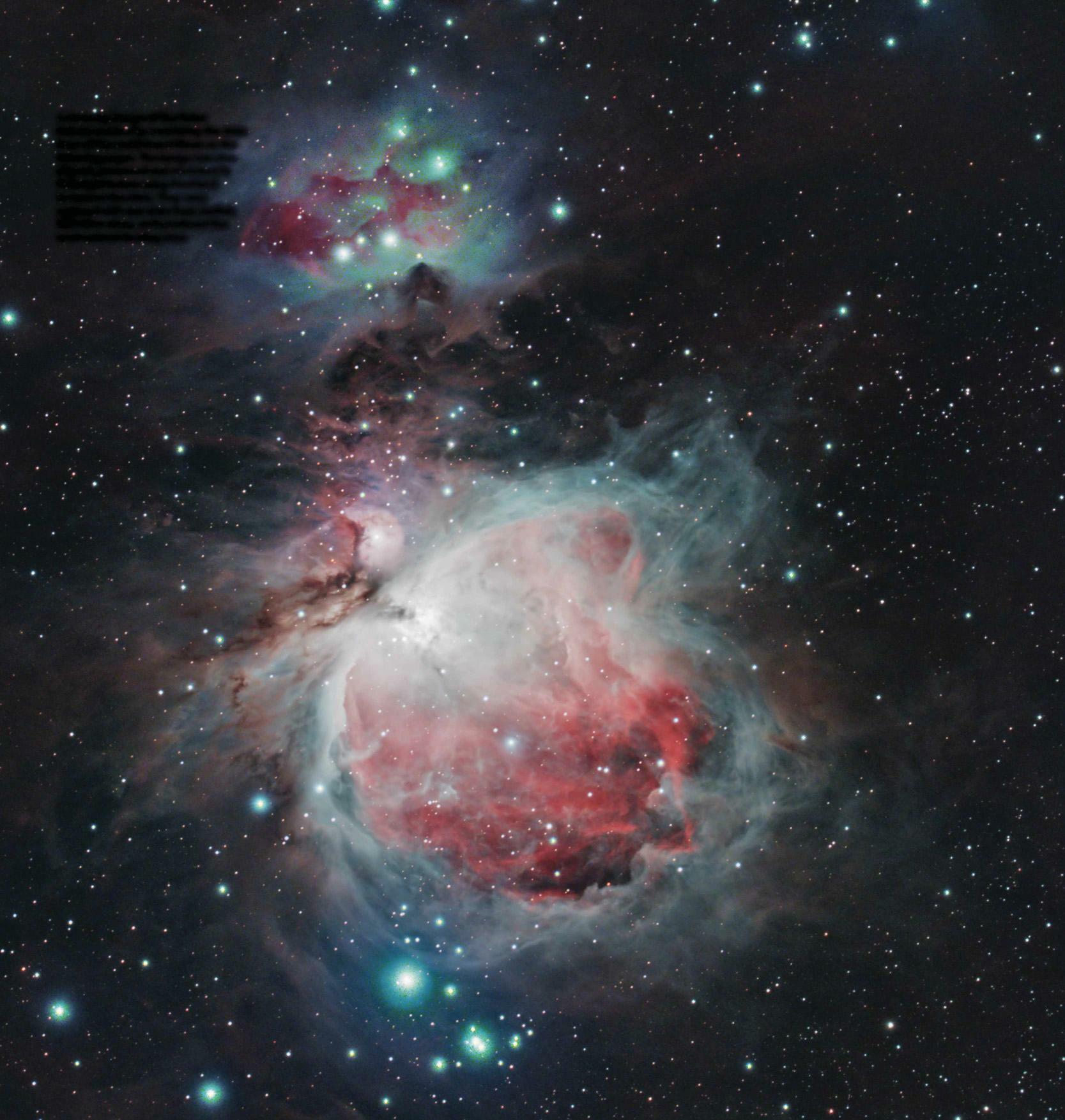
The target we chose to image with the eight filters was the Orion Nebula; it has a good mix of gases to image and, in the outer areas beyond the Trapezium, great detail which is harder to capture with standard light-pollution filters. For each multi-band filter, we captured 40x 180-second exposures, processing this with a full set of calibration frames in PixInsight. Further processing was limited to noise control and gentle stretching, but no colour calibration, as we wanted to show what each filter produced.
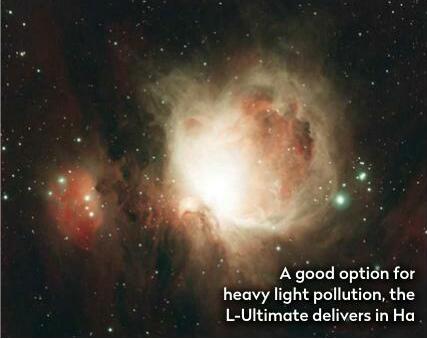
Optolong L-Ultimate dual-band 3nm filter
2-inch, £389

Diese Geschichte stammt aus der April 2023-Ausgabe von BBC Sky at Night Magazine.
Abonnieren Sie Magzter GOLD, um auf Tausende kuratierter Premium-Geschichten und über 9.000 Zeitschriften und Zeitungen zuzugreifen.
Sie sind bereits Abonnent? Anmelden
WEITERE GESCHICHTEN VON BBC Sky at Night Magazine
BBC Sky at Night Magazine
MOONWATCH
January's top lunar feature to observe

2 mins
January 2026
BBC Sky at Night Magazine
Speed up your processing workflow
How to use Photoshop's Actions tool to drastically cut your processing time
3 mins
January 2026
BBC Sky at Night Magazine
Chasing Canada's polar lights
With solar maximum peaking and a new Moon promising dark skies, Jamie Carter travels to Churchill, Manitoba to hunt the Northern Lights - and dodge polar bears – in Canada's far north
7 mins
January 2026
BBC Sky at Night Magazine
Beyond Pluto: The search for the hidden planets
Could one – or even two - undiscovered planets lurk at the edges of our Solar System? Nicky Jenner explores how close we are to finding the elusive 'Planet 9'
6 mins
January 2026
BBC Sky at Night Magazine
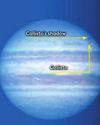
Jupiter moon events
Jupiter is a magnificent planet to observe.
2 mins
January 2026
BBC Sky at Night Magazine
What samples from space have taught us
Alastair Gunn explains what scientists have learnt in the 20 years since the first unmanned mission brought materials back from alien worlds
3 mins
January 2026
BBC Sky at Night Magazine
The Milky Way as you've never seen it before
This is the largest low-frequency radio colour image of our Galaxy ever assembled
1 min
January 2026
BBC Sky at Night Magazine
Merger of ‘impossibly' massive black holes explained
Scientists discover how enormous, fast-spinning black holes can exist after all
1 mins
January 2026
BBC Sky at Night Magazine
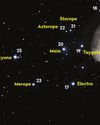
Lunar occultation of the Pleiades
BEST TIME TO SEE: 27 January from 20:30 UT
1 min
January 2026
BBC Sky at Night Magazine
The Universe's expansion may be slowing down
New study suggests current theories of dark energy could be wrong
1 mins
January 2026
Translate
Change font size