
Mit Magzter GOLD unbegrenztes Potenzial nutzen
Erhalten Sie unbegrenzten Zugriff auf über 9.000 Zeitschriften, Zeitungen und Premium-Artikel für nur
Chandra Uncovering the high-energy Universe
BBC Sky at Night Magazine
|July 2025
The world's most powerful X-ray telescope has been changing our understanding of space for a quarter of a century. Jane Green celebrates Chandra's achievements through some of its most spectacular images
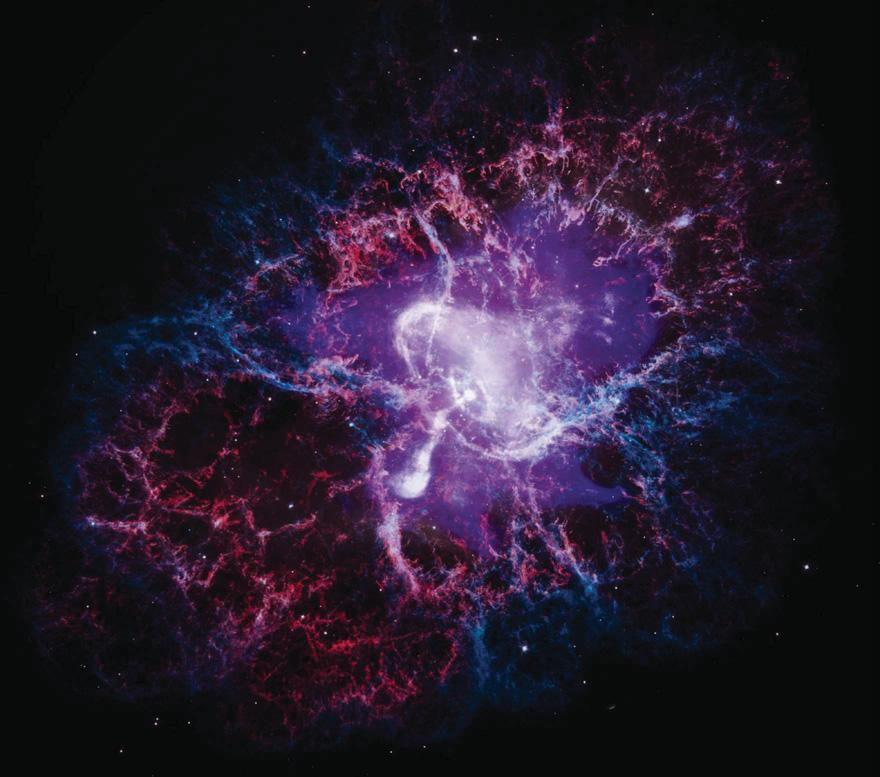
On 23 July 1999, Space Shuttle Columbia launched its heaviest-ever payload: the Chandra X-ray Observatory, a new flagship telescope for NASA. It is the world’s most powerful X-ray telescope, capable of detecting sources more than 20 times fainter than its predecessors and with a spatial resolution yet to be surpassed.
It immediately joined the ranks of NASA's Great Observatories; while Chandra had X-rays covered, the Compton Gamma Ray Observatory observed gamma rays, the Spitzer Space Telescope took infrared, and visible light fell under the remit of the still-operational Hubble Space Telescope. Over 25 years later, Chandra remains on its highly elliptical path around our planet, orbiting every 64 hours at an altitude a third of the way to our Moon, and returning extraordinary images.
Since high-energy X-rays cannot be observed by Earth-based telescopes and they reveal extremely hot objects and hugely energetic physical processes, Chandra has captured previously unseen phenomena. Neutron stars, supernovae shockwaves, elusive dark energy and the mysteries lurking in the hot gas surrounding our Galaxy's supermassive black hole: all have been brought into focus by Chandra’s super-sharp views and ultrasmooth mirrors.
Yet the entire project has recently come under threat of budget cuts so severe they would bring a premature end to Chandra's operation. Despite an outcry from the astronomy community, Chandra's future is uncertain. Although its two-year Legacy Program is ongoing, it now competes with newer projects demanding larger slices of a limited budgetary pie.
While Chandra continues, for now, to reveal secrets of the high-energy Universe, NASA marked its 25 years by releasing 25 stunning images. Here we've put together a selection of nine of the best wonders captured by Chandra over the last quarter of a century...
Centaurus A
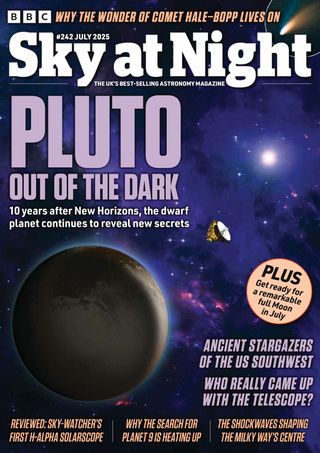

Diese Geschichte stammt aus der July 2025-Ausgabe von BBC Sky at Night Magazine.
Abonnieren Sie Magzter GOLD, um auf Tausende kuratierter Premium-Geschichten und über 9.000 Zeitschriften und Zeitungen zuzugreifen.
Sie sind bereits Abonnent? Anmelden
WEITERE GESCHICHTEN VON BBC Sky at Night Magazine
BBC Sky at Night Magazine
MOONWATCH
January's top lunar feature to observe

2 mins
January 2026
BBC Sky at Night Magazine
Speed up your processing workflow
How to use Photoshop's Actions tool to drastically cut your processing time
3 mins
January 2026
BBC Sky at Night Magazine
Chasing Canada's polar lights
With solar maximum peaking and a new Moon promising dark skies, Jamie Carter travels to Churchill, Manitoba to hunt the Northern Lights - and dodge polar bears – in Canada's far north
7 mins
January 2026
BBC Sky at Night Magazine
Beyond Pluto: The search for the hidden planets
Could one – or even two - undiscovered planets lurk at the edges of our Solar System? Nicky Jenner explores how close we are to finding the elusive 'Planet 9'
6 mins
January 2026
BBC Sky at Night Magazine
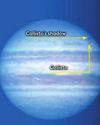
Jupiter moon events
Jupiter is a magnificent planet to observe.
2 mins
January 2026

BBC Sky at Night Magazine
What samples from space have taught us
Alastair Gunn explains what scientists have learnt in the 20 years since the first unmanned mission brought materials back from alien worlds
3 mins
January 2026
BBC Sky at Night Magazine
The Milky Way as you've never seen it before
This is the largest low-frequency radio colour image of our Galaxy ever assembled
1 min
January 2026
BBC Sky at Night Magazine
Merger of ‘impossibly' massive black holes explained
Scientists discover how enormous, fast-spinning black holes can exist after all
1 mins
January 2026
BBC Sky at Night Magazine
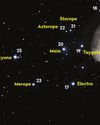
Lunar occultation of the Pleiades
BEST TIME TO SEE: 27 January from 20:30 UT
1 min
January 2026
BBC Sky at Night Magazine
The Universe's expansion may be slowing down
New study suggests current theories of dark energy could be wrong
1 mins
January 2026
Listen
Translate
Change font size