Versuchen GOLD - Frei
The truth about antidepressant withdrawal
BBC Science Focus
|January 2026
One in eight people in the US take an antidepressant. Stopping this medication can be hard, but researchers can't agree on the risks
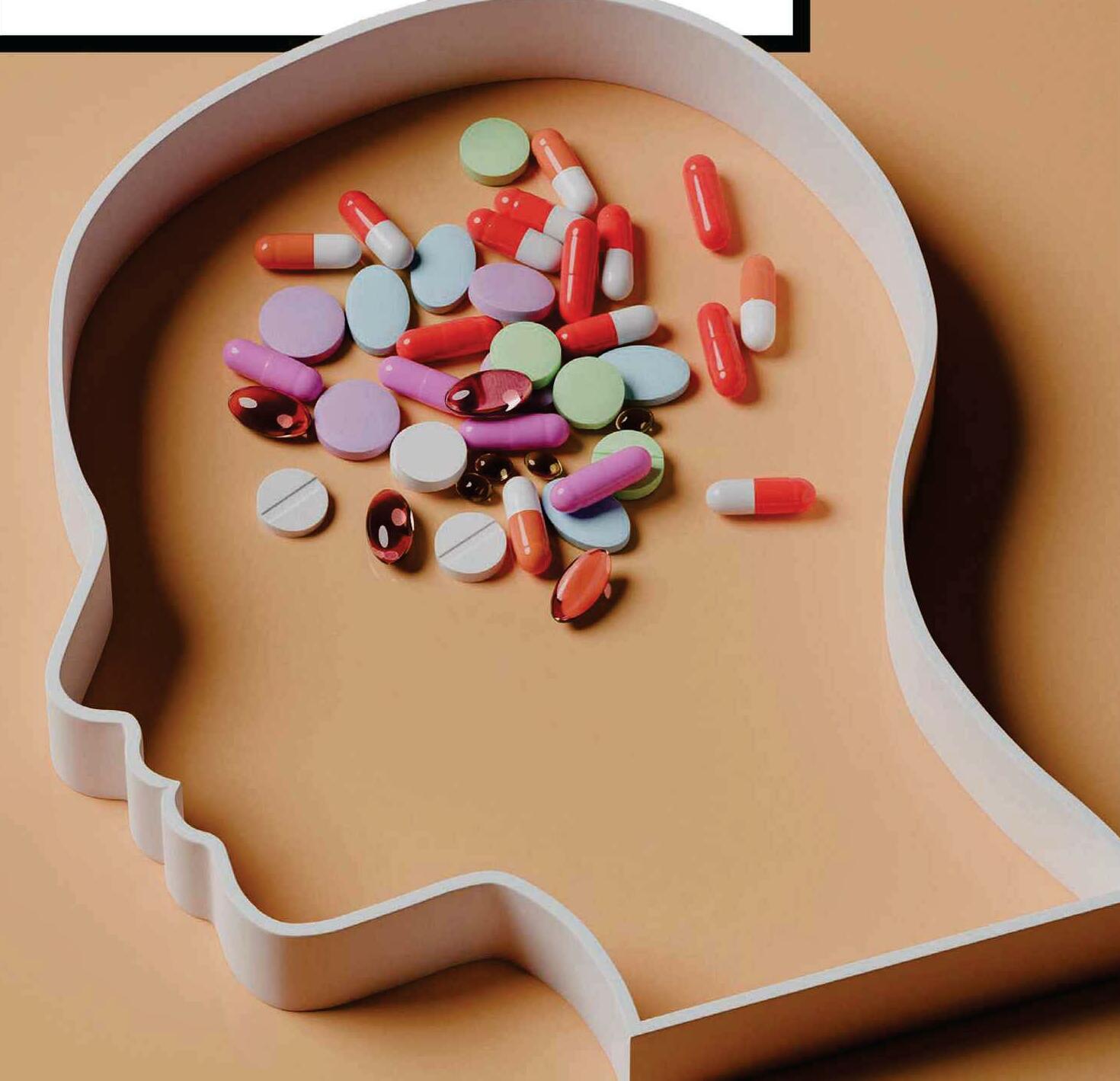
Dr Mark Horowitz knows how hard it can be to come off antidepressants. “When I got down to a very low dose – not even off the drugs – my entire world exploded,” the London-based doctor tells BBC Science Focus. “I had trouble sleeping and I would wake up in the mornings in a full-blown panic, like I was being chased by a wild animal, then that would go on for 10 or 11 hours of the day.”
He felt far worse – and had entirely different symptoms – compared to when he had been originally prescribed the Selective Serotonin Reuptake Inhibitor (SSRI) escitalopram, 12 years earlier at the age of 21.
Antidepressants are widely viewed as a huge success in the world of mental health treatment. Around a fifth of the population of the UK and the US use an antidepressant each year, and a 2025 study by King’s College London found 75 per cent of people who took SSRIs (the most common type of antidepressants, which include citalopram, fluoxetine, paroxetine and sertraline) thought they were helpful.
They’re often used long term: an investigation by BBC Panorama in 2023 found around two million people in England had been on antidepressants for more than five years (this figure is even higher now). And in the US, figures from the Center for Disease Control and Prevention suggest it’s at least 25 million.
STOPPING THE MEDICATION
But what happens when we feel like we don’t need them anymore?
According to the UK’s Royal College of Psychiatrists, symptoms of antidepressant withdrawal can include anxiety; low or rapidly changing moods; difficulty sleeping (including nightmares); an electric-shock feeling (‘zaps’) in the head and limbs; loss of coordination; suicidal thoughts; dizziness; and a feeling of inner restlessness (akathisia) – a symptom some of Dr Horowitz’s patients have described as feeling like “their nervous system on fire”. People pace the room and are flooded with a sense of terror.

Diese Geschichte stammt aus der January 2026-Ausgabe von BBC Science Focus.
Abonnieren Sie Magzter GOLD, um auf Tausende kuratierter Premium-Geschichten und über 9.000 Zeitschriften und Zeitungen zuzugreifen.
Sie sind bereits Abonnent? Anmelden
WEITERE GESCHICHTEN VON BBC Science Focus

BBC Science Focus
World's biggest cobweb is home to 100,000 spiders
Spiders don't normally create such large colonies, so there's no need to worry about finding one in your basement

1 min
February 2026

BBC Science Focus
A dementia vaccine could be gamechanging – and available already
Getting vaccinated against shingles could protect you from getting dementia, or slow the progression of the disease
1 mins
February 2026

BBC Science Focus
DATA IN SPACE
An unusual spacecraft reached orbit in November 2025, one that might herald the dawn of a new era.
7 mins
February 2026

BBC Science Focus
Climate change is already shrinking your salary
No matter where you live, a new study has found warmer temperatures are picking your pocket
4 mins
February 2026

BBC Science Focus
A MENTAL HEALTH GLOW-UP
Forget fine lines. Could Botox give you an unexpected mental health tweakment?
3 mins
February 2026
BBC Science Focus
Most people with high cholesterol gene don't know they have it
Standard testing struggles to detect the condition
1 mins
February 2026

BBC Science Focus
HOW CAN I BOOST MY IQ?
If you're serious about getting smarter, it's time to ditch the brain-training apps
4 mins
February 2026
BBC Science Focus
Humans are absolutely terrible at reading dogs' emotions
Think you can tell how our furry friends are feeling? Think again
1 mins
February 2026

BBC Science Focus
HOW TO TEACH AI RIGHT FROM WRONG
If we want to get good responses from AI, we may need to see what it does when we ask it to be evil
3 mins
February 2026

BBC Science Focus
What Australia's social media ban could really mean for under-16s
Many people think social media is bad for our kids. Australia is trying to prove it
5 mins
February 2026
Listen
Translate
Change font size