
Mit Magzter GOLD unbegrenztes Potenzial nutzen
Erhalten Sie unbegrenzten Zugriff auf über 9.000 Zeitschriften, Zeitungen und Premium-Artikel für nur
Versuchen GOLD - Frei
THE MYSTERY OF THE BIGGEST BLACK HOLE IN THE UNIVERSE
BBC Science Focus
|March 2023
Black holes are big. Very big. But physics makes it almost impossible for them to grow. Here's how one black hole defied the odds to swell to gargantuan proportions

The first image taken of a black hole, the picture that finally turned artists' impressions into a reality, was of the supermassive black hole at the centre of the galaxy Messier 87. Most supermassive black holes are found in the centres of galaxies. They sit in the gravitational driving seat as the hundreds of billions of stars in the surrounding systems happily orbit them, just like the planets orbit the Sun at the centre of our Solar System.
The black hole at the centre of Messier 87 lies at the more massive end of the supermassive scale, cramming a mass that's six billion times that of the Sun (six billion solar masses) into an area the size of Neptune's orbit. But as huge as that might sound (especially when compared to the black hole at the centre of the Milky Way, which is a mere four million solar masses), it's by no means the most massive black hole that we know of.
That title goes to TON 618, which is an astonishing 66 billion solar masses. It's so big that astronomers had to invent a new term to describe it; hence, TON 618 is what's become known as an ultramassive black hole.
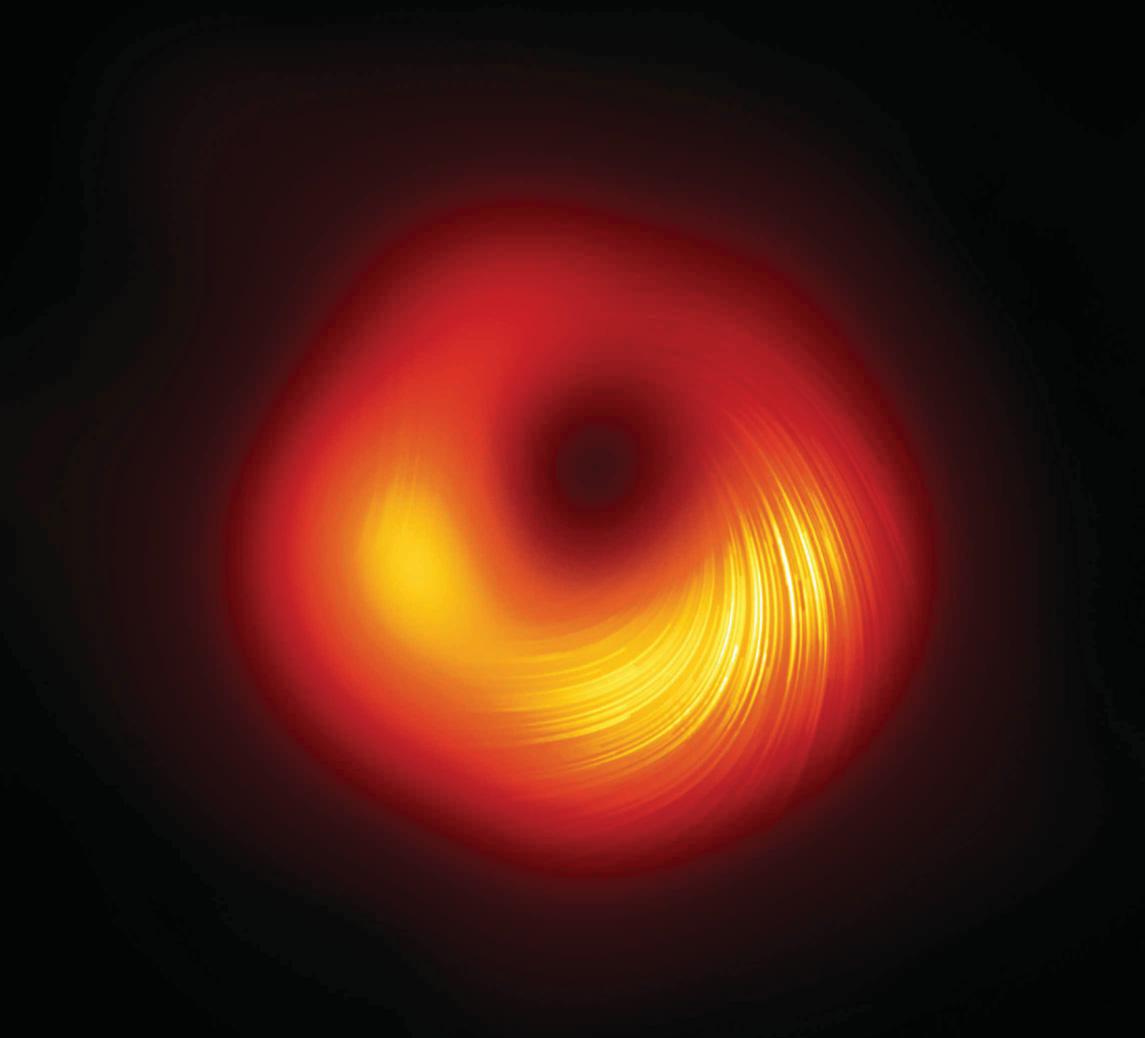
To give you an idea of just how mindbogglingly big TON 618 is, imagine taking all the stars in the Milky Way and squishing the matter in them down to create a black hole. Even if you did that, you would still be a few billion Suns worth of matter shy. So how did TON 618 become such a behemoth?
SPAGHETTI AND PIZZA
Black holes are made of vast amounts of matter that have accumulated in one spot and been packed together as densely as possible, to the point where the gravitational pull from the accumulation is so strong that not even light can escape it.


Diese Geschichte stammt aus der March 2023-Ausgabe von BBC Science Focus.
Abonnieren Sie Magzter GOLD, um auf Tausende kuratierter Premium-Geschichten und über 9.000 Zeitschriften und Zeitungen zuzugreifen.
Sie sind bereits Abonnent? Anmelden
WEITERE GESCHICHTEN VON BBC Science Focus
BBC Science Focus
HOW FISH COULD SAVE MILLIONS OF PEOPLE'S SIGHT
There's nowhere near enough donors to meet the demand for corneal transplants. A pioneering treatment that relies on fish scales could change that

3 mins
May 2026

BBC Science Focus
Your Wi-Fi is lying to you
Wi-Fi 7's giant speed claims might look impressive, but the realities of our homes – and the laws of physics – mean that real-world performance will never get close
6 mins
May 2026
BBC Science Focus
WHICH ANIMAL IS MOST LIKELY TO ESCAPE FROM THE ZOO?
Have you heard the one about the monkey and the Yorkshire pudding?
2 mins
May 2026
BBC Science Focus
THE BLACK SERVAL
The black serval (Leptailurus serval) is an unusual, melanistic version of the African serval, a medium-sized wild cat that's native to Africa.
2 mins
May 2026
BBC Science Focus
Cryosleep vs hibernation: What's the difference?
When hibernating animals, such as hedgehogs and dormice, disappear for winter, they don't freeze like the Siberian salamander.
1 mins
May 2026
BBC Science Focus
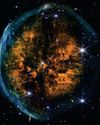
Space brain
The greatest names in science are often said to be 'big-brained', but this cosmic wonder puts them all to shame. Nebula PMR 1 - otherwise known as the 'Exposed Cranium' nebula for its distinctive shape - measures around 3.2 light-years across.
1 min
May 2026

BBC Science Focus
Your most draining relationships are taking years off your life, study suggests
Difficult people don't just zap your energy - they may also accelerate your biological ageing
4 mins
May 2026

BBC Science Focus
DOES EARTH HAVE A HEARTBEAT?
Move over, Ringo Starr.
1 mins
May 2026
BBC Science Focus
WEIGHT-LOSS DRUGS FOR ALL?
The obesity crisis is ruining lives and costing governments trillions. But some healthcare experts think there's now a radical solution: roll out GLP-1 jabs to everyone who needs them for free. Could it work?
9 mins
May 2026
BBC Science Focus
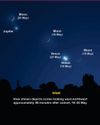
HOW TO SEE VENUS ON APPROACH TO JUPITER
Venus has been slowly moving away from the Sun's glare over the past few weeks, heading into the evening twilight after sunset.
1 mins
May 2026
Translate
Change font size