Versuchen GOLD - Frei
PROFESSOR BRIAN COX
BBC Science Focus
|October 2024
The biggest space missions yet are making their way to new parts of the Universe. In his new BBC Two series Solar System, Prof Brian Cox reveals what these explorations are discovering about life in our galactic neighbourhood. Noa Leach sat down with him to talk about the most exciting new missions, life in the Universe and his top behind-the-scenes moments of filming
-

As you read this, five of the eight planets in the Solar System have spacecraft orbiting them or landers on their surfaces - and more are on the way. In his new series Solar System, Prof Brian Cox reveals the freshest insights coming from these spacecraft and landers, and which of the planets they're studying holds the most promise for finding signs of life.
So, naturally, we had to ask him all about it: from filming in the most alien-like places on Earth to his hope that aliens might explore the vast expanses of the Universe after we humans (possibly) extinguish ourselves.
As a show, Solar System sounds familiar, but this series is very current and looks behind the scenes of the biggest space missions right now. What were your hopes for the show?
That was one of the central ones: to show that there are over 40 spacecraft currently active in the Solar System, so the amount of knowledge that we have of our neighbourhood is increasing all the time. With that increase - that huge amount of data that's raining down on us every second from these probes - we find that there are more questions than answers quite a lot of the time.
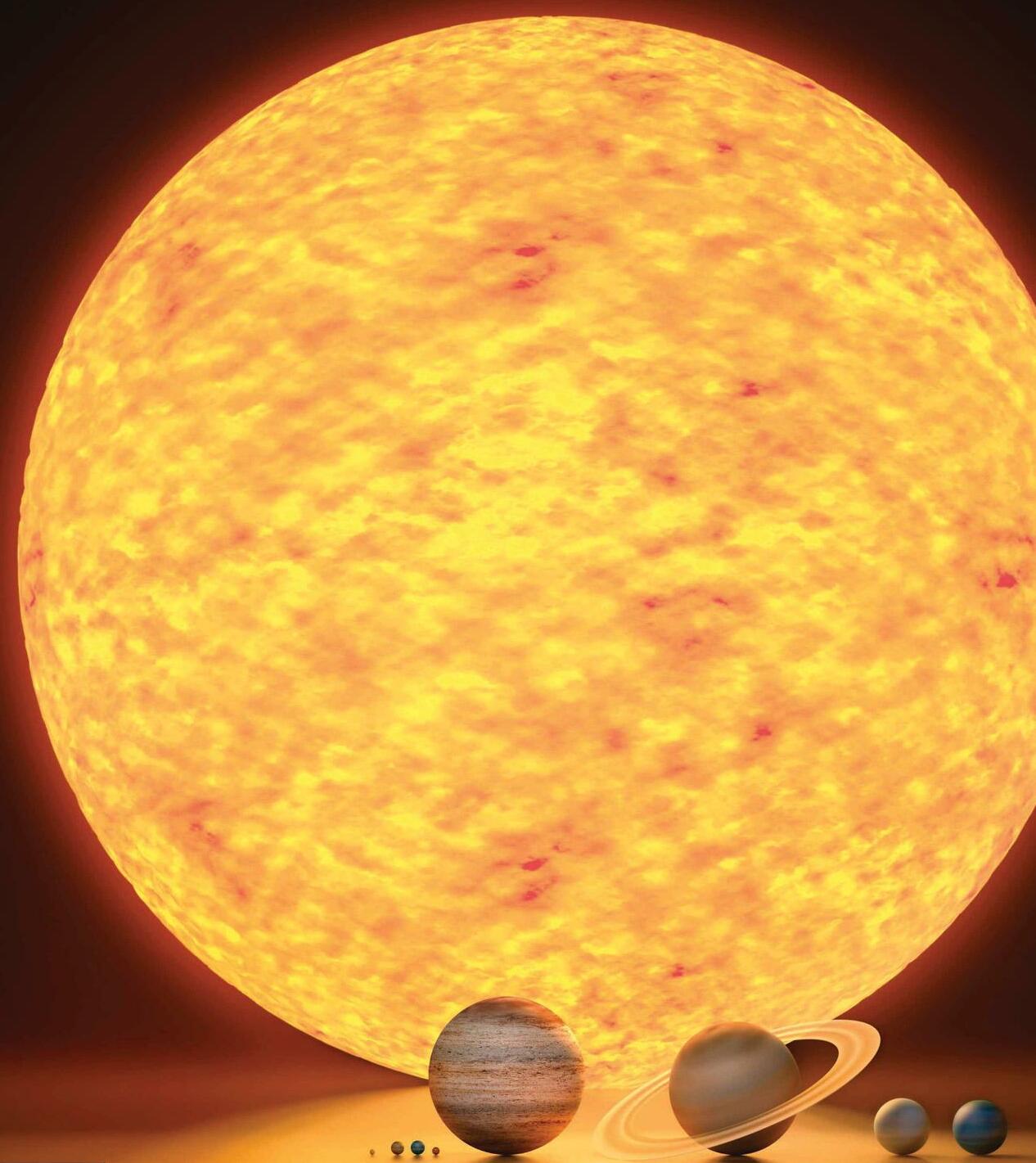 So, as with a lot of science, one of the things I hope that the audience takes away is that in no sense do we know everything about our neighbourhood in space.
In particular, [in the show] we talk about life - and life is a central part of any exploration of the Solar System. We say that the Solar System is a giant chemistry set and life is chemistry complex carbon chemistry.
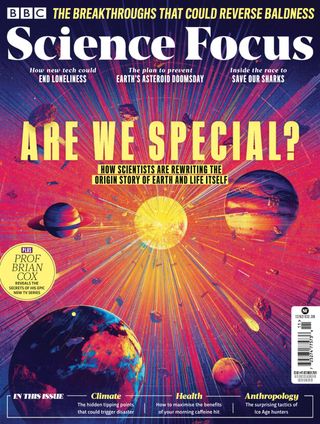

Diese Geschichte stammt aus der October 2024-Ausgabe von BBC Science Focus.
Abonnieren Sie Magzter GOLD, um auf Tausende kuratierter Premium-Geschichten und über 9.000 Zeitschriften und Zeitungen zuzugreifen.
Sie sind bereits Abonnent? Anmelden
WEITERE GESCHICHTEN VON BBC Science Focus

BBC Science Focus
World's biggest cobweb is home to 100,000 spiders
Spiders don't normally create such large colonies, so there's no need to worry about finding one in your basement

1 min
February 2026

BBC Science Focus
A dementia vaccine could be gamechanging – and available already
Getting vaccinated against shingles could protect you from getting dementia, or slow the progression of the disease
1 mins
February 2026

BBC Science Focus
DATA IN SPACE
An unusual spacecraft reached orbit in November 2025, one that might herald the dawn of a new era.
7 mins
February 2026
BBC Science Focus
Climate change is already shrinking your salary
No matter where you live, a new study has found warmer temperatures are picking your pocket
4 mins
February 2026

BBC Science Focus
A MENTAL HEALTH GLOW-UP
Forget fine lines. Could Botox give you an unexpected mental health tweakment?
3 mins
February 2026
BBC Science Focus
Most people with high cholesterol gene don't know they have it
Standard testing struggles to detect the condition
1 mins
February 2026

BBC Science Focus
HOW CAN I BOOST MY IQ?
If you're serious about getting smarter, it's time to ditch the brain-training apps
4 mins
February 2026

BBC Science Focus
Humans are absolutely terrible at reading dogs' emotions
Think you can tell how our furry friends are feeling? Think again
1 mins
February 2026

BBC Science Focus
HOW TO TEACH AI RIGHT FROM WRONG
If we want to get good responses from AI, we may need to see what it does when we ask it to be evil
3 mins
February 2026

BBC Science Focus
What Australia's social media ban could really mean for under-16s
Many people think social media is bad for our kids. Australia is trying to prove it
5 mins
February 2026
Listen
Translate
Change font size