
Mit Magzter GOLD unbegrenztes Potenzial nutzen
Erhalten Sie unbegrenzten Zugriff auf über 9.000 Zeitschriften, Zeitungen und Premium-Artikel für nur
Versuchen GOLD - Frei
Does having a 'dog baby' make us happier than having a human baby?
BBC Science Focus
|July 2025
While fertility rates across the world are falling, more and more of us are choosing to parent pooches
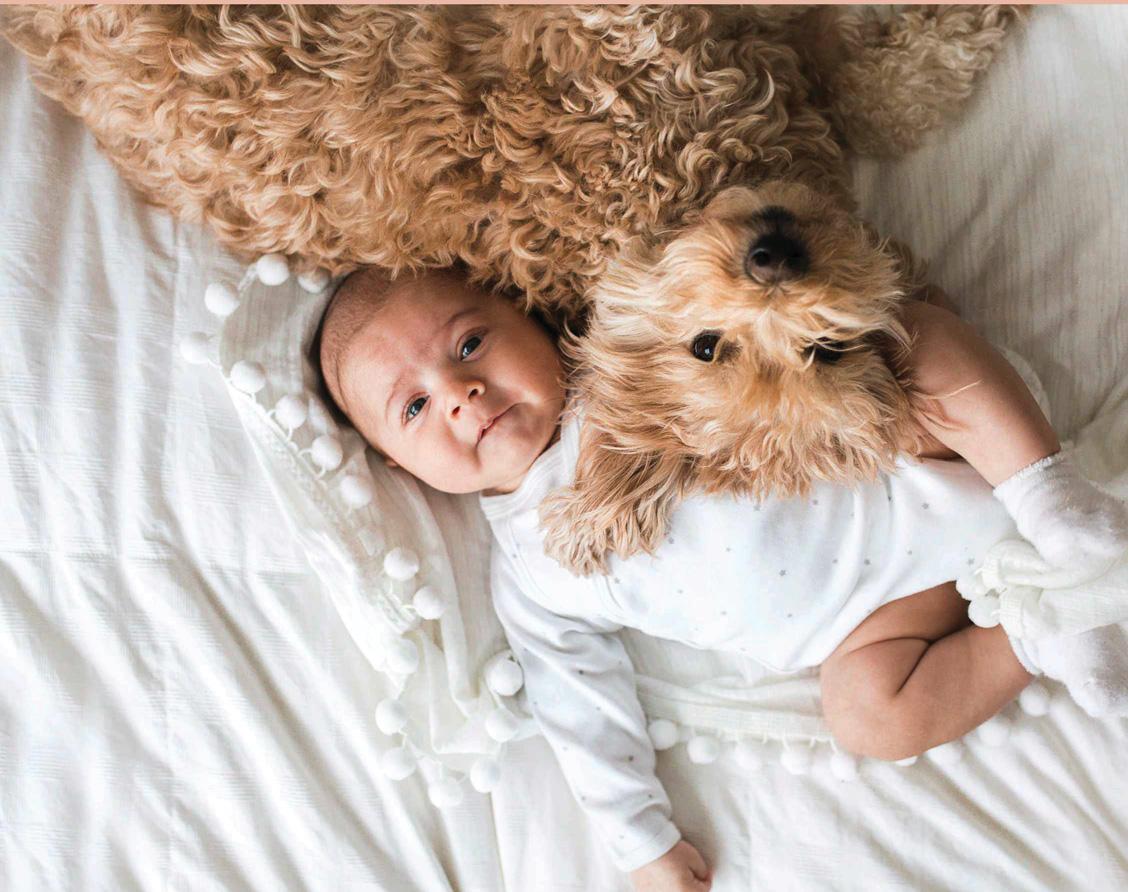
I'll never forget the day my wife and I drove to pick up our miniature schnauzer puppy. She was just four weeks old and could sit in my palm. On the way home, I sat with her on the back seat as she cosied up to my lap, looking up at me with those big, adorable eyes.
In the weeks and months that followed, we used to joke that having a puppy felt like a dress rehearsal for having a baby.
These days, an increasing number of people seem to be thinking this way, identifying as 'dog parents' and seeing their furry friends as substitute children.
In a new paper in the European Psychologist, a pair of researchers at Eötvös Loránd University in Budapest - Laura Gillet and Prof Enikő Kubinyi – have drawn attention to this trend and raised the question of whether it's related to the parallel decline in human fertility rates worldwide.
As it happens, my wife and I ended up having human twins a few years after we got Ruby. But amid the ongoing cost-of-living crisis and a growing emphasis on individualistic values, could it be that many people are choosing to have dogs instead of raising children?
SUBSTITUTE CHILDREN
In the UK, fertility rates are at historic lows. In 2023, we were averaging 1.44 children per woman (the figure needs to be over 2 to sustain a population), with the number of live births at 591,072, the lowest annual figure since 1977. At the same time, however, dog ownership is on the rise, especially among younger generations.
There are over a million more pet dogs in the country today than there were a decade ago, and 45 per cent of owners are millennials (born between the early 1980s and mid 1990s). Anecdotally, we're increasingly treating dogs like people. At our local café you can order a 'puppuccino' and many owners are setting up their dogs' own social media accounts.

Diese Geschichte stammt aus der July 2025-Ausgabe von BBC Science Focus.
Abonnieren Sie Magzter GOLD, um auf Tausende kuratierter Premium-Geschichten und über 9.000 Zeitschriften und Zeitungen zuzugreifen.
Sie sind bereits Abonnent? Anmelden
WEITERE GESCHICHTEN VON BBC Science Focus
BBC Science Focus
HOW FISH COULD SAVE MILLIONS OF PEOPLE'S SIGHT
There's nowhere near enough donors to meet the demand for corneal transplants. A pioneering treatment that relies on fish scales could change that

3 mins
May 2026

BBC Science Focus
Your Wi-Fi is lying to you
Wi-Fi 7's giant speed claims might look impressive, but the realities of our homes – and the laws of physics – mean that real-world performance will never get close
6 mins
May 2026
BBC Science Focus
WHICH ANIMAL IS MOST LIKELY TO ESCAPE FROM THE ZOO?
Have you heard the one about the monkey and the Yorkshire pudding?
2 mins
May 2026
BBC Science Focus
THE BLACK SERVAL
The black serval (Leptailurus serval) is an unusual, melanistic version of the African serval, a medium-sized wild cat that's native to Africa.
2 mins
May 2026
BBC Science Focus
Cryosleep vs hibernation: What's the difference?
When hibernating animals, such as hedgehogs and dormice, disappear for winter, they don't freeze like the Siberian salamander.
1 mins
May 2026
BBC Science Focus
Space brain
The greatest names in science are often said to be 'big-brained', but this cosmic wonder puts them all to shame. Nebula PMR 1 - otherwise known as the 'Exposed Cranium' nebula for its distinctive shape - measures around 3.2 light-years across.
1 min
May 2026
BBC Science Focus
Your most draining relationships are taking years off your life, study suggests
Difficult people don't just zap your energy - they may also accelerate your biological ageing
4 mins
May 2026

BBC Science Focus
DOES EARTH HAVE A HEARTBEAT?
Move over, Ringo Starr.
1 mins
May 2026
BBC Science Focus
WEIGHT-LOSS DRUGS FOR ALL?
The obesity crisis is ruining lives and costing governments trillions. But some healthcare experts think there's now a radical solution: roll out GLP-1 jabs to everyone who needs them for free. Could it work?
9 mins
May 2026
BBC Science Focus
HOW TO SEE VENUS ON APPROACH TO JUPITER
Venus has been slowly moving away from the Sun's glare over the past few weeks, heading into the evening twilight after sunset.
1 mins
May 2026
Listen
Translate
Change font size