
Mit Magzter GOLD unbegrenztes Potenzial nutzen
Erhalten Sie unbegrenzten Zugriff auf über 9.000 Zeitschriften, Zeitungen und Premium-Artikel für nur
Versuchen GOLD - Frei
Dark energy could be getting weaker
BBC Science Focus
|May 2025
New discoveries suggest that the Universe isn't expanding as we thought. So is it time for us to go back to the drawing board?
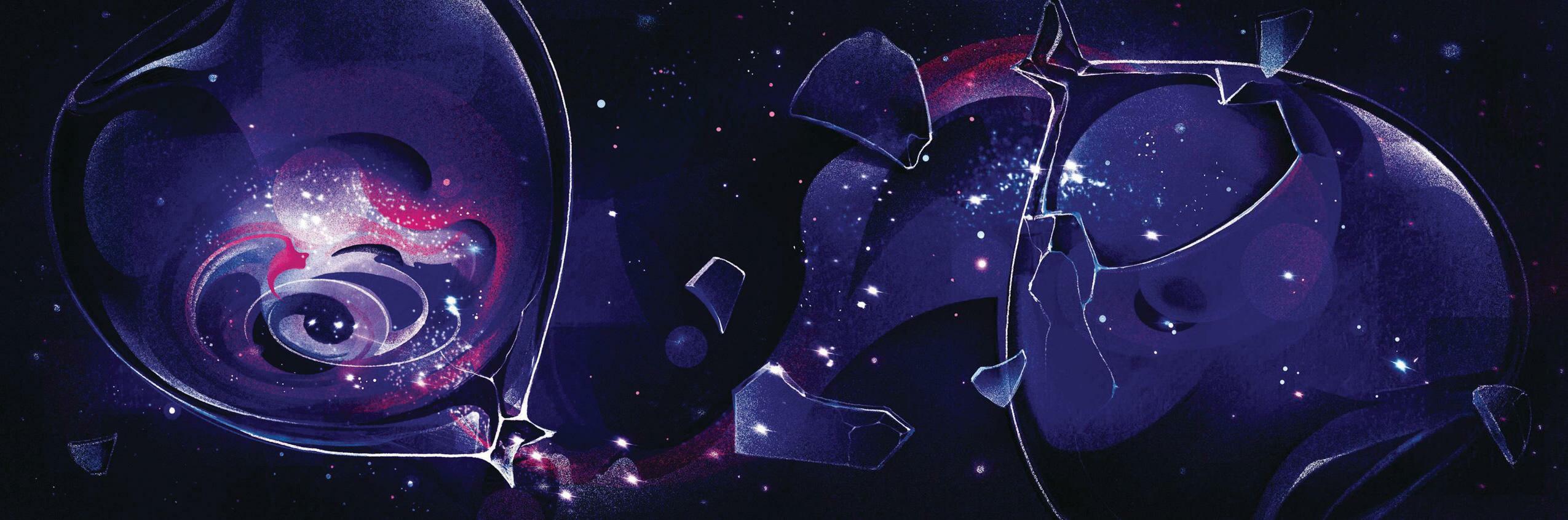
The day after the Dark Energy Spectroscopic Instrument's (DESI) second data release papers came out, which presented evidence for a weakening of the dark energy accelerating the Universe's expansion, members of the cosmology group at my research institute received an email announcing a discussion group.
It was headed "The week that broke Cosmology!" and said that we would meet in an hour to hear a summary from a member of the DESI team and then "pick up the pieces and decide what comes next for cosmology."
It's not unusual to see breathless proclamations about cosmic crises in the media, but within the research community, most of us tend to be more cautious. Yes, it could be really interesting and important, but we shouldn't throw out the textbooks just yet. Yes, let's talk about possible implications, but let's also think about what could have gone wrong in the analysis and how new data could change the story.
Still, if the DESI announcement holds up, it'll require the first major rewriting of our cosmological paradigm in the last couple of decades: a rejection of the cosmological constant.

Diese Geschichte stammt aus der May 2025-Ausgabe von BBC Science Focus.
Abonnieren Sie Magzter GOLD, um auf Tausende kuratierter Premium-Geschichten und über 9.000 Zeitschriften und Zeitungen zuzugreifen.
Sie sind bereits Abonnent? Anmelden
WEITERE GESCHICHTEN VON BBC Science Focus

BBC Science Focus
HEALTH: Eating oats could lower your cholesterol in just two days
The health benefits of a two-day porridge diet lasted for weeks afterwards

1 mins
April 2026

BBC Science Focus
Most people are too sure they can identify fake human faces
Even 'super recognisers' struggle with the challenge. Can you do better?
1 min
April 2026

BBC Science Focus
WHAT'S THE WORST THING YOU CAN DO FOR THE PLANET ONLINE?
Human beings can barely move a muscle without some kind of deleterious effect on the environment around us.
2 mins
April 2026
BBC Science Focus
A bug in the system
The complex arrangement of equipment you see here is part of a particle accelerator.
1 min
April 2026
BBC Science Focus
Snug as a bug in a rug
At first glance, you might feel envious of this little leafhopper, swaddled beneath the folds of what appears to be a luxurious fur blanket.
1 min
April 2026

BBC Science Focus
WHY DO WE ROOT FOR THE VILLAIN IN MOVIES?
Whether it's Darth Vader or Cruella de Vil, we all have a favourite movie villain.
1 mins
April 2026
BBC Science Focus
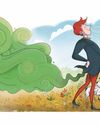
A TURN TO DISPERSE
Why a fart walk after dinner does more than release your gas
3 mins
April 2026
BBC Science Focus
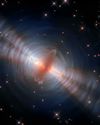
Hatching a nebula
Welcome to the Egg Nebula, an enigmatic structure formed by ejected stardust in the Cygnus constellation around 1,000 light-years from Earth.
1 min
April 2026

BBC Science Focus
7 TIMES AI GOT IT SPECTACULARLY WRONG
For the past four years, AI has been reshaping how we work and live. But its failures are proving just as transformative as its triumphs
8 mins
April 2026
BBC Science Focus
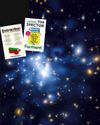
CHARLES ADCOCK, VIA EMAIL: COULD DARK MATTER BE ALL AROUND PLANET EARTH BUT UNDETECTABLE?
Astronomers have gathered overwhelming evidence that 80 per cent of all matter in the Universe is invisible.
1 min
April 2026
Listen
Translate
Change font size