Versuchen GOLD - Frei
CSI: ISS
BBC Science Focus
|May 2025
When it eventually happens, a murder in space will be unlike any that has occurred on Earth. So how do you investigate an astronaut's killing when your crime scene lacks gravity?
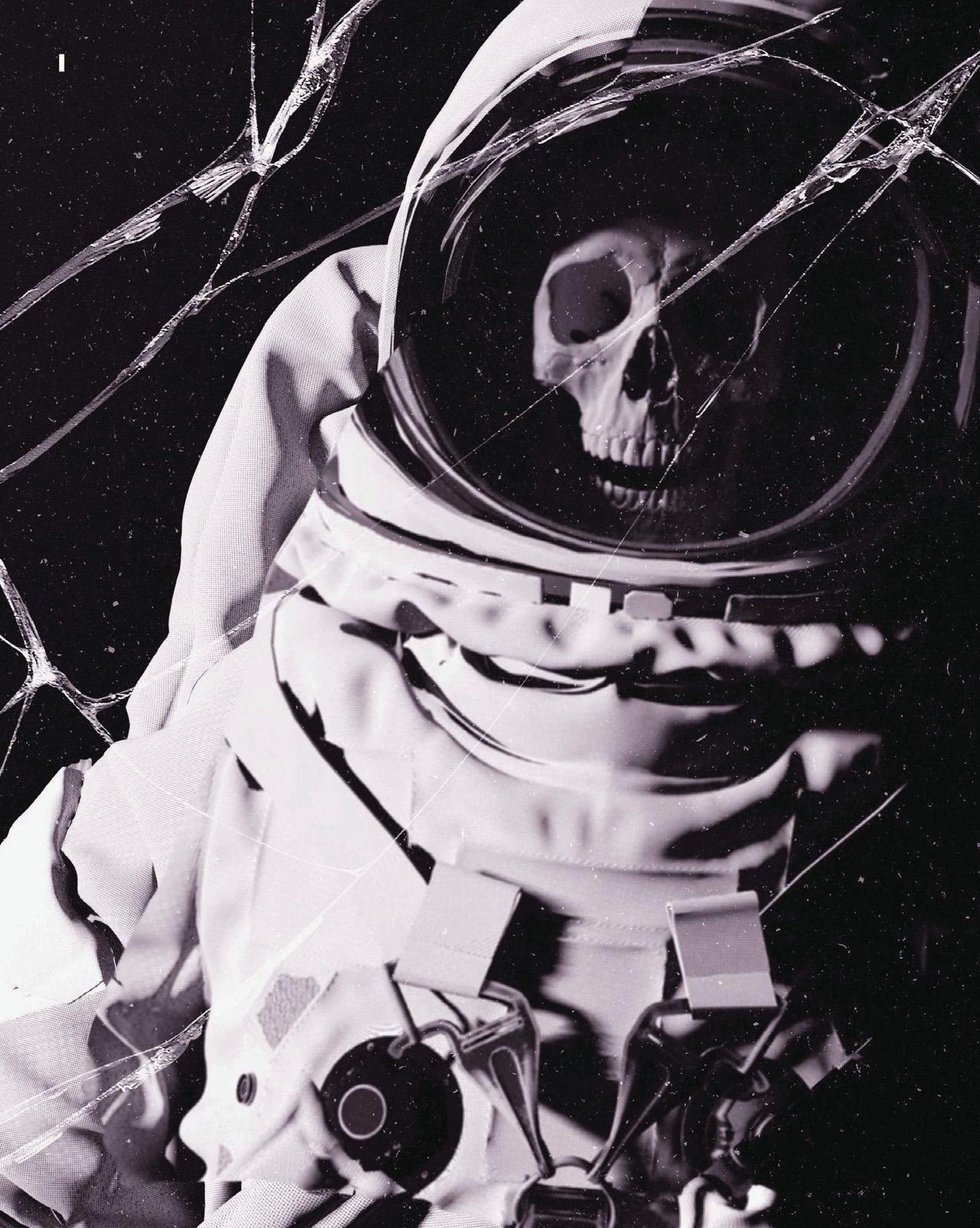
A confined space, a limited number of suspects, a lack of contact with the outside world. These are the makings of a juicy murder mystery. They're also eerily similar to conditions aboard the International Space Station (ISS), where astronauts -highly trained personnel selected for their resourcefulness, endurance and almost impossibly cool composure - spend months on end trapped together.
Though we like to think of Earth's best and brightest scientists as incorruptible, who hasn't considered murdering a co-worker from time to time? And extended stays in high-stress environments are enough to make anyone snap. As cosmonaut Valery Ryumin chillingly wrote in his personal diary during a stint in space in 1980: "All the necessary conditions to perpetrate a murder are met by locking two men in a cabin of 5 x 6m [18 x 20ft] for two months."
In the worst-case scenario where something gruesome does happen in space, we'll want to know who did it. But we're starting off with a disadvantage: the forensic methods we've developed on Earth won't necessarily cut it in the face of low-gravity, off-planet environments.
With civilian space travel on the horizon, some experts are calling for investment in the emerging field of astroforensics - and the first research in this area has already landed.
So, awkwardly pull on a trench coat over your spacesuit and perch a fedora on your helmet, because it's time to go, crime-solving... in space.
HOUSTON, WE HAVE A HOMICIDE
One thing investigators are sure to notice missing in their first extraterrestrial case? Gravity.

Diese Geschichte stammt aus der May 2025-Ausgabe von BBC Science Focus.
Abonnieren Sie Magzter GOLD, um auf Tausende kuratierter Premium-Geschichten und über 9.000 Zeitschriften und Zeitungen zuzugreifen.
Sie sind bereits Abonnent? Anmelden
WEITERE GESCHICHTEN VON BBC Science Focus

BBC Science Focus
DOES MY DOG HAVE ADHD?
Officially, Attention-Deficit Hyperactivity Disorder (ADHD) is a human condition. People are diagnosed with it. Dogs are not. Yet many of its core features, including hyperactivity, impulsivity and distractibility, can be found in dogs.

1 min
March 2026

BBC Science Focus
DOES MY BRAIN LIVE A LITTLE IN THE PAST?
Yes, your brain does live a little in the past. It can't help it. The information it receives via your senses is always a little out of date. Whether it's light entering the retinas in your eyes, or sounds vibrating the hairs in your ears, it not only takes time for the data to arrive, but your brain then has to process it.
2 mins
March 2026

BBC Science Focus
ASTRONOMY FOR BEGINNERS
RETURN OF THE EVENING STAR (VENUS)
1 mins
March 2026

BBC Science Focus
CAN YOU STOP YOUR SENSE OF TASTE DULLING AS YOU AGE?
Sometimes I hear people say that food just doesn't taste the same as they get older. It's tempting to blame this on age, but there are other factors at play, too.
1 mins
March 2026

BBC Science Focus
MICROBIOMES OF THE SUPERAGERS
BY STUDYING THE INCREASING NUMBER OF PEOPLE WHO ARE LIVING BEYOND THEIR 100TH BIRTHDAYS, SCIENTISTS ARE DISCOVERING THAT THE SECRET TO REACHING A RIPE OLD AGE IN RUDE HEALTH MIGHT LIE IN OUR GUTS
8 mins
March 2026

BBC Science Focus
HOW BIG WERE MEDIEVAL WAR HORSES?
You might picture knights charging into battle on towering steeds, but medieval horses were typically no bigger than modern-day ponies.
1 min
March 2026

BBC Science Focus
FORCES OF HABIT
Could new research on setting up healthy habits resuscitate those stuttering New Year resolutions?
3 mins
March 2026

BBC Science Focus
5 DANGERS HIDING IN YOUR PROCESSED FOOD
We all know that ultra-processed foods are bad for us, but what ingredients should we particularly try to avoid? And what are they doing to our bodies?
9 mins
March 2026

BBC Science Focus
Mosquitoes are becoming thirstier for human blood
Habitat loss may be pushing mosquitoes towards human hosts with deadly consequences
1 mins
March 2026

BBC Science Focus
HOW CAN I GET OVER MY EX?
Relationship breakups can be brutal, just look at the popularity of songs like 'Someone Like You' by Adele, or all the covers of 'Cry Me a River' by Julie London.
1 mins
March 2026
Listen
Translate
Change font size