
Mit Magzter GOLD unbegrenztes Potenzial nutzen
Erhalten Sie unbegrenzten Zugriff auf über 9.000 Zeitschriften, Zeitungen und Premium-Artikel für nur
Versuchen GOLD - Frei
THE INDIAN ARMY AND DRONES
Geopolitics
|January 2025
AMIT GUPTA argues why the induction of Drones, which have changed the face of modern warfare, into the Indian Army needs to be in greater numbers
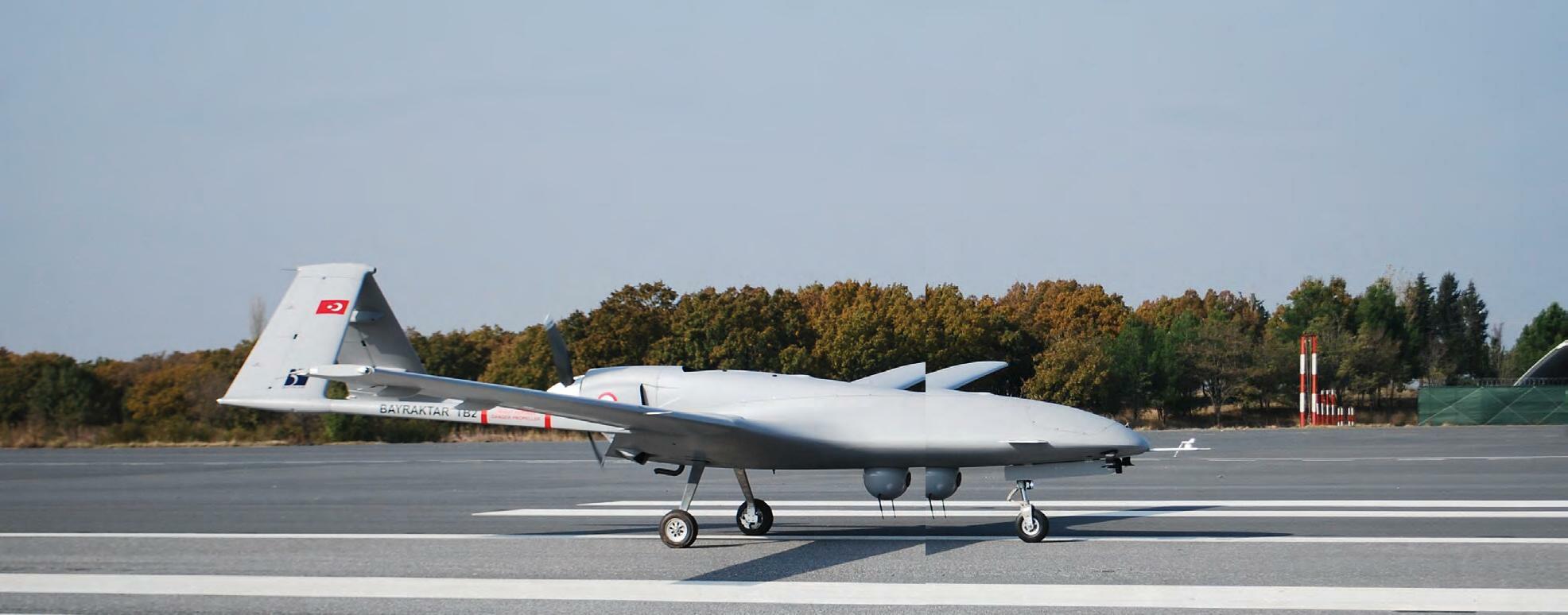
The Azerbaijan-Armenia war brought the potential of drones to the attention of militaries across the world since the Azeris used the unmanned vehicles to destroy Armenian artillery and armor. While the Azerbaijan-Armenia war did not get widespread global coverage, the Ukraine war has brought home just how effective drones can be in reshaping the nature of land warfare. At the same time, countries like Turkey and Iran have made a financial killing by selling their drones, which are made with off-the-shelf components, to Azerbaijan, Ukraine, and Russia to pursue their wars. Iran has also given its allies, like the Houthi in Yemen, drones, which have been used quite effectively both against Saudi targets as well as, more recently, against tankers in the Red Sea.
The Indian Army has started to buy drones but it needs a dedicated drone force for three purposes: surveillance, tactical strike, and for electronic warfare. To discuss how drones can be integrated into the operations of the Indian Army this article is divided into several parts: the first part discusses the background history of drone warfare; the second part discusses the effectiveness and utility of drones; and the third part examines the need for a joint drone acquisition policy for the Indian armed forces as well as a coherent and effective way to acquire and produce these weapons.
Drones: A Backgrounder
Drones have been around since the 1930s when both the US Navy and the British military began to conduct experiments with unmanned systems. In the Vietnam War, the United States used drones for surveillance, but the full potential of the system was not recognized. By the 1980s, the Israelis were successfully using drones in various conflicts, particularly in 1982, when Israeli unmanned vehicles were used to ascertain the radar signatures of Syrian air defence systems.


Diese Geschichte stammt aus der January 2025-Ausgabe von Geopolitics.
Abonnieren Sie Magzter GOLD, um auf Tausende kuratierter Premium-Geschichten und über 9.000 Zeitschriften und Zeitungen zuzugreifen.
Sie sind bereits Abonnent? Anmelden
WEITERE GESCHICHTEN VON Geopolitics
Geopolitics
Navy Flags Critical Engine Dependency Gap
Despite significant advances in indigenous warship construction, India's continued reliance on foreign marine propulsion systems remains a critical vulnerability in its defence framework.

1 mins
April 2026
Geopolitics
GTRE Advances Engine Testing With Su-30
India's aero-engine development programme is set to accelerate as GTRE proceeds to convert two Su-30 MKI fighters into dedicated flying testbeds, enabling real-time validation of indigenous propulsion technologies.
1 mins
April 2026
Geopolitics
Indigenous Anti-Tank Missile Nears Production Clearance
India's indigenous man-portable anti-tank guided missile is approaching final clearance for mass production following successful validation trials against moving targets.
1 min
April 2026
Geopolitics
A RE-LOOK AT INDIAN MILITARY LOGISTICS & THEATRE COMMANDS
JOSEPH P CHACKO explains why logistics systems must be integrated to be capable of seamlessly supporting modern warfare operations, which necessitate rapid, coordinated responses across multiple domains
14 mins
April 2026
Geopolitics
Defence Spending Drives Acquisition Surge
India's defence modernisation programme has entered a phase of rapid implementation, with FY 2025-26 seeing full utilisation of capital expenditure and a clear focus on addressing critical capability gaps across the armed forces.
3 mins
April 2026

Geopolitics
K9 Vajra Hits mega Indigenisation
India's India's flagship tracked artillery programme has reached a crucial turning point, with the K9 Vajra-T now achieving over 82 per cent indigenous content at the work package level, marking a fundamental shift in domestic defence manufacturing capability.
1 min
April 2026

Geopolitics
NUCLEAR SHARKS OF STEEL!
India’s third Arihant-class submarine, INS Aridhaman, was commissioned into the Indian Navy on April 3, 2026, at Visakhapatnam by Defence Minister Rajnath Singh.
2 mins
April 2026

Geopolitics
Army Eyes Tank-Launched Drone Strikes
The Indian Army is advancing a new concept to equip its main battle tanks with indigenous loitering munitions that can be deployed directly from existing 81mm smoke grenade launchers.
1 min
April 2026

Geopolitics
THE ANATOMY OF A POLARISED FRONTIER
West Bengal has changed from a longtime “Red Bastion” to one of the most hotly contested states in Indian politics.
2 mins
April 2026

Geopolitics
Navy Advances Drone-Ready Amphibious Carriers
India's next-generation amphibious warfare programme has entered a crucial -phase as the Navy advances its evaluation of four large-deck platforms designed to revolutionise expeditionary operations.
1 mins
April 2026
Listen
Translate
Change font size