
Mit Magzter GOLD unbegrenztes Potenzial nutzen
Erhalten Sie unbegrenzten Zugriff auf über 9.000 Zeitschriften, Zeitungen und Premium-Artikel für nur
Versuchen GOLD - Frei
RAM RAJYA AS THE PATELIAN STATE
The Sunday Guardian
|November 30, 2025
Beyond spiritual concepts, India’s civilizational conception of self must frame its identity asa high trust, hard security state.
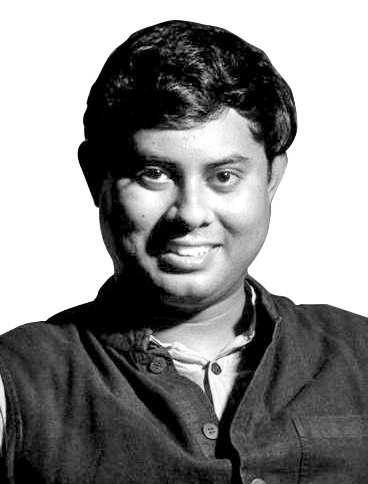
Ever since I wrote the biography of Sardar Vallabhbhai Patel (“The Man Who Saved India”, 2017), I have argued that the Indian state must transition from using only Gandhian notions for self-reference to combining the aspiration of universal nonviolence with the practical application of hard security to protect sovereignty in a difficult geography and build a high trust society.
The idea that India must use its own cultural history, including its foundational literature, as ideational sources for strategy has been deliberated more vividly in recent times, not least in the public utterances of Prime Minister Narendra Modi, and foreign minister S. Jaishankar (including in his book “The India Way”).
The completion of the Ram temple in Ayodhya has also brought about declarations of the start of the recreation of “Ram Rajya”, a golden age of justice which, says the Ramayana, started with the return of the god-king Ram to Ayodhya after 14 years in exile.
But beyond the spiritual symbolism, a lot more structural thought is needed into trying to understand if “Ram Rajya” indeed could be a sociopolitical aspiration of India, and what policy decisions and actions would be required to build it.
Fundamentally, this essay argues that the Ram Rajya is what I call the Patelian state. One of the great failures of the Indian state since Independence is an over-romanticisation of Gandhian idealism while incessantly grappling with intense security, and other structural, challenges for which Gandhian thought had little immediate answers. Therefore, the Indian state had to surreptitiously build and deploy military capability in everything from insurgency to nuclear weapons capability while advocating nonviolence. While this, for a time, may have worked as international positioning during the tenure of the first Prime Minister Jawaharlal Nehru, quickly it created deep social cognitive dissonance, not least when India lost a critical war to China in 1962.

Diese Geschichte stammt aus der November 30, 2025-Ausgabe von The Sunday Guardian.
Abonnieren Sie Magzter GOLD, um auf Tausende kuratierter Premium-Geschichten und über 9.000 Zeitschriften und Zeitungen zuzugreifen.
Sie sind bereits Abonnent? Anmelden
WEITERE GESCHICHTEN VON The Sunday Guardian
The Sunday Guardian
INDIA'S SMALL REACTOR, LARGE AMBITION
Understanding India's small modular reactor project is key in comprehending the vast nuclear energy ambition of the world's most populous, fast-growing country.

8 mins
February 22, 2026
The Sunday Guardian
INDIA-BANGLADESH MARITIME COOPERATION STAYED THE COURSE DESPITE POLITICAL SHIFTS
According to official Indian Navy data, in 2023-2024, India allotted 39 naval training slots to Bangladesh under the ITEC framework, and 37 were utilised.
3 mins
February 22, 2026

The Sunday Guardian
'INDIA SHOULD RE-NEGOTIATE TRADE DEAL WITH THE U.S.'
India should either opt out or delay negotiations or seek fresh terms so that the trade deal looks equitable, say experts.
5 mins
February 22, 2026

The Sunday Guardian
SAD RALLY TARGETS MANN GOVERNMENT AMID RELIGIOUS ROW
Akali Dal intensifies campaign as granthi allegations spark controversy.
2 mins
February 22, 2026
The Sunday Guardian
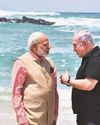
Shalom Namaste: As PM Modi travels to Israel
Israel is India's second largest defence supplier, with a large market for hight technology intensive Israeli arms industry. Israel is also in collaboration with various Indian companies to manufacture in India.
4 mins
February 22, 2026
The Sunday Guardian
India expands intelligence partnerships, turns provider from consumer
India has expanded intelligence-sharing arrangements, surveillance infrastructure, and geospatial cooperation with more than 20 countries since 2014, while simultaneously investing in advanced technologies including artificial intelligence, satellite systems, and digital surveillance platforms to strengthen its intelligence-gathering capacity across defence, intelligence, police, and paramilitary agencies.
3 mins
February 22, 2026

The Sunday Guardian
Karmayogi: How to reclaim meaning in academic life
Karmayogi is not a spiritual ornament but a professional orientation that shifts motivation from reward to responsibility and from anxiety to contribution.
5 mins
February 22, 2026

The Sunday Guardian
US’ renewed Tibet policy matters
For decades, Tibet has lived in the diplomaticshadows—acknowledged but rarely prioritized, invoked but seldom defended with sustained policy attention.
2 mins
February 22, 2026

The Sunday Guardian
EUROPE’S LEADERS SHOULD DERIVE RESERVED COMFORT FROM RUBIO’S SPEECH
Rubio's speech reflects a broader reality: the US is unlikely to abandon Europe, but it is equally unlikely to return to a sentimental conception of the transatlantic bond. The alliance is entering a post-romantic phase.
4 mins
February 22, 2026
The Sunday Guardian
DEMOCRATS DEMAND REFUND AFTER U.S. SUPREME COURT TOSSES OUT TRUMP TARIFFS
Governor J.B. Pritzker sent U.S. President Donald Trump an invoice on Friday demanding nearly $9 billion in tariff refunds for Illinois families after the Supreme Court ruled the President's much-touted levies are illegal.
1 mins
February 22, 2026
Listen
Translate
Change font size